Welding Jackets and Coveralls: How to Choose the Right Protection Level
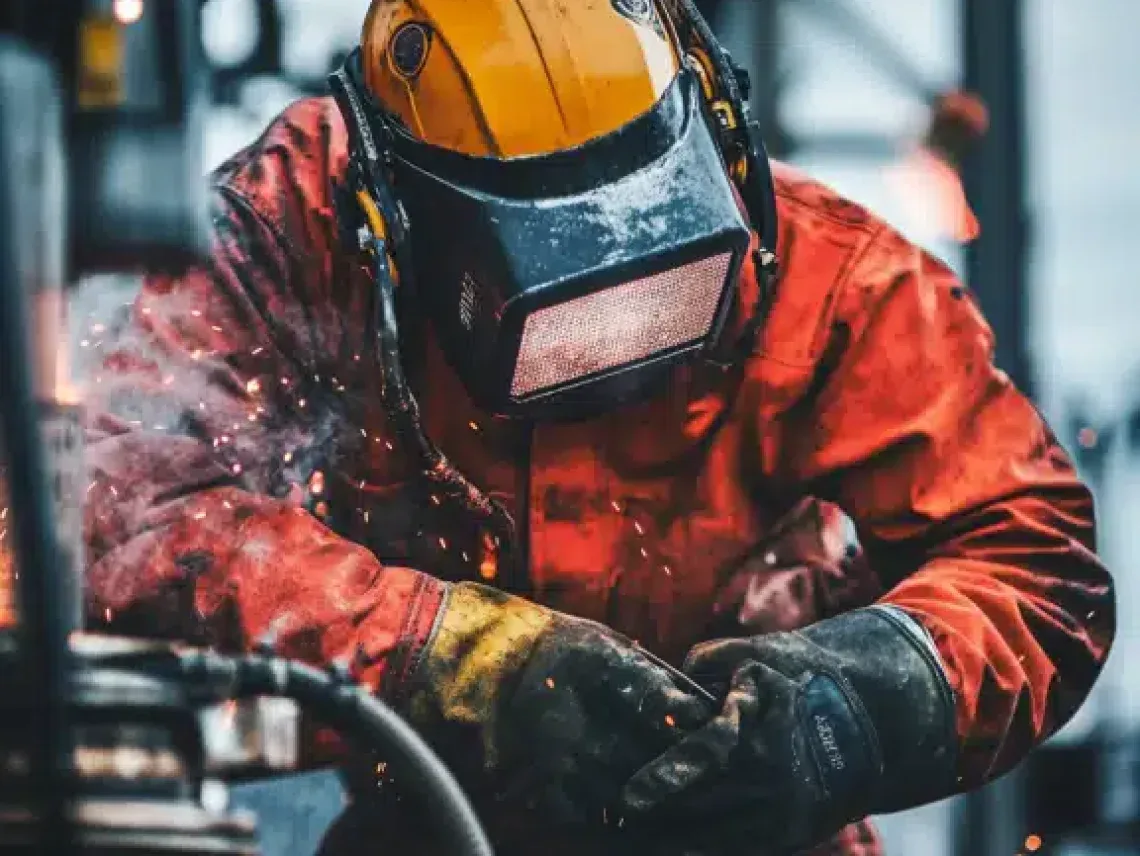
Not all welding is created equal—and neither is all welding gear.
A lightweight cotton FR jacket might be perfect for a TIG welder, but useless for someone working with MIG or stick welding.
A bulky leather coverall may protect against heavy spatter, but overheat the worker doing precision tack work.
Welding jackets and coveralls are not “one size fits all.” They must match the heat, sparks, and intensity of your operation. Let’s break down how to choose the right protection level for your welding team.
Why Jacket and Coverall Selection Matters
Welding exposes workers to:
- Sparks and spatter
- Molten metal droplets
- Infrared and UV radiation
- Arc flash (in electrical welding)
- Heat buildup from prolonged work
- Slag and grinding debris
Wearing the wrong gear can result in burns, fatigue, and heat stress—or worse, catastrophic injuries.
✅ Choosing the right garment isn’t just about safety—it’s about comfort, mobility, and task efficiency too.
Welding Garment Types: Jackets vs. Coveralls
| Type | Best For | Key Features |
|---|---|---|
| Welding Jacket | Light to medium-duty welding tasks | Worn over pants; flexible, cooler |
| Coveralls | Full-body, high-risk or overhead welding | One-piece, full protection, no gaps |
| Cape Sleeves + Apron | Stationary work, vertical sparks only | Modular, good breathability |
✅ Coveralls eliminate “gap risk” (shirt riding up, pant waistband exposure), making them ideal for overhead or heavy spatter work.
How to Match Garment Type to Welding Process
| Welding Type | Recommended Protection Level | Material Suggestions |
|---|---|---|
| TIG (Tungsten Inert Gas) | Light spark, precision task | Lightweight FR cotton, treated blends |
| MIG (Metal Inert Gas) | Moderate spatter, longer duration | Midweight FR blends or leather combo |
| Stick / Arc Welding | Heavy spark, slag, UV radiation | Heavy FR cotton, split cowhide leather |
| Flux-Core Welding | High spatter + fume exposure | Full leather coverall or hybrid system |
| Plasma Cutting | High heat + metal droplets | Aluminized outer layers, thick FR base |
Rule of thumb: The more heat and spatter, the more coverage and insulation you need.
Key Features of High-Performance Welding Jackets & Coveralls
When sourcing, look for:
- FR-certified fabric: EN ISO 11611 / NFPA 2112
- Double-layer front panels or chest reinforcement
- High collars and flapped closures to block sparks
- Sleeve gussets for extended reach and arm mobility
- Snug-fitting cuffs (elastic or adjustable tab)
- Metal-free zippers or protective flaps over fasteners
- Ventilation zones (e.g., underarms, back panel)
- Patch- or swing pockets with spark-resistant flaps
- Triple-stitched seams for abrasion resistance
✅ For high-duty tasks, choose coveralls with knee pad compartments, tool loops, and belt reinforcement.
Understanding EN ISO 11611 Welding Classifications
EN ISO 11611 sets two protection classes:
| Class | Description | Use Case |
|---|---|---|
| Class 1 | For light welding, low spatter risk | TIG, occasional MIG |
| Class 2 | For heavy welding, high spatter/slags | Stick, flux-core, arc gouging |
✅ Also check if it covers A1 (surface ignition) and A2 (edge ignition).
Material Comparison: Which Fabric Does What?
| Material Type | Pros | Cons |
|---|---|---|
| FR Cotton (treated) | Lightweight, breathable, cost-effective | Loses FR after many washes |
| Inherent FR blends | Long-lasting, good arc flash protection | More expensive upfront |
| Leather (split/cowhide) | Excellent heat + spatter resistance | Heavy, hot, limits flexibility |
| Wool blends | Great natural resistance + warmth | Less common, needs layering |
| Aluminized fabrics | Reflect radiant heat and molten splash | Stiff, usually used as outer aprons only |
✅ Combine a light FR shirt with a leather apron or cape to balance mobility + protection.
Real-World Tips from the Welding Floor
- “Never use plastic zippers—they melt fast.”
- “I need ventilation in the back, not just more padding.”
- “Don’t give me a jacket I can’t lift my arms in.”
- “One bad collar design = sparks down the neck.”
- “Pants that ride low get you burned. Go full coveralls if you’re working overhead.”
✅ Design = difference between safe and scorched.
What to Ask Your Supplier Before Ordering
- What welding class is this garment rated for (EN ISO 11611 Class 1 or 2)?
- Is it inherently FR or treated? What’s the expected wash cycle life?
- Are seams triple-stitched and reinforced?
- Are there options with ventilation zones for long shifts?
- Can you add custom company logo or reflective ID?
- Do you offer matching gloves, hoods, aprons, and gaiters?
At workwearsolutions, we help you build full welding PPE systems by task type, environment, and budget—with OEM branding and batch flexibility.
Conclusion
Welding jackets and coveralls aren’t just protective—they’re performance gear.
To choose the right garment:
- Understand the welding process and risk level
- Choose materials that balance protection and mobility
- Verify certifications and coverage zones
- Don’t forget comfort—your welders are wearing this for 10+ hours a day
Need help outfitting your welding team with jackets, coveralls, or full arc-rated kits? I’ll help you match gear to heat, hazard, and human movement.
📩 Contact: [email protected]
🌐 Visit: www.workwearsolutions.net