Waterproof, Windproof, Breathable: How to Read Fabric Tech Sheets (ePTFE, PU, TPU)
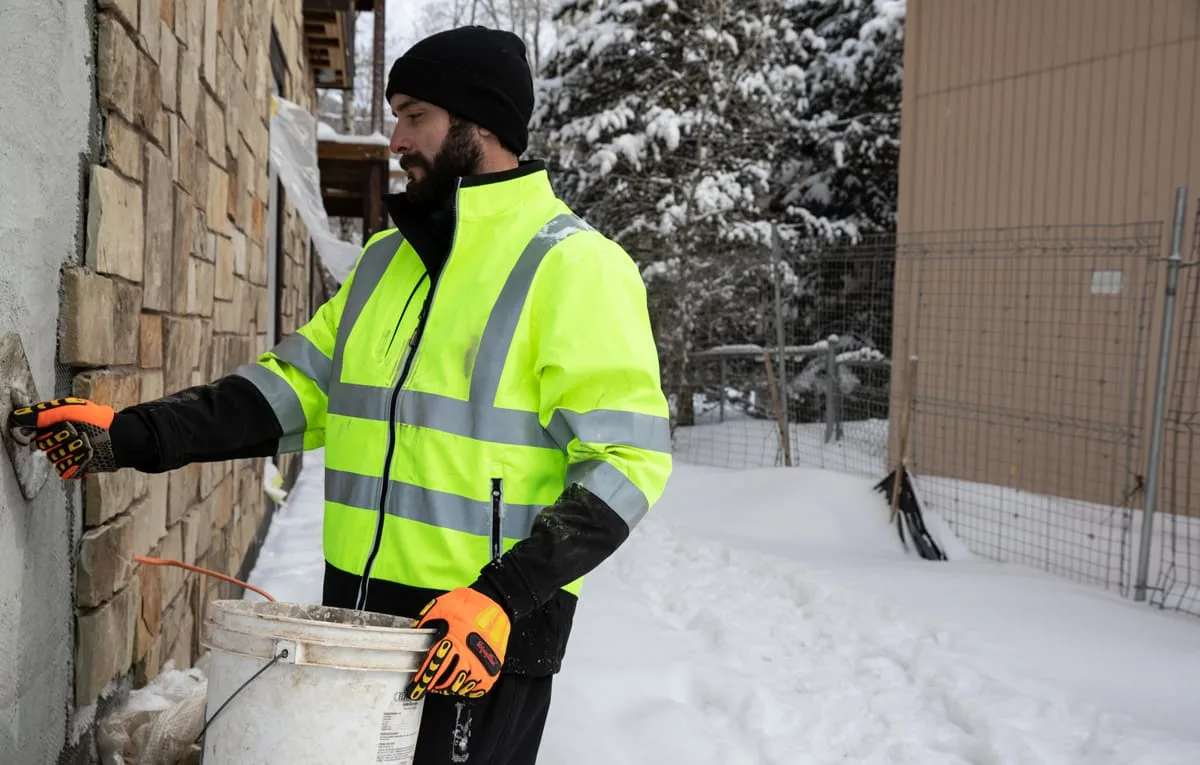
Picking a jacket that claims "waterproof" and "breathable" is easy—but understanding the performance behind those claims requires decoding fabric tech sheets. Terms like ePTFE, PU, and TPU, alongside metrics like Hydrostatic Head (HH) and Moisture Vapor Transmission Rate (MVTR), can quickly confuse buyers.
Let’s simplify these terms, clarify performance standards, and guide you to the right choice for your workers.
Key Terms Explained
-
Waterproof (Hydrostatic Head – HH):
Measures water pressure resistance (in mm).- Higher number = greater waterproofing.
-
Windproof:
Indicates how effectively fabric blocks wind penetration.- Critical for maintaining insulation in windy conditions.
-
Breathability (MVTR – Moisture Vapor Transmission Rate):
Rate at which moisture vapor escapes fabric (g/m²/24hrs).- Higher MVTR = better comfort for active workers.
Fabric Technologies Compared
1. ePTFE (e.g., Gore-Tex®)
Characteristics:
- Superior breathability and waterproofness
- Microscopic pores block water drops but allow vapor through
| Pros | Cons |
|---|---|
| Excellent breathability (MVTR ≥ 15,000) | High cost |
| Extremely durable, long-lasting | Requires careful laundering |
| Reliable in heavy, persistent rain | Lower stretch/flexibility |
Best for: Heavy-duty outdoor work, prolonged exposure, oil & gas offshore, and high-activity tasks (construction, forestry).
2. Polyurethane (PU) Coatings
Characteristics:
- Waterproof coating applied inside fabric
- Less breathable than ePTFE
| Pros | Cons |
|---|---|
| Cost-effective, good waterproofing | Lower breathability (MVTR < 8,000) |
| Lightweight, flexible | Less durable; coating may degrade with frequent laundering |
Best for: General-purpose industrial use, occasional wet conditions, budget-sensitive procurement.
3. Thermoplastic Polyurethane (TPU)
Characteristics:
- Combines good waterproofness and breathability
- Higher elasticity and comfort
| Pros | Cons |
|---|---|
| Excellent stretch and comfort | Moderate breathability (~10,000 MVTR) |
| Better durability than basic PU | Mid-range cost |
| Good waterproofness (≥10,000 mm HH) | Less durable than ePTFE in extreme environments |
Best for: Moderate activity tasks, such as logistics, warehousing, or moderate construction work.
Understanding Technical Metrics: HH & MVTR
Waterproofness (Hydrostatic Head – HH)
| HH Rating (mm) | Suitability |
|---|---|
| 5,000–10,000 | Light rain, brief exposure |
| 10,000–15,000 | Moderate rain, prolonged exposure |
| 15,000–20,000+ | Heavy rain, snow, offshore, and prolonged exposure |
Breathability (MVTR)
| MVTR (g/m²/day) | Worker Activity Level | Comfort Level |
|---|---|---|
| < 8,000 | Low activity, short-duration wear | Basic comfort |
| 8,000–15,000 | Moderate to high activity | Good comfort |
| 15,000+ | High activity, prolonged wear | Excellent comfort |
Sample Application Recommendations
| Work Scenario | Recommended Fabric Tech | Ideal Specs |
|---|---|---|
| Offshore oil & gas | ePTFE (Gore-Tex®), ≥20,000 mm HH | High breathability |
| Construction site, moderate rain | TPU-coated, ≥10,000 mm HH | Moderate breathability |
| Warehousing, occasional outdoor tasks | PU-coated, 8,000–10,000 mm HH | Budget-friendly |
Common Buyer Questions Answered
Q: “Do we need the highest waterproof rating for everyday industrial use?”
A: No—most industrial scenarios do well with 10,000–15,000 mm HH; save higher ratings (20,000 mm) for extreme environments.Q: “Why invest in higher MVTR for workers?”
A: Better breathability reduces sweat buildup, prevents chilling, enhances comfort, and significantly boosts productivity.Q: “How do I know if the fabric is windproof?”
A: Check tech sheets for “windproof” specification or ask for air-permeability test results (ideally <1 CFM).Q: “How do we maintain breathability after washing?”
A: Follow washing instructions carefully; reapply DWR treatment regularly, and avoid high-temperature drying.
Procurement Checklist
- [ ] Identify weather conditions and exposure duration
- [ ] Define activity level (low, moderate, high)
- [ ] Determine suitable waterproof (HH) and breathable (MVTR) ratings
- [ ] Compare cost and durability requirements
- [ ] Request fabric tech sheets from suppliers
- [ ] Plan for garment care and maintenance
Conclusion
Choosing the right waterproof, windproof, breathable fabric is key to balancing worker safety, comfort, productivity, and budget. Clearly understanding technical terms like ePTFE, PU, TPU, HH, and MVTR allows informed, strategic procurement decisions that keep your team warm, dry, and performing at their best.
Need help selecting the right fabrics for your conditions?
Email: [email protected]
Website: www.workwearsolutions.net