Chemical Protective Clothing: Types, Categories, and EN Standards Explained
Archived resource. Confirm current standards, supporting test evidence and project applicability before relying on technical or case information.
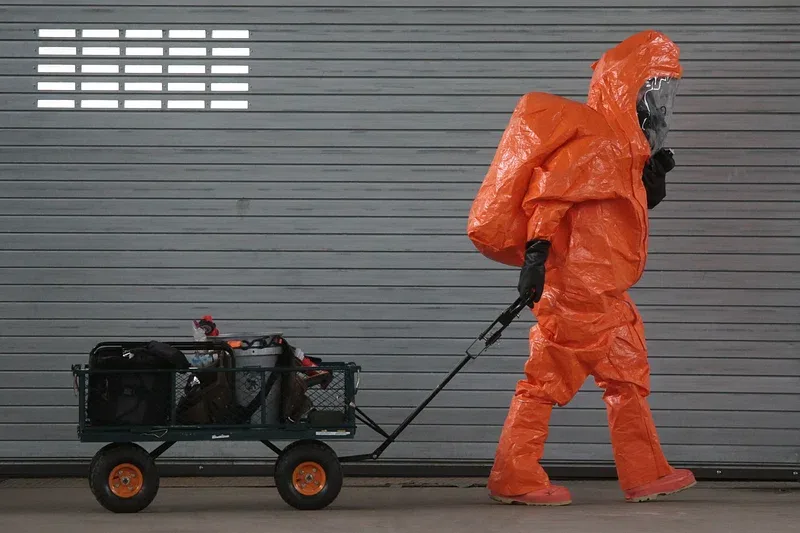
Choosing the right chemical protective clothing isn’t just about picking a suit—it’s about understanding risk, protection levels, and international standards.
Whether you’re sourcing PPE for a chemical plant, pharmaceutical facility, or hazmat response team, knowing the differences between Type 1 to Type 6 suits, and the standards like EN 943 or EN 14605, can save lives—and protect your company from non-compliance.
Let’s break it all down in clear, simple terms.
What Is Chemical Protective Clothing?
Chemical protective clothing (CPC) refers to garments specifically designed to shield the wearer from hazardous chemical exposure—including liquid splashes, vapor, gas, or solid particulates.
Depending on your application, this might include:
- Disposable coveralls for light spray protection
- Fully encapsulated suits for toxic gas environments
- Multi-layer garments for acid, solvent, or pesticide handling
⚠️ Not all protective suits are equal—protection depends on type, material, and sealing system.
Understanding the Types: Type 1 to Type 6 Explained
Chemical protective clothing is categorized into six main types, based on the kind of chemical hazard and level of protection provided.
| Type | Protection Level | Typical Use Cases |
|---|---|---|
| Type 1 | Gas-tight suits (fully encapsulated) | Toxic gas environments, HAZMAT teams |
| Type 2 | Non-gas-tight suits (with positive pressure) | Cleanrooms, chemical sampling |
| Type 3 | Liquid-tight suits | Pressure spray, decontamination zones |
| Type 4 | Spray-tight suits | Chemical manufacturing, pesticide application |
| Type 5 | Particle-tight suits | Pharmaceutical production, asbestos removal |
| Type 6 | Limited splash protection | Maintenance, general chemical handling |
✅ The lower the number, the higher the protection. Type 1 = highest, Type 6 = light duty.
Key European Standards for Chemical PPE
Europe uses a robust set of standards to classify and test CPC. Here are the most relevant ones you need to know:
| Standard | Applies To | What It Covers |
|---|---|---|
| EN 943-1 / 2 | Type 1 & 2 suits | Gas-tight and non-gas-tight suits |
| EN 14605 | Type 3 & 4 suits | Liquid-tight and spray-tight suits |
| EN ISO 13982-1 | Type 5 suits | Particle protection (solid chemicals, powders) |
| EN 13034 | Type 6 suits | Light splash protection (low volume, short contact) |
| EN 14325 | Performance classification | Test methods for CPC fabrics (seam strength, barrier ratings) |
| EN 1149-5 | Anti-static protection (optional) | Explosive environments |
🏷️ If you’re exporting to Europe or working with EU-compliant clients, your suits must have CE marking + applicable EN codes on the label.
What Do the Symbols and Pictograms Mean?
Certified chemical suits will often have icon-style pictograms showing their protection level:
- A gas tank symbol = Type 1
- A spray nozzle = Type 3
- A dust cloud = Type 5
- An Erlenmeyer flask with splash = Type 6
- Antenna symbol = Anti-static compliant (EN 1149)
✅ Always check the label + datasheet + CE documentation to verify compliance.
When Should You Use Each Type?
| Job Scenario | Recommended Type |
|---|---|
| Handling toxic gases (e.g. chlorine) | Type 1 |
| Spraying acids under pressure | Type 3 |
| Applying pesticides in agriculture | Type 4 |
| Working around powder contaminants | Type 5 |
| Routine maintenance with splashes | Type 6 |
Don’t overprotect or underprotect—match the suit to the job’s risk level.
Additional Certifications to Consider
Some suits may also require:
- EN 1073-2: Radioactive particle protection
- EN 14126: Infective agent protection (used in biolab, COVID, Ebola settings)
- EN 1149-5: Anti-static if used in ATEX zones (explosive risk)
✅ Always request a Declaration of Conformity (DoC) from your supplier to ensure true compliance.
Common Buyer Mistakes to Avoid
| Mistake | Why It’s Risky |
|---|---|
| Assuming “chemical suit” = max protection | Overbuying increases cost and discomfort |
| Buying Type 5 for a Type 3 job | May result in chemical penetration or failed inspections |
| Ignoring CE / EN labeling | Product may be illegal to use in certain regions |
| Skipping compatibility charts | Not all suits resist all chemicals—even if the rating is “high” |
| Thinking all Tychem® = same level | DuPont has multiple Tychem variants—each with specific usage |
What to Ask Your Supplier
- What type classification is this suit? (1–6)
- Which EN standards does it comply with?
- Is it CE certified with a valid Notified Body number?
- Can I see test data or chemical compatibility charts?
- Is the suit disposable or reusable, and how many times?
- Does it come with anti-static or biohazard protection?
At workwearsolutions, we provide full documentation, labeling, and use-case matching to help you buy with confidence.
Conclusion
Chemical protective clothing isn’t one-size-fits-all.
The right protection depends on the chemicals used, the exposure level, and the working environment.
As a buyer:
- Know the Type classification system (1–6)
- Understand the EN standards behind the labels
- Match the suit to real hazards, not just budget or appearance
Need help choosing certified chemical protective suits for your facility or export project?
Let’s get the protection right—down to the last seam.
📩 Contact: [email protected]
🌐 Visit: www.workwearsolutions.net