
Pattern Grading for Global Bodies: The Engineering of Anthropometric Fit in Industrial Workwear

In the highly regulated landscape of industrial Personal Protective Equipment (PPE) and B2B workwear procurement, fit is not a matter of aesthetics; it is a critical vector of occupational safety. A poorly graded garment fundamentally alters the protective coverage of the textile, compromising arc flash boundaries, chemical splash barriers, and high-visibility zoning. [cite_start]As globalization accelerates, […]
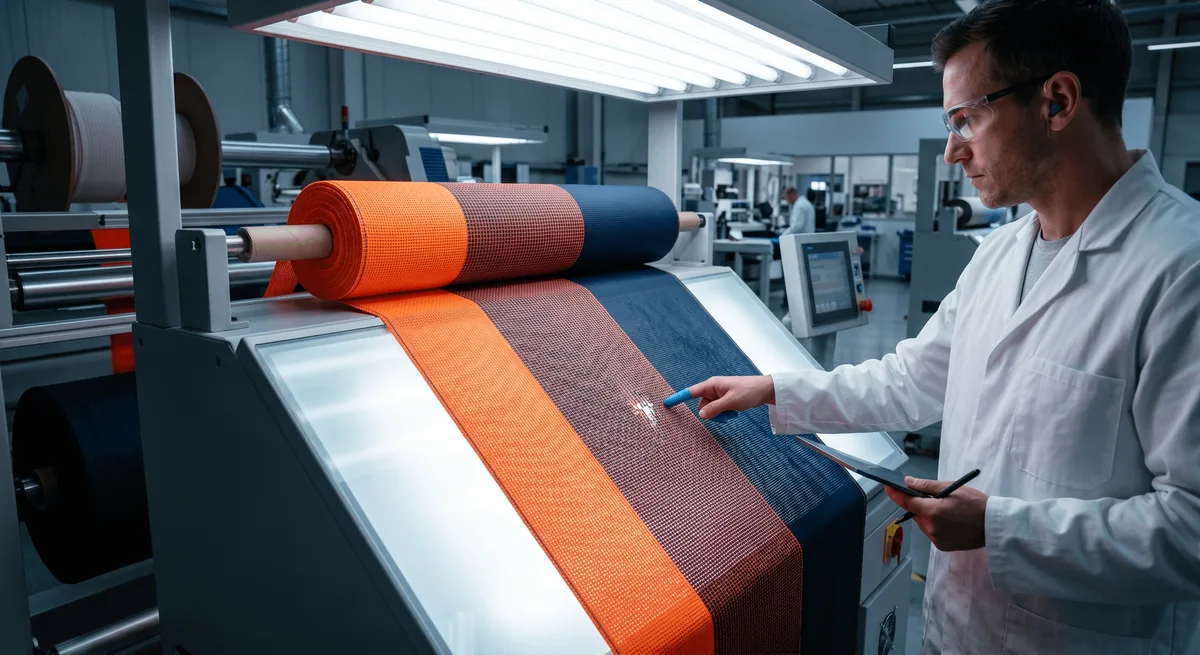
The “Light Box” Inspection: Deconstructing Fabric Defect Diagnostics and the 4-Point Quality System

The structural integrity and visual uniformity of industrial workwear and Personal Protective Equipment (PPE) are determined long before the first pattern is cut. In high-stakes manufacturing environments where garments must withstand mechanical abrasion, chemical exposure, and thermal hazards, latent textile defects are not merely cosmetic—they are catastrophic safety liabilities. By implementing rigorous optical transillumination protocols […]
The Engineering of Waterproof Breathable Workwear: A Forensic Analysis of PU Coatings vs. PTFE Membranes

The selection of waterproof foul-weather gear in industrial environments is rarely treated with the engineering rigor it demands. Procurement departments frequently evaluate "waterproofness" as a binary attribute, failing to recognize that isolating the human body from external moisture without managing internal metabolic heat inevitably leads to physiological failure. The decision between Polyurethane (PU) coatings and […]
The “Button Pull” Test Protocol: Engineering Fastener Security to Mitigate Industrial Machinery and Choking Hazards

The “Button Pull” Test Protocol: Engineering Fastener Security to Mitigate Industrial Machinery and Choking Hazards Executive Summary In the realm of B2B industrial workwear, a button is not merely a garment closure; it is a critical structural vulnerability. The premature detachment of a fastener in high-risk environments initiates a cascade of catastrophic operational failures, ranging […]
Fabric Shrinkage in Industrial Workwear: The Sanforization Secret and the Physics of Dimensional Stability

Executive Summary In the global industrial workwear and Personal Protective Equipment (PPE) sector, fabric shrinkage is frequently dismissed as a minor nuisance or an unavoidable byproduct of commercial laundering. This is a critical, multi-million-dollar misconception. When a standard 100% cotton or poly-cotton blend coverall shrinks by 5% to 8%, it does not merely become uncomfortable; […]
Color Consistency: The Delta-E Standard and the End of the “Clown Suit” Effect

In the corporate world, a uniform is a brand’s calling card. It signals professionalism, discipline, and unity. But what happens when the "Navy Blue" jacket bought in January doesn’t match the "Navy Blue" trousers bought in June? You get the "Clown Suit Effect": a workforce that looks mismatched, ragged, and unprofessional. To the untrained eye, […]
Why Zippers Fail (and How We Prevent It): The Engineering of Closure Reliability

In the hierarchy of industrial garment components, the zipper is often treated as an afterthought—a commodity item costing less than $1.00. This is a strategic error. For a petrochemical worker on an offshore rig or a lineman on a utility pole, the zipper is a mission-critical mechanical device. If a zipper bursts during an arc […]
The Anatomy of a Seam: Engineering Durability at the Needle Point

In the world of industrial workwear, the fabric gets all the glory, but the seam does all the work. A garment is only as strong as its weakest connection. You can spec the most expensive, abrasion-resistant Cordura® or flame-resistant Nomex®, but if the seam architecture is flawed, the garment will fail catastrophically under stress. For […]