

In the global procurement of industrial workwear, the difference between a successful contract and a catastrophic recall often lies in what you cannot see. Suppliers under pressure to meet low price targets often resort to technical subterfuge—subtle downgrades in material, chemical processing, and certification that are invisible to the naked eye but fatal to the garment’s performance.
For a Procurement Officer, "trust" is not a strategy; Verification is. A supplier providing a cheap quote for FR (Fire Resistant) coveralls might be using a counterfeit certificate, or a factory promising "Heavyweight Cotton" might be delivering a polyester-rich blend that melts on skin.
This guide combines Part 1 (Forensic Auditing of Supply Chains) and Part 2 (Technical Quality Control) to provide a complete decision-making toolkit for identifying and neutralizing the Top 5 Traps in the textile trade.
Google Snippet: Quick Answer
The most dangerous procurement traps in workwear are invisible until failure occurs. The Top 5 Traps include: 1) Fake or Expired Safety Certificates (CE/UL), 2) Material "Bait and Switch" (Low-grade yarn substitution), 3) Dimensional Instability (High shrinkage rates), 4) The "Golden Sample" Deception, and 5) Chemical Non-Compliance (Azo dyes/Formaldehyde). Avoiding these requires strict Third-Party Testing, Batch-Specific Transaction Certificates, and Randomized Destructive Testing of bulk stock.
Trap 1: The Certification Mirage (Fake Documentation)
The Scam
In high-risk categories like Flame Resistant (FR), High Visibility, or Anti-Static gear, a certificate is a legal license to operate. Unscrupulous suppliers often:
- Photoshop: Alter dates or company names on valid certificates from other factories.
- "Draft" Reports: Submit a "Test Report" (which just shows a sample was tested) as a "Product Certificate" (which guarantees the production line).
- Expired Standards: Providing a certificate for EN 471 (an old standard) instead of EN ISO 20471 (the current standard).
The Consequence
If an accident occurs and the PPE fails, the buyer is legally liable. In the EU and US, using non-certified PPE can lead to corporate manslaughter charges and massive fines.
How to Detect It
- Check the "Notified Body" Number: Every CE certificate has a 4-digit code (e.g., 0120 for SGS). Go to the NANDO database (EU) and verify the body exists.
- Verify the License Number: Contact the testing house (e.g., BTTG, UL, SATRA) directly with the certificate number. They will confirm if it is valid or forged.
- Match the Fabric: The certificate specifies a precise fabric weight and composition (e.g., "98% Cotton / 2% Antistatic, 260gsm"). If your garment is 250gsm, the certificate is void.
Trap 2: The Material "Bait and Switch"
The Scam
You order "100% Long-Staple Cotton, 280gsm." The supplier delivers "60% Carded Cotton / 40% Polyester, 260gsm."
- Yarn Substitution: Using "Carded" yarn (rough, weak) instead of "Combed" yarn (smooth, strong).
- Fiber Blending: Sneaking in polyester to reduce cost. Polyester is cheaper than cotton but melts in heat.
- Weight Shaving: Delivering 260gsm fabric when 280gsm was ordered. This saves the factory 7% in raw material costs but reduces durability significantly.
The Consequence
- Melting Risk: In welding or electrical environments, the hidden polyester content melts into the worker’s skin during an arc flash.
- Pilling: Carded yarn pills (fuzzes) rapidly, making the uniform look old in weeks.
How to Detect It
- The Burn Test: Burn a swatch.
- Cotton: Burns like paper, grey ash, smells like wood.
- Poly/Cotton: Melts and burns, hard black bead residue, chemical smell.
- Chemical Dissolution: A lab can dissolve the cotton portion with acid to reveal exactly how much polyester is hiding inside.
- GSM Cutter: Use a circle cutter and scale to verify the weight of the bulk production, not just the sample.
Trap 3: The Dimensional Disaster (Shrinkage)
The Scam
Fabric must be Sanforized (mechanically pre-shrunk) or heat-set to ensure it stays the same size. This process costs money and slows production. Factories often skip it or do it poorly.
- The Result: A size "Large" shirt shrinks to a size "Small" after the first hot industrial wash (60°C). sleeves ride up, and waists become tight.
The Consequence
- Total Loss: The entire batch becomes unwearable.
- Safety Risk: Shrunk sleeves expose wrists to cuts or burns. Tight clothes restrict movement (ergonomic hazard).
How to Detect It
- The "5-Wash" Test: Do not accept a fabric report based on 1 wash. Demand ISO 6330 testing for 5 wash/dry cycles at the intended temperature (e.g., 60°C).
- Tolerance Limits: Set a strict contract limit.
- Woven (Pants/Jackets): +/- 3% max.
- Knits (Polos/Tees): +/- 5% max.
- Spirality Check: Check if the side seams twist around the body after washing (common in cheap polo shirts).
Trap 4: The "Golden Sample" Deception
The Scam
The supplier sends a flawless prototype (The Golden Sample) made by their best master tailor using premium fabric purchased from a retail market. You approve it.
- The Switch: The bulk order is then outsourced to a cheaper sub-contractor using lower-grade bulk fabric and hasty assembly line stitching.
The Consequence
- Inconsistency: You receive 1,000 units where the sizing varies, buttons fall off, and colors don’t match the sample.
- Reputation Damage: Your workforce feels undervalued when issued cheap, ill-fitting gear.
How to Detect It
- Seal the Sample: Sign and date the approved sample. Cut it in half—keep half, send half back to the factory. This is the "Sealed Standard."
- AQL Inspection: Mandate a Pre-Shipment Inspection (PSI) using Acceptable Quality Limit (AQL) 2.5 standards. Inspectors pick random boxes and compare them strictly against the Sealed Standard.
- Raw Material Audit: Ask for the invoice of the fabric purchase for the bulk order to ensure it matches the sample specifications.
Trap 5: The Hidden Chemical Hazard (Color & Toxins)
The Scam
To achieve bright colors cheaply, factories use Direct Dyes or Sulfur Dyes instead of Reactive or Vat Dyes. They may also use cheap finishing agents containing Formaldehyde or banned Azo Dyes.
The Consequence
- Color Bleeding: A red logo bleeds onto a white shirt in the wash, ruining the uniform.
- Crocking: Dye rubs off onto car seats or leather furniture (a disaster for automotive or luxury service clients).
- Health Hazards: Formaldehyde causes skin rashes (contact dermatitis) and is carcinogenic. Azo dyes are banned in the EU (REACH) and California (Prop 65).
How to Detect It
- The "Wet Rub" Test: Rub a wet white cloth vigorously on the colored fabric. If color transfers, reject it (ISO 105-X12).
- Lab Testing: Require a RSL (Restricted Substance List) test report for every batch, checking for Azo, Formaldehyde, and Heavy Metals.
- Dye Class Specification: Explicitly write "Vat Dyed" or "Reactive Dyed" in the Purchase Order.
6. ROI Analysis: The Cost of Traps vs. Prevention
Is it worth paying for inspections and testing? The math says yes.
Scenario: Order of 1,000 Coveralls @ $30 each ($30,000 Total).
| Scenario | Cost of Prevention | Cost of Failure (Trap Triggered) | Net Financial Impact |
|---|---|---|---|
| Trap 1: Fake Certs | $500 (Lab verification) | $1,000,000+ (Legal fines/Lawsuits after injury) | Critical Risk |
| Trap 2: Material Swap | $200 (Lab composition test) | $30,000 (Unusable stock) + Re-order delay | 150x ROI on Testing |
| Trap 3: Shrinkage | $100 (Wash test) | $30,000 (Total write-off after wash) | 300x ROI on Testing |
| Trap 4: Golden Sample | $800 (3rd Party Inspection) | $5,000 (Repair costs) + Morale loss | 6x ROI on Inspection |
Conclusion: Spending 3–5% of the PO value on Quality Assurance (QA) prevents 100% loss.
7. The "Trap-Evasion" Buyer Checklist
Use this checklist before paying the deposit (30%) and before paying the balance (70%).
Pre-Contract (The Setup):
- [ ] Specs: Are fiber content, yarn count, weight (GSM), and shrinkage limits explicitly written in the contract?
- [ ] Penalty Clause: Does the contract state "Supplier pays for 100% replacement and shipping if bulk fails lab testing"?
- [ ] Cert Verification: Have I emailed the Notified Body to validate the CE/UL certificates?
Pre-Production (The Material):
- [ ] Lab Dip: Approve the color under standard light sources (D65).
- [ ] Greige Check: Ask for a photo of the raw yarn/fabric stock.
Pre-Shipment (The Defense):
- [ ] AQL Inspection: Send an inspector to check sizing, stitching, and packaging.
- [ ] The "Pick-and-Test": Have the inspector pick 3 garments from the packed boxes (not the ones the factory hands them) and send them to a lab for checking GSM, composition, and shrinkage.
8. Frequently Asked Questions (FAQ)
Q1: How can I tell if a fabric is "Low Grade" just by touching it? A: Look at the surface against the light.
- High Grade: Smooth, even reflection, very little "fuzz" (hairiness).
- Low Grade: Uneven/slubby texture, lots of small hairs sticking up (indicates short-staple cotton), feels "dry" or dusty.
Q2: My supplier says "Tolerance is industry standard." What is acceptable? A: Don’t accept vague terms.
- GSM: +/- 5% is standard. (e.g., 200gsm can be 190-210).
- Size: +/- 1cm is standard. +/- 2cm is sloppy.
- Color: Delta E < 1.0 (Commercial match).
Q3: What if the factory refuses Third-Party Inspection? A: Walk away. A factory that refuses inspection knows they are cutting corners. Honest factories welcome inspection as it protects them from disputes later.
Q4: Is "Mercerized" cotton worth it? A: Yes. Mercerization burns off the fuzz and swells the fiber, making it stronger, shinier, and more receptive to dye. It prevents the "old rag" look after washing.
Q5: Can I trust a "Mill Test Report" provided by the factory? A: No. Always treat internal factory reports as marketing, not data. Only trust reports from ISO 17025 accredited labs (SGS, Intertek, TUV, etc.) on samples you selected.
9. Conclusion
Procurement is not about finding the lowest price; it is about finding the lowest risk.
The Top 5 Traps—Fake Certs, Material Swaps, Shrinkage, Golden Samples, and Toxic Dyes—are business models for dishonest suppliers. They rely on the buyer being too busy, too trusting, or too inexperienced to check.
By implementing a "Trust but Verify" protocol involving independent testing and strict specifications, you inoculate your supply chain against these traps. You ensure that the gear you buy actually protects the people who wear it.
Quality is never an accident; it is always the result of intelligent effort.
📩 Need a Supply Chain Audit or Lab Testing Support to validate your current suppliers? We specialize in forensic textile analysis and risk management. Email: [email protected] 🌐 www.workwearsolutions.net

 Architecting Resilience: Single Sourcing vs. Dual Sourcing Strategies in Global PPE Procurement2026年4月30日Executive Summary In the complex landscape of industrial […]
 Pattern Grading for Global Bodies: The Engineering of Anthropometric Fit in Industrial Workwear2026年4月29日In the highly regulated landscape of industrial Personal […]
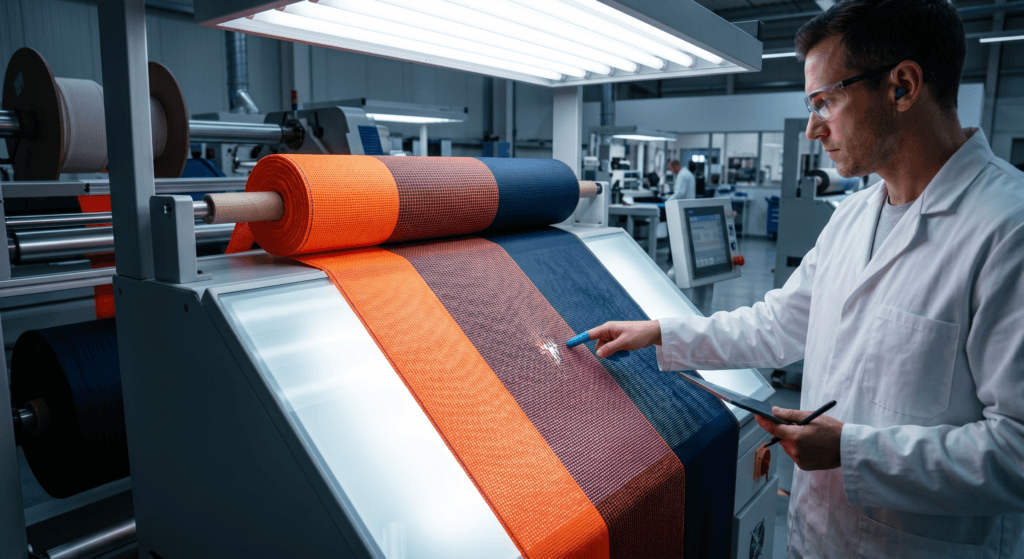 The “Light Box” Inspection: Deconstructing Fabric Defect Diagnostics and the 4-Point Quality System2026年4月28日The structural integrity and visual uniformity of […]
 The Engineering of Waterproof Breathable Workwear: A Forensic Analysis of PU Coatings vs. PTFE Membranes2026年4月24日The selection of waterproof foul-weather gear in industrial […]
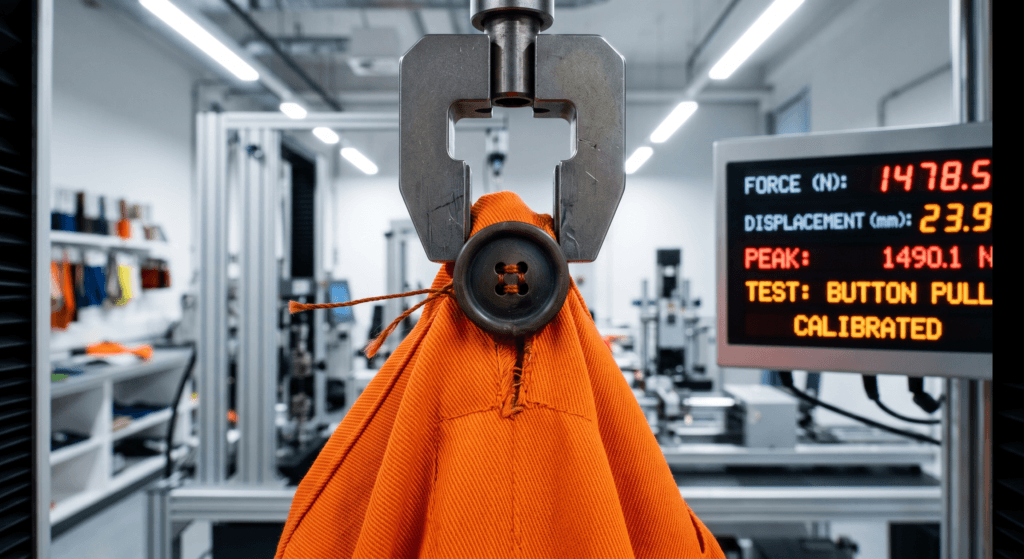 The “Button Pull” Test Protocol: Engineering Fastener Security to Mitigate Industrial Machinery and Choking Hazards2026年4月22日The “Button Pull” Test Protocol: Engineering […]
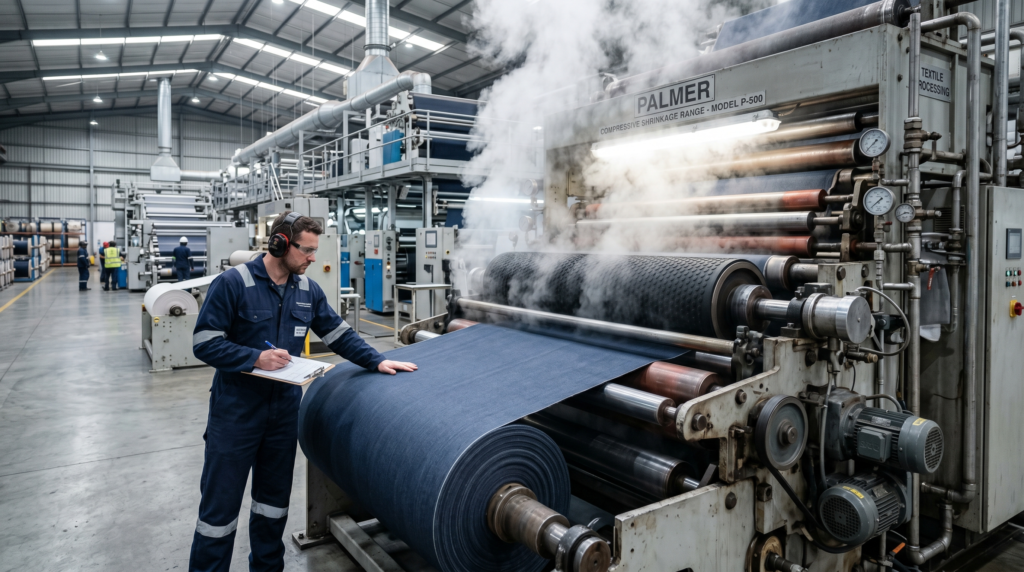 Fabric Shrinkage in Industrial Workwear: The Sanforization Secret and the Physics of Dimensional Stability2026年4月18日Executive Summary In the global industrial workwear and […]