

In large-scale manufacturing, construction, energy, and infrastructure projects, workwear and PPE mismanagement is one of the most overlooked sources of hidden cost, compliance risk, and operational inefficiency. Lost uniforms, untracked PPE, expired equipment, and improper assignment create a chain reaction that impacts safety audits, productivity, budget control, and even brand image.
As global projects scale in complexity, companies are adopting RFID + QR hybrid tracking systems to build a real-time, data-driven workwear management ecosystem. This article provides a complete enterprise-level guide—combining fundamentals, technology options, cost-benefit analysis, deployment strategies, and real-world case studies.
Google Snippet: Quick Answer
RFID and QR-based workwear tracking enables real-time monitoring of uniforms and PPE across large sites, ensuring accountability, reducing losses, simplifying laundry cycles, improving safety compliance, and generating actionable data for decision-making.
RFID tags allow automated scanning, inventory tracking, and gate-control monitoring, while QR codes provide low-cost identification, usage logs, and worker-level checks.
1. Why Big Projects Are Moving Toward RFID + QR Workwear Tracking
1.1 Rising Scale and Complexity
Mega-projects—refineries, airports, megafactories, and high-rise developments—may involve 5,000–50,000 workers, each requiring multiple sets of PPE. Manual management becomes impossible.
1.2 Increasing Compliance Pressure
Global standards such as:
- ISO 45001 (Safety Management)
- EN PPE regulations
- ILO Occupational Safety Guidelines
…require traceability and documentation, not just distribution.
1.3 Hidden Costs of Traditional Wear Management
Common losses per 1,000 workers per year:
| Issue | Impact | |
|---|---|---|
| Lost uniforms | $50k–$200k | |
| Untracked PPE use | 30%+ over-purchasing | |
| Late replacement of safety gear | Risk of injury + failed audits | |
| Manual inventories | 300–500 labor hours monthly |
1.4 Digital Transformation Pressure
Companies implementing Lean, 5S, Six Sigma, or ESG compliance increasingly adopt smart textile management as part of their digital ecosystem.
2. RFID vs QR: Which Technology Handles What?
RFID and QR serve different purposes—they work best together.
2.1 RFID: Automated, Fast, Hands-Free
| Feature | Capability |
|---|---|
| Scan Range | Up to 8–12 meters (UHF) |
| Scan Speed | 300+ items per second |
| User Action Required | None; automatic |
| Best Use Cases | Laundry sorting, warehouse flow, gate monitoring, bulk inventory |
| Durability | Wash-proof, heat-resistant tags |
RFID Strengths:
- Ideal for high-volume workwear
- Automated counting eliminates human error
- Real-time visibility of thousands of garments
- Perfect for multi-site operations and central laundry systems
RFID Limitations:
- Higher cost than QR
- Requires UHF reader infrastructure
- Cannot be visually read
2.2 QR Codes: Low Cost & Worker-Level Flexibility
| Feature | Capability |
|---|---|
| Scan Range | 10–30 cm |
| User Action Required | Manual scan by phone or scanner |
| Best Use Cases | Worker assignment, safety inspection logs, maintenance records |
| Cost | Almost free |
QR Strengths:
- Zero hardware cost (use phones)
- Great for training and DIY check-ins
- Easy to print and replace
- Perfect for small subcontractors
QR Limitations:
- Not suitable for mass scanning
- Damaged easily if unprotected
- Slower and labor-dependent
3. How RFID + QR Hybrid Systems Transform Workwear Management
A unified system typically assigns:
- 1 RFID tag to each garment
- 1 QR code linked to worker or garment profile
- All data connected to a management dashboard
3.1 Full Lifecycle Tracking
Workwear tracking covers:
- Procurement
- Issuance
- Daily use
- Laundry and sanitization
- Repairs
- Replacement
- Retirement and audits
3.2 Accountability and Loss Prevention
- Worker receives PPE recorded under their ID
- PPE passes gate readers automatically
- Lost items are traceable to last scan location
- Reduces lost garments by 80–95%
3.3 Improved Hygiene and Laundry Management
RFID laundry tunnels can process 2,000+ garments per hour.
The system automatically detects:
- Overused clothing
- Missing items from laundry return
- Items due for sanitization
3.4 Safety and Compliance Reinforcement
Managers can immediately see:
- Which worker has which PPE
- Which items are expired
- If flame-resistant or chemical PPE usage is compliant
- Worker PPE readiness at site entry gates
3.5 Predictive Data for Procurement
Historical analytics help forecast:
- Replacement cycles
- Budget needs
- High-loss zones
- Abnormal shrinkage rates
- Seasonal PPE demand
4. Key Technical Components of a Workwear Tracking System
4.1 RFID Tag Types for Workwear
| Tag Type | Application | Features |
|---|---|---|
| UHF Textile Tag | Sewn into uniforms | High durability, wash-rated |
| Heat-Sealed Tag | PVC rainwear, coated fabrics | Strong adhesion |
| Laundry Button Tag | Heavy-duty garments | Impact-resistant |
| Metal-Mount Tag | Helmets, tools | Works on metal surfaces |
Durability Requirements:
- 200+ washing cycles
- 180°C ironing resistance
- Chemical resistance (alkali, chlorine, detergent)
4.2 QR Code Applications
QR labels are used for:
- Worker self-scan PPE assignment
- Inspection logs
- Repair notes
- Entry to PPE manuals or SDS sheets
- Zone-based color coding
- Subcontractor supervision
High-performance QR labels include:
- Thermal transfer labels
- Waterproof vinyl stickers
- Laminated polyester labels
4.3 Hardware Ecosystem
RFID:
- UHF handheld scanners
- Fixed readers at gates
- Laundry tunnel readers
- Shelf/box RFID antennas
- Automation conveyors
QR:
- Smartphones
- Handheld barcode scanners
- Tablets at workwear issue offices
4.4 Software Platform Capabilities
A modern tracking system includes:
- Worker ID + PPE linkage
- Certificate and expiry date tracking
- Laundry and maintenance logs
- Multi-site synchronization
- API integration with ERP (SAP, Oracle)
- Contractor-level dashboards
- Real-time alerts (expiring PPE, losses, gate violations)
5. Implementation Framework: How to Deploy RFID + QR for Big Projects
Step 1: Map Your Workwear Flow
Define touchpoints:
- Storage warehouse
- Receiving room
- Distribution to workers
- Site entry gates
- Daily operations
- Laundry cycle
- Repair workshop
- Disposal
Step 2: Select Tags Based on Garment Type
Examples:
| Workwear Type | Recommended Tag |
|---|---|
| Cotton coveralls | Sew-in textile tag |
| Hi-visibility vests | Heat-sealed tag |
| Chemical-resistant suits | Encapsulated laundry tag |
| Winter jackets | Pocket-insert RFID |
| Safety helmets | Metal-mount tag |
Step 3: Build a Hybrid RFID + QR Identification System
- RFID for bulk flow
- QR for worker-level actions
- Unified digital profiles for each garment
Step 4: Set Up Gate Monitoring
Install UHF fixed readers at:
- Site entrances
- Warehouse doors
- Laundry collection points
- Subcontractor check-in zones
Automatically detect:
- Workers missing required PPE
- Items leaving the premises
- Unauthorized transfers
Step 5: Train Staff and Subcontractors
Provide training on:
- Scanning process
- PPE issuance protocol
- QR-based repair requests
- Compliance rules
Step 6: Start with a 30-Day Pilot
Measure improvements:
- Loss reduction rate
- Inventory accuracy
- Worker compliance
- Laundry cycle efficiency
6. Cost Analysis: RFID vs Traditional Management
6.1 Per-Garment Cost Comparison
| Item | Traditional | RFID System |
|---|---|---|
| Tagging | None | $0.20–$1.00 |
| Labor | High | Very low (automated) |
| Tracking accuracy | 60–80% | 98–100% |
| Loss rate | High | 5–10% |
| Audit cost | High | Automated |
6.2 Annual ROI for 1,000 Workers
| Category | Traditional Cost | RFID-Tracked Cost | Savings |
|---|---|---|---|
| Lost Uniforms | $150,000 | $15,000 | $135,000 |
| Laundry Sorting Labor | $70,000 | $10,000 | $60,000 |
| Manual Inventory | $30,000 | $3,000 | $27,000 |
| Audit Failures | $50,000 | $5,000 | $45,000 |
📌 Total Annual Savings: $267,000
📌 Payback Period: 3–6 months
7. Case Studies Across Industries
Case Study 1: Oil Refinery (20,000 workers)
Problem:
High loss rate of flame-resistant coveralls, poor PPE compliance at entry points.
Solution:
- RFID tags sewn in all FR garments
- QR-based worker assignment
- Gate readers at all zones
Results:
- Lost garment rate dropped 92%
- FR PPE non-compliance reduced 87%
- Annual savings: $1.4 million
Case Study 2: Brazilian Construction Consortium
Problem:
Subcontractors mismanaging issued PPE and uniforms.
Solution:
- QR codes for subcontractor-level auditing
- RFID for main contractor warehouses
- Mobile scanning at field teams
Results:
- 100% traceability by subcontractor
- PPE life extended by 35%
- Zero audit failures in 18 months
Case Study 3: European Food Processing Plant
Problem:
Failed hygiene audits due to untraceable laundry cycles.
Solution:
- RFID laundry tunnels
- Automated sanitation record logging
Results:
- 60% reduction in laundry errors
- Complete HACCP traceability
- Smooth ISO audit with zero remarks
8. Buyer Checklist for Implementing RFID/QR Workwear Tracking
- [ ] RFID tag durability (200+ wash cycles)
- [ ] QR code scratch and chemical resistance
- [ ] UHF readers for gates and warehouses
- [ ] Laundry tunnel compatibility
- [ ] Worker-level QR functionality
- [ ] ERP integration
- [ ] Subcontractor access control
- [ ] Automated expiry alerts
- [ ] Cloud dashboard availability
- [ ] Multilingual support (for international workers)
9. FAQ
Q1: Do RFID tags survive industrial laundry?
Yes. Modern UHF laundry tags withstand 200–300 cycles, high heat, and chemicals.
Q2: Can QR replace RFID?
No. QR is useful for worker-level actions but cannot replace high-speed automated scanning.
Q3: Is the system expensive to implement?
Initial cost is low compared to savings. Payback is typically within 3–6 months.
Q4: Can subcontractors use the same system?
Yes—QR access allows them to join with minimal cost.
Q5: What garments benefit most from RFID?
Coveralls, jackets, pants, safety vests, FR wear, and reusable PPE.
10. Conclusion
RFID and QR workwear tracking is no longer a futuristic concept—it is the new global standard for large-scale projects.
Organizations adopting hybrid tracking achieve:
- Full traceability
- Higher safety compliance
- Major cost savings
- Faster audits
- Smoother subcontractor management
- Digital transformation readiness
For companies aiming to scale safely and efficiently, smart workwear tracking is not optional—it is strategic.
📩 Need RFID/QR-ready workwear with factory-integrated tags?
Email: [email protected]
🌐 Website: www.workwearsolutions.net

 Architecting Resilience: Single Sourcing vs. Dual Sourcing Strategies in Global PPE Procurement2026年4月30日Executive Summary In the complex landscape of industrial […]
 Pattern Grading for Global Bodies: The Engineering of Anthropometric Fit in Industrial Workwear2026年4月29日In the highly regulated landscape of industrial Personal […]
 The “Light Box” Inspection: Deconstructing Fabric Defect Diagnostics and the 4-Point Quality System2026年4月28日The structural integrity and visual uniformity of […]
 The Engineering of Waterproof Breathable Workwear: A Forensic Analysis of PU Coatings vs. PTFE Membranes2026年4月24日The selection of waterproof foul-weather gear in industrial […]
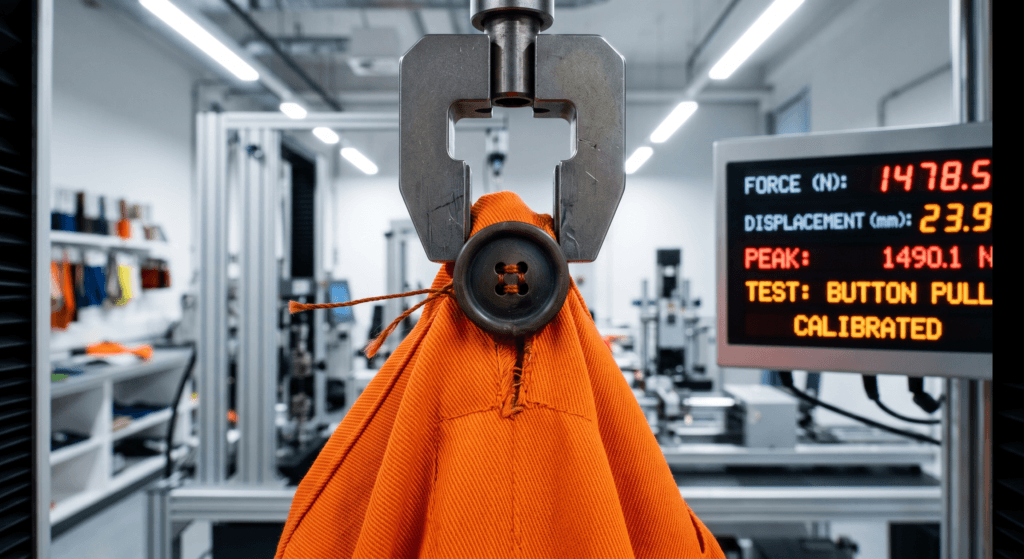 The “Button Pull” Test Protocol: Engineering Fastener Security to Mitigate Industrial Machinery and Choking Hazards2026年4月22日The “Button Pull” Test Protocol: Engineering […]
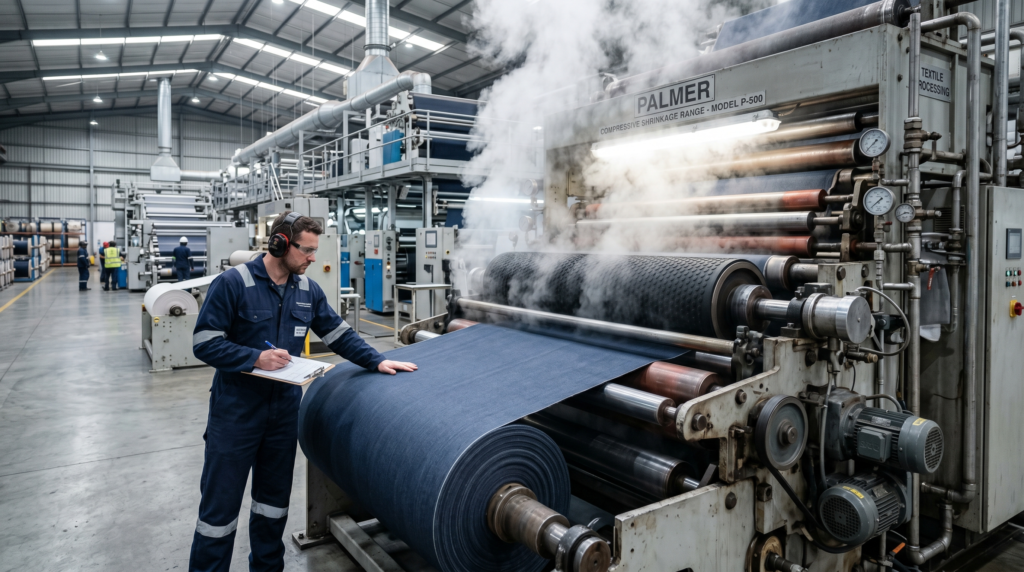 Fabric Shrinkage in Industrial Workwear: The Sanforization Secret and the Physics of Dimensional Stability2026年4月18日Executive Summary In the global industrial workwear and […]