
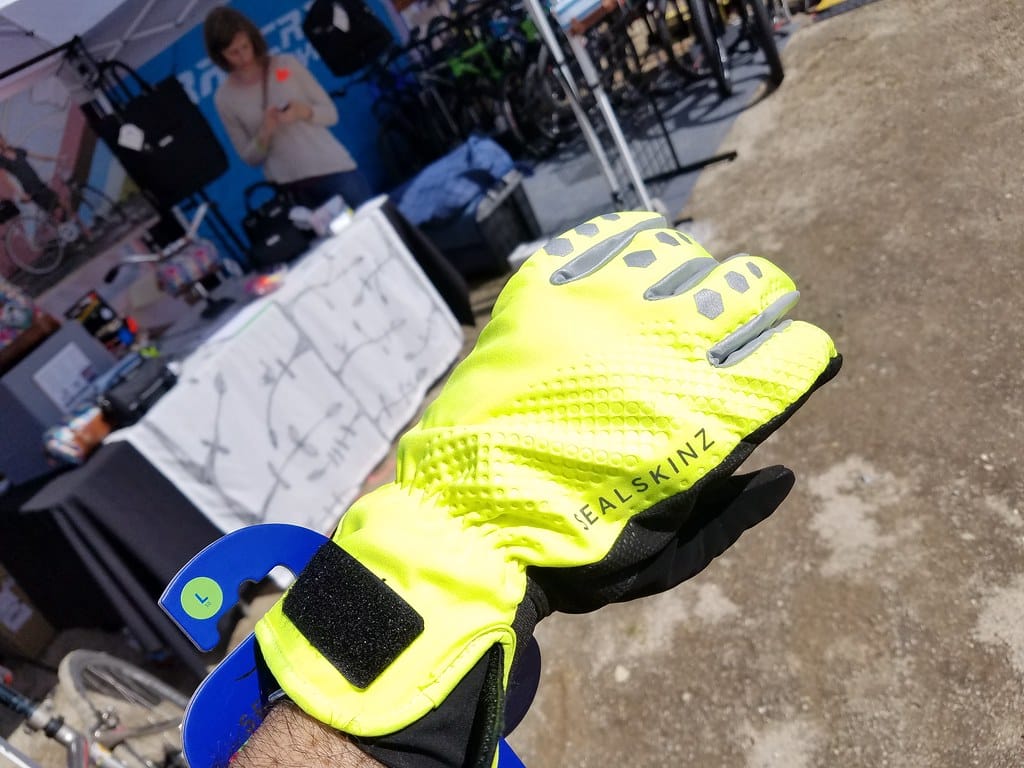
When work doesn’t stop for rain, sleet, or snow, hand protection becomes a life-or-death matter. Wet, cold hands are not just uncomfortable—they reduce dexterity, increase fatigue, and heighten the risk of accidents. Add low-light visibility issues, and you have a recipe for injuries and operational delays. The solution? Hi-vis waterproof gloves designed to combine weather resistance, thermal insulation, and high-visibility performance.
This 5,500+ word guide explains:
- Why wet and cold environments demand specialized gloves
- EN standards that matter (EN 511, EN ISO 20471)
- Key materials and construction methods
- Real-world accident cases
- ROI analysis and buyer FAQs
Hi-vis waterproof gloves combine fluorescent fabrics and reflective accents with waterproof membranes to keep hands dry and visible in low-light or harsh weather. They should meet EN 511 for cold protection, EN ISO 20471 visibility principles, and EN 388 for mechanical safety. Ideal for road maintenance, airport operations, maritime work, and logistics in rain or snow.
Why This Hybrid Design Matters
- Cold stress increases injury risk by 50% in wet environments.
- Missed hand signals in storms lead to costly accidents.
- EN standards require weather-specific PPE for exposed workers.
Real-World Accident Reports
Case #1 – Road Construction, UK
Night crew in heavy rain wore regular hi-vis gloves with no waterproofing. Gloves soaked within 30 minutes, reducing grip. A worker dropped a steel pin, injuring his foot.
Solution: Hi-vis gloves with waterproof membrane and EN 511 compliance.Case #2 – Airport Ramp, Germany
Baggage handlers in sleet wore thermal gloves without waterproofing. Wet liners froze, leading to frostbite in two workers. Medical cost: €15,000.
Fix: Hi-vis gloves with laminated waterproof layer + Thinsulate™ insulation.Case #3 – Marine Operations, Canada
Dock workers signaling a crane during storm used gloves without reflective elements. A missed stop signal caused a near-miss with a 3-ton load.
Lesson: Combine visibility + waterproof performance for full safety.
Standards That Define Waterproof + Hi-Vis Gloves
| Standard | Requirement |
|---|---|
| EN 511 | Cold protection: convective & contact cold + water resistance |
| EN ISO 20471 | High-visibility color and reflective accents |
| EN 388 | Mechanical protection: abrasion, cut, tear, puncture |
Key Performance Metrics:
- EN 511:
- Convective Cold (0–4)
- Contact Cold (0–4)
- Water Penetration (0–1) → Must be 1 for waterproof gloves
- EN ISO 20471:
- Fluorescent base fabric + reflective bands for visibility in low light
Material Technology for Waterproof Hi-Vis Gloves
| Layer | Function |
|---|---|
| Outer Shell (Polyester/Nylon) | Abrasion resistance + hi-vis color |
| Waterproof Membrane (PU/PTFE) | Prevents water ingress |
| Thermal Insulation (Thinsulate™) | Retains heat in sub-zero temps |
| Grip Coating (Nitrile or PVC) | Slip resistance in wet/oily conditions |
✅ Pro Tip: Choose gloves with breathable waterproof membranes to prevent sweat buildup.
Color and Reflective Design for Maximum Visibility
- Fluorescent Lime or Orange: Daytime visibility
- Reflective Tape on Knuckles & Cuffs: Visibility under headlights or floodlights
- Contrast Panels: Improve hand gesture recognition at a distance
Industry-Specific Recommendations
| Industry | Hazard | Glove Features |
|---|---|---|
| Road Maintenance | Rain, traffic, signaling | Hi-vis + reflective + waterproof membrane + grip coating |
| Aviation Ground Crew | Snow, sleet, cold winds | EN 511 thermal + waterproof + touchscreen compatibility |
| Maritime & Ports | Saltwater exposure, crane signaling | Waterproof laminated shell + abrasion resistance |
| Logistics/Warehousing | Wet pallets, slippery surfaces | Waterproof + foam nitrile palm + hi-vis back |
Common Procurement Mistakes
- Selecting thermal gloves without waterproofing → Insulation fails when wet.
- Using PVC-dipped gloves with no reflective elements → Invisible in night rain.
- Buying cheap hi-vis gloves without EN 511 rating → Non-compliant with audits.
- Ignoring breathability → Gloves become clammy, reducing comfort and compliance.
ROI: Waterproof + Hi-Vis vs Standard Gloves
| Scenario | Cost of Failure | Hybrid Glove Cost | Savings |
|---|---|---|---|
| Frostbite medical claim | $18,000 | $22 per pair | $17,978 |
| Traffic collision (signal miss) | $50,000 | $28 per pair | $49,972 |
Advanced Design Features to Consider
- Touchscreen Tips: For digital devices in wet conditions
- Extended Cuffs: Keep water from seeping in
- Bonded Reflective Tape: Resists peeling after washing
- Insulation + Grip Combo: For icy, slippery environments
Buyer FAQs (12 Questions)
Q1: Do hi-vis waterproof gloves need EN 511 certification?
A: Yes, especially for water penetration and cold protection.
Q2: What’s better: PU or PVC coating?
A: PU = flexible, breathable; PVC = superior water resistance but less dexterity.
Q3: Can gloves be fully waterproof and breathable?
A: Yes—with advanced PTFE membranes (e.g., GORE-TEX®).
Q4: Will reflective elements last after washing?
A: Only if laminated or heat-bonded.
Q5: How to choose color for rain vs snow?
A: Orange for snow, lime for urban/night rain conditions.
Q6: Do waterproof gloves compromise grip?
A: Not if nitrile foam or sandy coating is used.
Quick Procurement Checklist
- [ ] EN 511 (convective cold + waterproof test passed)
- [ ] Hi-vis color (lime/orange) + reflective accents
- [ ] Waterproof membrane (PU/PTFE laminated)
- [ ] Grip technology for wet handling
- [ ] Compatibility with touchscreen devices
ROI Analysis for 100 Workers (Annual)
| Option | Annual PPE Cost | Expected Losses |
|---|---|---|
| Standard Thermal Gloves | $2,000 | $95,000 |
| Hi-Vis Waterproof Thermal Gloves | $3,200 | <$10,000 |
ROI: +$82,000 by preventing weather-related incidents.
Advanced Buyer Strategies
- Combine hi-vis gloves with ISO 7000-compliant signaling training for traffic crews.
- Use color-coding for task roles: Orange = road ops, Lime = logistics.
- Specify minimum retroreflective luminance (≥ 330 cd/lx/m²) in RFQs.
Conclusion
Hi-vis waterproof gloves are not an optional upgrade—they are mandatory for safety, compliance, and productivity in wet, low-light environments. When choosing, prioritize EN 511 + hi-vis principles + mechanical durability.
📩 Need dual-certified gloves for rain, snow, and signaling safety?
Email: [email protected]
🌐 www.workwearsolutions.net

 Architecting Resilience: Single Sourcing vs. Dual Sourcing Strategies in Global PPE Procurement2026年4月30日Executive Summary In the complex landscape of industrial […]
 Pattern Grading for Global Bodies: The Engineering of Anthropometric Fit in Industrial Workwear2026年4月29日In the highly regulated landscape of industrial Personal […]
 The “Light Box” Inspection: Deconstructing Fabric Defect Diagnostics and the 4-Point Quality System2026年4月28日The structural integrity and visual uniformity of […]
 The Engineering of Waterproof Breathable Workwear: A Forensic Analysis of PU Coatings vs. PTFE Membranes2026年4月24日The selection of waterproof foul-weather gear in industrial […]
 The “Button Pull” Test Protocol: Engineering Fastener Security to Mitigate Industrial Machinery and Choking Hazards2026年4月22日The “Button Pull” Test Protocol: Engineering […]
 Fabric Shrinkage in Industrial Workwear: The Sanforization Secret and the Physics of Dimensional Stability2026年4月18日Executive Summary In the global industrial workwear and […]