
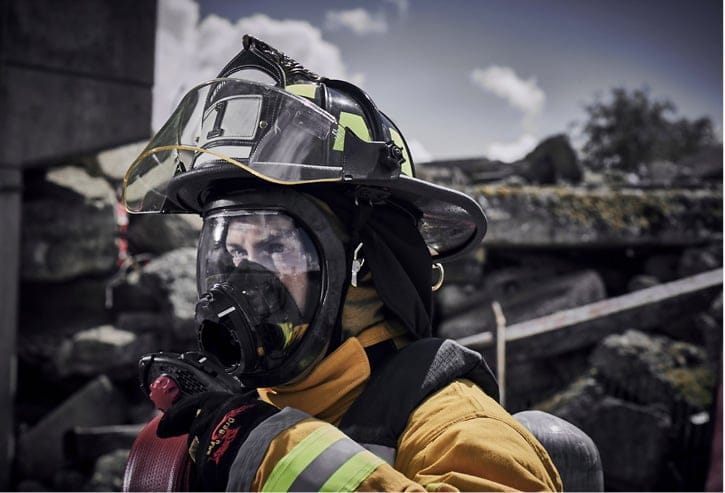
Even well-equipped companies fail OSHA audits—not because they lack PPE, but because of program gaps such as missing documentation, untrained workers, or expired filters. Respiratory protection ranks among OSHA’s Top 10 most cited standards, and violations can cost thousands. Here’s a deeper dive into the most frequent errors, real case studies, and practical ways buyers can prevent compliance disasters.
Common OSHA respirator violations include missing written programs, improper respirator selection, lack of fit testing, no medical evaluations, expired filters, and no training records. Avoid these by sourcing certified PPE, including training kits and compliance templates with every order.
Why Violations Matter
Failing to comply with OSHA’s 29 CFR 1910.134 isn’t just a paperwork issue—it’s a financial and safety hazard:
- Penalties up to $15,625 per violation (2024).
- Stop-work orders causing major project delays.
- Worker injuries leading to lawsuits and higher insurance premiums.
Case Example #1 (Automotive Plant, Ohio):
During an audit, 200 workers were found using non-NIOSH-approved masks in a paint shop. Result: $23,000 OSHA fine, scrapping of 500 masks, and a rush order for certified PPE.Case Example #2 (Shipyard, California):
A welder collapsed from inhaling toxic fumes. Investigation revealed he had never been fit-tested. Company paid $35,000 fine, plus $120,000 in workers’ comp claims.Case Example #3 (Oil Refinery, Texas):
Expired filters caused ammonia vapor breakthrough. OSHA cited the company for poor inventory control. Penalty: $42,000 and mandatory EHS program overhaul.Case Example #4 (Construction Firm, New York):
Workers reused disposable N95 masks without guidance. OSHA’s findings: improper storage and reuse. Fine: $12,750 plus project delay.
Top 10 Most Common Respirator Program Violations
| Violation | Why It Happens |
|---|---|
| 1. No written respiratory protection program | Companies overlook the requirement for documented plans |
| 2. Improper respirator selection | Buyers focus on price instead of hazard-specific PPE |
| 3. No initial or annual fit testing | Lack of fit-test kits or awareness of OSHA requirement |
| 4. Missing employee training | PPE issued without explaining limitations or correct use |
| 5. No medical evaluations | Employers skip exams to speed up onboarding |
| 6. Using expired filters or cartridges | No digital tracking, poor inventory management |
| 7. Poor cleaning/storage of respirators | Workers lack proper decontamination and storage stations |
| 8. No recordkeeping for fit tests & training | Paper logs lost; no digital backup |
| 9. Using non-certified respirators | Low-cost imports bought without compliance verification |
| 10. No filter replacement schedule | No ESLI indicators or scheduled maintenance plan |
Real Cost of Non-Compliance
| Issue | Potential Cost |
|---|---|
| OSHA Fine | $15,625 per violation |
| Medical Claim | $25,000+ per injured worker |
| Lost Production | $10,000–$50,000 per day |
| Contract Penalty | Up to $500,000 for missed deadlines |
| Reputation Damage | Loss of bids due to safety record issues |
Case in Point: A U.S. contractor lost a $1.2M contract renewal after failing two consecutive OSHA respiratory program audits.
How Buyers Can Prevent Violations
1. Insist on Certified Equipment
- Confirm NIOSH TC numbers for U.S. compliance.
- For EU operations, verify CE mark + EN standards (EN 136/140).
2. Include Compliance in Every Purchase
- Add to your purchase order:
- Fit-test kits (qualitative and quantitative)
- Training modules (videos, posters, guides)
- Maintenance accessories (cleaning wipes, storage bags)
- Request digital filter tracking systems from suppliers.
3. Require Documentation from Vendors
- Certificates of Conformity
- Filter compatibility charts
- Sample templates for OSHA-required written programs
4. Plan for Inventory & Shelf Life
- Use barcoding or RFID tracking for filters and cartridges.
- Set auto-reminder systems for filter changes and expiry checks.
Quick Procurement Checklist
- [ ] Only purchase NIOSH- or EN-certified respirators
- [ ] Fit-test kits included in the initial order
- [ ] Training resources bundled with PPE delivery
- [ ] Spare filters and maintenance kits secured
- [ ] Digital compliance tracking tools considered
- [ ] Vendor provides compliance documentation and templates
Buyer FAQ
Q: Is a written program required for voluntary respirator use?
A: Yes, even voluntary programs require documentation under OSHA 1910.134(c)(2).Q: Can expired filters still be used for short tasks?
A: Absolutely not—expired filters degrade and provide no guaranteed protection.Q: Are digital PPE management systems worth it?
A: Yes. They reduce audit risks by tracking filter life, fit tests, and training status.
Additional Buyer Insights
- For multi-hazard sites, standardize combination filters (A2B2E2K2-P3) to simplify inventory.
- Bundle training and fit-test solutions in the first purchase to avoid last-minute scramble.
- Align with ISO 45001 for global recognition and seamless audits.
Conclusion
Most OSHA violations stem from preventable gaps—not missing PPE. Buyers who integrate compliance into procurement by requesting certified equipment, documentation, and training resources cut risk dramatically and save thousands in penalties.
Need NIOSH-certified respirators, fit-test kits, and compliance management tools?
Email: [email protected]
Website: www.workwearsolutions.net

 Architecting Resilience: Single Sourcing vs. Dual Sourcing Strategies in Global PPE Procurement2026年4月30日Executive Summary In the complex landscape of industrial […]
 Pattern Grading for Global Bodies: The Engineering of Anthropometric Fit in Industrial Workwear2026年4月29日In the highly regulated landscape of industrial Personal […]
 The “Light Box” Inspection: Deconstructing Fabric Defect Diagnostics and the 4-Point Quality System2026年4月28日The structural integrity and visual uniformity of […]
 The Engineering of Waterproof Breathable Workwear: A Forensic Analysis of PU Coatings vs. PTFE Membranes2026年4月24日The selection of waterproof foul-weather gear in industrial […]
 The “Button Pull” Test Protocol: Engineering Fastener Security to Mitigate Industrial Machinery and Choking Hazards2026年4月22日The “Button Pull” Test Protocol: Engineering […]
 Fabric Shrinkage in Industrial Workwear: The Sanforization Secret and the Physics of Dimensional Stability2026年4月18日Executive Summary In the global industrial workwear and […]