
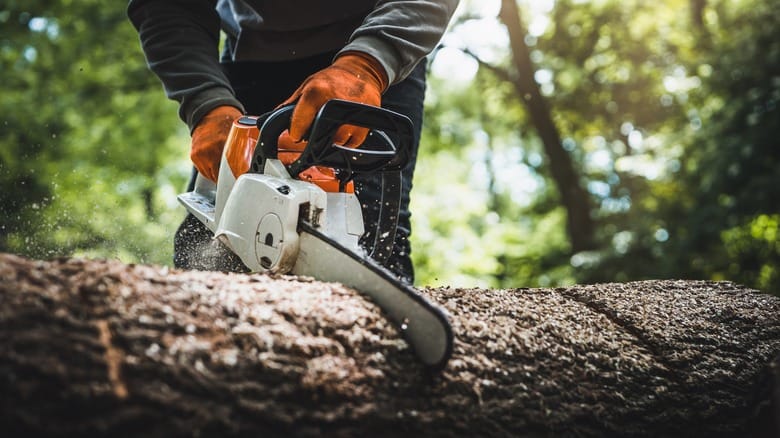
Your feet are at risk every time you start a chainsaw. While legs account for most injuries, foot injuries can be catastrophic, especially when chains meet regular work boots or when heavy logs crush toes. Certified chainsaw boots provide cut resistance, crush protection, slip resistance, and comfort, making them a non-negotiable part of chainsaw PPE.
This article covers:
- Key protective features in chainsaw boots
- Steel toe vs composite toe: which is better and why
- Global safety standards and compliance checks
- Real-world failure cases and procurement tips
Google Snippet: Quick Answer
Chainsaw protective boots feature chainsaw-cut resistant inserts, steel or composite toe caps, slip-resistant soles, and waterproofing. Certified under EN ISO 17249 and ASTM F2413, these boots protect against chain penetration, crushing injuries, and environmental hazards. Buyers must verify certifications and consider comfort for long shifts.
Why Chainsaw Boots Are Essential
Chainsaw operators often underestimate foot injuries—until an accident happens:
- Chainsaws can cut through regular boots in under 0.1 seconds.
- Slippery terrain leads to missteps and saw contact.
- Heavy logs and equipment can crush unprotected toes.
Case Example #1 (USA):
A tree service worker in Oregon wore hiking boots while cutting limbs. A slip caused the saw to nick his ankle—result: deep cut, tendon damage, and $18,000 in medical bills plus 6 weeks of lost work.Case Example #2 (Canada):
A logging company replaced basic steel-toe boots with EN ISO 17249 Class 2 boots across its team. In one year, foot injuries dropped to zero, and workers reported 30% better stability in muddy conditions.Case Example #3 (Norway):
A forestry operator credits insulated chainsaw boots for saving him from frostbite during a winter job in -15°C conditions while keeping him fully protected from chain hazards.
Key Protective Features in Chainsaw Boots
1. Cut-Resistant Inserts
- Positioned around shin, instep, and ankle zones where saw strikes are most likely.
- Made from Kevlar® or advanced synthetic fibers, engineered to jam a rotating chain.
How it works:
Similar to protective pants, the fibers pull into the sprocket during contact, slowing and stopping the chain.
2. Toe Caps: Steel vs Composite
| Feature | Steel Toe | Composite Toe |
|---|---|---|
| Impact Strength | Excellent for crush protection | Meets impact standards; slightly less durable |
| Weight | Heavier | 30% lighter for long shifts |
| Temperature | Conducts heat and cold (less ideal in extremes) | Insulated and metal-free (great for winter) |
| Metal-Free | No | Yes—ideal for airport or utility sites |
Recommendation:
- Steel toe for logging in rugged terrain where durability is critical.
- Composite toe for arborists or hot climates, where comfort and reduced fatigue matter.
3. Slip-Resistant Soles
- Deep lug patterns for grip on wet logs, mud, and snow.
- Oil- and chemical-resistant soles for industrial sites.
- Shock-absorbing midsoles reduce foot fatigue during long shifts.
4. Waterproofing and Insulation
- GORE-TEX® or PU membranes to keep feet dry.
- Insulation options for winter forestry.
- Moisture-wicking linings to prevent odor and fungal infections.
Field Insight:
A survey of forestry workers showed 70% prefer boots with breathable waterproof liners, as wet feet increase fatigue and risk of trench foot in cold conditions.
Standards and Compliance for Chainsaw Boots
- EN ISO 17249: Chainsaw-resistant footwear
- Class 1: 20 m/s
- Class 2: 24 m/s
- Class 3: 28 m/s
- ASTM F2413: Toe impact and compression resistance
- EN ISO 20345: General safety footwear requirements (slip resistance, sole strength)
Compliance Tip:
Always check for a permanent marking with EN ISO class, CE mark, and batch number. Fake PPE often omits these details.
Common Buyer Mistakes
- Choosing regular steel-toe boots—they offer no chain cut resistance.
- Ignoring slip resistance in muddy or icy work areas.
- Skipping waterproof boots for outdoor logging in wet regions.
- Buying the wrong protection class for saw speed (e.g., Class 0 boots for 24 m/s saw).
Red Flag:
If the boots only say “chainsaw safe” without EN ISO 17249 class marking, they’re likely non-compliant.
Quick Procurement Checklist for Chainsaw Boots
- [ ] Certified to EN ISO 17249 (correct class for your chainsaw speed)
- [ ] ASTM F2413-approved toe protection
- [ ] Cut-resistant inserts in shin and ankle zones
- [ ] Slip-resistant, oil-resistant outsole
- [ ] Waterproof and breathable membrane
- [ ] Optional insulation for winter conditions
- [ ] Batch code and certification documents for audits
Buyer FAQ
Q: Do steel-toe boots provide chainsaw protection?
A: No. Steel toes protect against impact, not chain penetration.Q: What’s the best boot for cold climates?
A: EN ISO 17249 Class 2 or 3 boots with insulation and waterproof lining.Q: How often should I replace chainsaw boots?
A: Every 12–24 months under heavy forestry work or immediately after severe impact.
Conclusion
Chainsaw boots are critical PPE, not an accessory. They prevent severe injuries, improve stability, and ensure compliance. As a buyer, always look for EN ISO 17249 certification, proper insulation for your climate, and comfort features that reduce fatigue during long shifts.
Looking for dual-certified chainsaw boots with EN ISO 17249 + ASTM F2413 compliance?
Email: [email protected]
Website: www.workwearsolutions.net

 Architecting Resilience: Single Sourcing vs. Dual Sourcing Strategies in Global PPE Procurement2026年4月30日Executive Summary In the complex landscape of industrial […]
 Pattern Grading for Global Bodies: The Engineering of Anthropometric Fit in Industrial Workwear2026年4月29日In the highly regulated landscape of industrial Personal […]
 The “Light Box” Inspection: Deconstructing Fabric Defect Diagnostics and the 4-Point Quality System2026年4月28日The structural integrity and visual uniformity of […]
 The Engineering of Waterproof Breathable Workwear: A Forensic Analysis of PU Coatings vs. PTFE Membranes2026年4月24日The selection of waterproof foul-weather gear in industrial […]
 The “Button Pull” Test Protocol: Engineering Fastener Security to Mitigate Industrial Machinery and Choking Hazards2026年4月22日The “Button Pull” Test Protocol: Engineering […]
 Fabric Shrinkage in Industrial Workwear: The Sanforization Secret and the Physics of Dimensional Stability2026年4月18日Executive Summary In the global industrial workwear and […]