
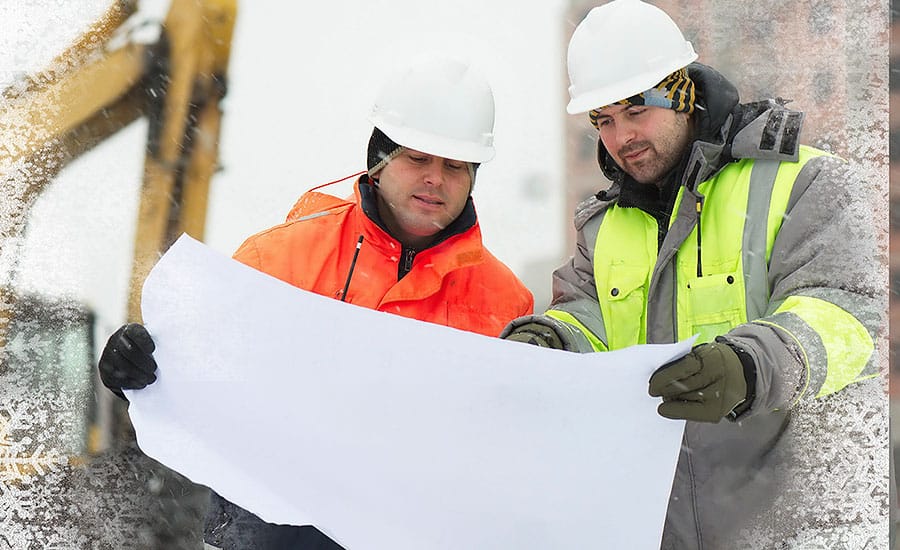
When wind-chill dips below –5 °C, every minute on site drags, tools slip from numb fingers, and the risk of cold-related incidents soars.
Proper insulated workwear isn’t just about comfort—it’s a strategic investment in productivity, injury prevention, and regulatory compliance.
Cold-weather workwear with the right combination of insulation, breathability, and protective features can:
- Maintain core body temperature, reducing shivering and fatigue
- Preserve fine motor skills and grip strength in sub-zero tasks
- Lower accident rates by keeping reflexes sharp
- Satisfy OSHA, ISO 15743, and EN 342 requirements for cold-stress protection
1. Productivity — Keeping Teams Efficient in the Cold
| Cold Effect | Measured Impact | Garment Solution |
|---|---|---|
| Grip Strength ↓30 % | Wrench-tightening tasks take 40 % longer | Insulated gloves with textured palms |
| Cognitive Focus ↓14 % | Picking errors + rework spikes | Layered system that stabilizes core temp |
| Fine Dexterity ↓25 % | Electronic assembly delays | Touchscreen-compatible inner liners |
| Overall Output ↓10 %/°C | Warehouse throughput suffers | Breathable, ventilated parkas |
Case in Point: A Nordic telecom installer replaced basic parkas with 200 g Thinsulate™ jackets featuring pit-zips and moisture-wicking liners. Result: 15 % faster clutch and cable installations during winter months and a 20 % drop in tool-drop incidents.
2. Safety — Mitigating Cold-Stress Hazards
| Symptom | On-Site Outcome | Protective Feature |
|---|---|---|
| Vasoconstriction | Slow reflexes → crush or pinch injuries | Insulated, flexible gloves rated to –25 °C |
| Shivering | Trip/fall risk on ice | Layered mid-layers + wind-block shell |
| Numbness | Loss of tactile feedback on controls | Battery-heated liners + wool blend socks |
| Hypothermia Risk | Medical evacuations, work stoppage | Parkas ≥ 15 000 mm HH with sealed seams |
Regulatory Thresholds & Definitions
- ISO 15743 “Cold Stress”: Defines high risk at –7 °C with wind > 4 m/s → mandates PPE + work-rest schedules.
- ACGIH: Recommends 1.5 CLO minimum for continuous outdoor work at –10 °C.
- EN 342: Garment ratings list CLO, air permeability, and resistance to water penetration (Rct and Hp values).
Alert: A Midwestern power utility faced a workers’ comp claim of $48 000 when a lineman sustained frostbite—investigation found issued jackets had only 5 000 mm HH and no seam taping.
| Standard | Key Requirement | Buyer Action |
|---|---|---|
| OSHA 1910.132 | Provide PPE for recognized hazards (cold qualifies) | Document cold risk assessment + PPE issuance |
| EN 342 | Declare CLO, Rct, and Air Permeability | Match spec sheet values to site conditions |
| NFPA 2112 / ASTM F2732 | FR insulation must maintain arc rating at –20 °C | Specify –20 °C tested FR parkas |
| CSA Z96-22 | High-visibility in low-light winter | ANSI 107 Class 3 insulated jackets |
📝 Audit-Ready Tip: Keep a cold-stress log showing daily temps, wind-chill, and PPE issued. Automated thermometers at entry gates can timestamp compliance.
4. Six Critical Workwear Specifications
-
Insulation Value (CLO/GSM):
- Light duty: 100–150 g synthetic (1.0–1.2 CLO)
- Moderate: 200–300 g (1.5–1.8 CLO)
- Extreme: 400 g+ or down/synthetic hybrid (> 2 CLO)
-
Moisture Management:
- Baselayer: Merino wool or synthetic (e.g., Polartec® Power Dry)
- Mid-layer: Fleece or PrimaLoft® (retains warmth when damp)
-
Wind & Water Barrier:
- HH ≥ 15 000 mm for heavy wet snow
- Fully taped seams, waterproof zippers
-
Ventilation & Mobility:
- Pit-zips, back vents for heat dump
- Gusseted joints, articulated elbows/knees
-
Specialty Features:
- Touchscreen-safe fingertips on inner gloves
- Detachable hoods, helmet compatibility
- Integrated knee pads or pockets for thermals
-
Additional Compliance:
- FR rating to 13 cal/cm² down to –20 °C
- Hi-vis striping with reflective tape per ANSI 107
5. Deep-Dive Buyer FAQs
Q1: “Can I use the same jacket for –5 °C and –35 °C conditions?”
A: No. Implement a modular liner system:
- 150 g for mild cold
- 300 g zip-in for deep-freeze
- Outer shell remains constant
Q2: “Which insulation works best in wet winter sites?”
A: Synthetic (PrimaLoft® or Thinsulate™). Retains loft when damp, dries faster, non-flammable vs. down.Q3: “Do heated garments eliminate layering?”
A: They supplement passive insulation. Battery performance drops in extreme cold—always combine with mid-layers.Q4: “How to justify cost to finance?”
A: Present ROI model:
- Reduce frostbite/claims
- Improve output by 8–12 %
- Extend project timelines into colder months
6. Enhanced Procurement Checklist
- [ ] Temperature profile (daily min/max + wind-chill)
- [ ] Work intensity (METs chart for each task)
- [ ] Compliance matrix (OSHA, EN 342, NFPA 2112)
- [ ] Insulation spec per zone (CLO / GSM)
- [ ] Field trials (3-week wear-test with worker feedback)
- [ ] Maintenance plan (wash at ≤ 60 °C; DWR reapplication)
- [ ] Heated gear battery policy (IEC 62133 certification + spare packs)
- [ ] Disposal & recycling (polyester recycling stream options)
7. Real-Life Scenario Playbook
- Scenario A: Arctic pipeline survey—team issued 400 g insulated suits + heated gloves; no frostbite incidents in 6 months.
- Scenario B: Outdoor winter road repair—introduced Class 3 hi-vis FR shells; slowed wind-burn and prevented two near-misses due to improved visibility.
- Scenario C: Construction crew in mixed snow/rain—switched to PU-coated shells with 200 g inner liners; reported 30 % less downtime from wet gear.
Conclusion
Effective cold-weather PPE is not one-size-fits-all. It’s a blend of thermal science, regulatory know-how, and real-world trials.
By specifying zone-based insulation, layering smartly, and validating with user feedback, you’ll maximize productivity, slash incident rates, and keep auditors happy.
Need a tailored cold-stress PPE proposal or ROI calculator?
Email: [email protected]
Website: www.workwearsolutions.net

 Architecting Resilience: Single Sourcing vs. Dual Sourcing Strategies in Global PPE Procurement2026年4月30日Executive Summary In the complex landscape of industrial […]
 Pattern Grading for Global Bodies: The Engineering of Anthropometric Fit in Industrial Workwear2026年4月29日In the highly regulated landscape of industrial Personal […]
 The “Light Box” Inspection: Deconstructing Fabric Defect Diagnostics and the 4-Point Quality System2026年4月28日The structural integrity and visual uniformity of […]
 The Engineering of Waterproof Breathable Workwear: A Forensic Analysis of PU Coatings vs. PTFE Membranes2026年4月24日The selection of waterproof foul-weather gear in industrial […]
 The “Button Pull” Test Protocol: Engineering Fastener Security to Mitigate Industrial Machinery and Choking Hazards2026年4月22日The “Button Pull” Test Protocol: Engineering […]
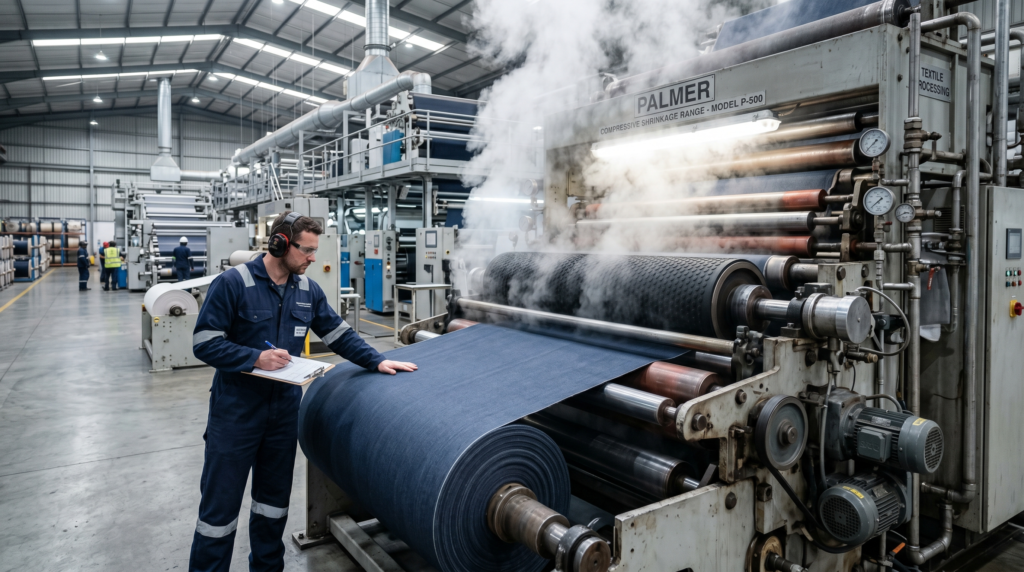 Fabric Shrinkage in Industrial Workwear: The Sanforization Secret and the Physics of Dimensional Stability2026年4月18日Executive Summary In the global industrial workwear and […]