
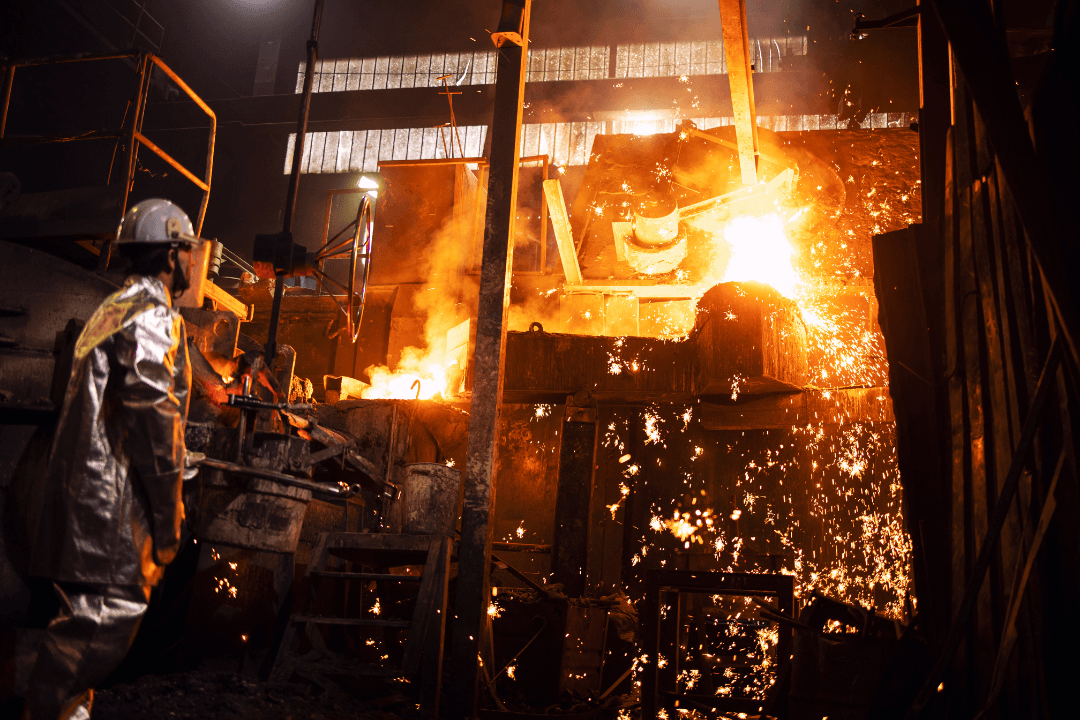
Not all aluminized fabrics are created equal.
While they may look similar on the outside—shiny, silver, heat-reflective—the inner fabric layer makes all the difference.
That core material determines the garment’s real-world performance: heat resistance, flexibility, weight, and comfort.
Let’s break down the most common aluminized fabric bases—fiberglass, aramid, carbon, and blends—and when to use each.
Why the Fabric Behind the Foil Matters
Aluminum does the job of reflecting radiant heat, but it’s the base fabric that:
- Resists conductive and convective heat
- Determines durability under heavy use
- Influences flexibility, weight, and breathability
- Affects comfort and layering
✅ Think of the aluminum as your heat “mirror”—but the fabric underneath is your heat “shield.”
1. Aluminized Fiberglass Fabric
What It Is:
A tightly woven fiberglass cloth laminated with aluminum foil or film.
Key Features:
- High resistance to radiant and convective heat
- Excellent molten metal splash protection
- Relatively stiff and heavier than others
- Good for extreme temp applications (>1000°C)
Best For:
✔ Foundries
✔ Smelting operations
✔ Proximity to furnaces
Watch Out:
❌ Less breathable
❌ Can crack or delaminate over time if folded often
2. Aluminized Aramid (Nomex® / Kevlar®)
What It Is:
A base fabric made from aramid fibers (e.g., Nomex®, Kevlar®), with aluminum coating.
Key Features:
- Naturally flame-resistant
- More flexible and comfortable than fiberglass
- Withstands flash fires and radiant heat
- Good abrasion resistance
- Lighter weight = better for extended wear
Best For:
✔ Firefighting gear
✔ Welding jackets
✔ Multi-layer aluminized suits
✔ Maintenance crews needing mobility
Watch Out:
❌ Less tolerant of molten splash than fiberglass
❌ Not ideal for direct metal pour zones
3. Aluminized Carbon/Kevlar® Blends
What It Is:
Hybrid fabrics using carbon fiber + Kevlar® or similar combinations, then aluminized.
Key Features:
- Superior mechanical strength and heat tolerance
- Better flexibility than pure fiberglass
- May include moisture barriers or quilted insulation
- Excellent for multi-hazard zones
Best For:
✔ High-heat + cut risk environments
✔ Glass blowing
✔ Complex furnace work
✔ Petrochemical settings
Watch Out:
❌ Higher cost
❌ May be bulkier with insulation layers
4. Aluminized Modacrylic or FR Cotton Blends
What It Is:
Lower-cost aluminized fabrics using modacrylic or flame-retardant cotton as the base.
Key Features:
- Good basic thermal protection
- Lower cost per unit
- Flexible, comfortable, easy to cut and sew
- Lighter duty use
Best For:
✔ Light-duty hot work
✔ Visitors in hot zones
✔ Short-term exposure
Watch Out:
❌ Not suitable for high-splash or prolonged exposure
❌ Weaker mechanical durability
Side-by-Side Fabric Comparison
| Fabric Type | Temp Resistance | Flexibility | Weight | Splash Protection | Cost Level |
|---|---|---|---|---|---|
| Fiberglass | 🔥🔥🔥 | 😐 | Heavy | ✅✅✅ | $$ |
| Aramid (Nomex/Kevlar) | 🔥🔥 | ✅✅✅ | Light | ✅✅ | $$$ |
| Carbon/Kevlar Blends | 🔥🔥🔥 | ✅✅ | Med | ✅✅✅ | $$$$ |
| FR Cotton/Modacrylic | 🔥 | ✅✅✅ | Light | ✅ | $ |
⚠️ Choose based on hazard type, not just the appearance.
What to Ask Before Choosing Aluminized Fabric
- What’s the maximum radiant and conductive temperature?
- Is splash protection (ASTM F955) required?
- How long will workers be exposed to heat or flames?
- Is mobility or comfort more important than raw protection?
- Are you layering it with other FR or thermal gear?
- Will garments be reused or single-shift?
✅ Your supplier should help match fabric spec to real risk—not just to certification labels.
Conclusion
When it comes to aluminized PPE, it’s not just about shiny on the outside.
It’s about what’s woven underneath—because that’s what protects under pressure.
As a buyer:
- Choose fiberglass for max heat
- Choose aramid for mobility and wearability
- Choose blends for balanced protection
- Choose modacrylic for budget-conscious, short-term use
Need help selecting the right aluminized fabric for your industry or specific job role? I’ll help you weigh the trade-offs and make a choice that keeps your team protected and productive.
📩 Contact: [email protected]
🌐 Visit: www.workwearsolutions.net

 Architecting Resilience: Single Sourcing vs. Dual Sourcing Strategies in Global PPE Procurement2026年4月30日Executive Summary In the complex landscape of industrial […]
 Pattern Grading for Global Bodies: The Engineering of Anthropometric Fit in Industrial Workwear2026年4月29日In the highly regulated landscape of industrial Personal […]
 The “Light Box” Inspection: Deconstructing Fabric Defect Diagnostics and the 4-Point Quality System2026年4月28日The structural integrity and visual uniformity of […]
 The Engineering of Waterproof Breathable Workwear: A Forensic Analysis of PU Coatings vs. PTFE Membranes2026年4月24日The selection of waterproof foul-weather gear in industrial […]
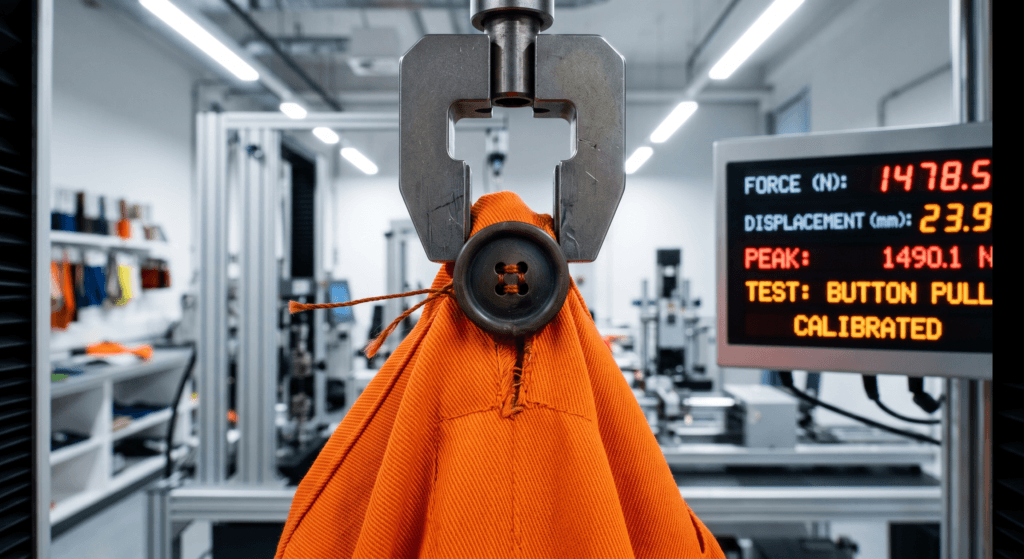 The “Button Pull” Test Protocol: Engineering Fastener Security to Mitigate Industrial Machinery and Choking Hazards2026年4月22日The “Button Pull” Test Protocol: Engineering […]
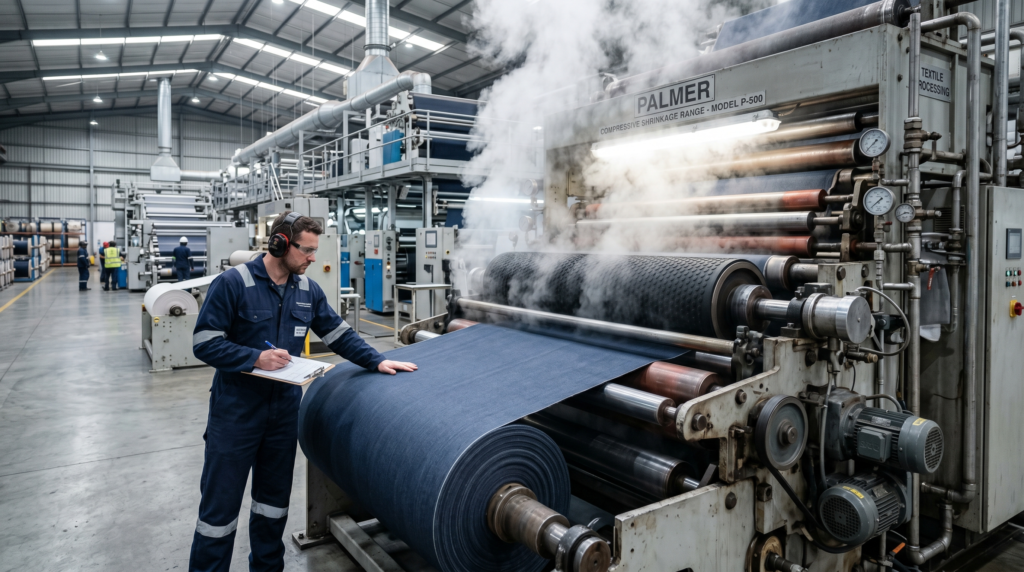 Fabric Shrinkage in Industrial Workwear: The Sanforization Secret and the Physics of Dimensional Stability2026年4月18日Executive Summary In the global industrial workwear and […]