
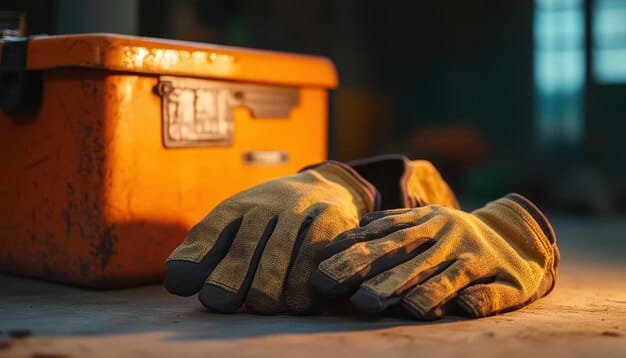
You’ve got the jacket. You’ve got the pants.
But what about your hands? Neck? Ankles? Ears?
In metalworking, protection gaps are danger zones. A spark in the glove cuff. Molten splash behind the helmet. A burn on the wrist.
These aren’t accidents—they’re accessory failures.
To truly protect workers in hot work environments, you need more than core garments.
You need a complete PPE system—from head to toe, fingertips to neckline.
Why Accessories Matter in High-Heat Metal Work
In metal processing, these areas are often first to get hit:
- Hands and fingers (handling tools, workpieces, welding torches)
- Face and neck (rising heat, sparks, radiant exposure)
- Boot tops and ankles (downward splash or slag)
- Wrists and cuffs (gap between glove and sleeve)
- Ears (arc flash noise, radiant exposure)
⚠️ Most severe burns happen at interface zones—where one PPE item ends and another should begin.
✅ Accessories close the gaps, add layers, and improve compliance.
Essential Accessories for Metal Processing Workers
| Item | Key Protection Area | Application Scenarios |
|---|---|---|
| Heat-resistant gloves | Hands/fingers | Welding, grinding, handling hot materials |
| Welding hood / shroud | Face, neck, ears | Arc welding, pouring, overhead heat zones |
| FR balaclava | Full head/neck skin coverage | Foundries, plasma cutting, arc flash zones |
| Wrist gaiters / cuffs | Between gloves and sleeves | Shield from rising sparks or downward debris |
| Spats / boot covers | Top of boot, ankle | Molten splash, grinding sparks, slag |
| Apron add-ons | Lower chest to thighs | Extra coverage for grinders, pourers |
✅ Every one of these can prevent hospitalization-level injuries for under $20–$60 per unit.
What to Look for in Gloves (Your First Line of Defense)
Welding / Metalwork gloves should be:
- EN 12477 / EN 388 / ANSI 105 certified
- Made of split leather, Kevlar®-reinforced fabric, or aluminized composites
- Lined with cotton or FR fleece for sweat and heat insulation
- Long enough to cover 2–3 inches beyond wrist
- Stitched with aramid thread (not nylon!)
✅ Match glove style to task:
| Task | Glove Type |
|---|---|
| TIG welding | Thin, dexterous goatskin |
| MIG / Arc welding | Thick cowhide with gauntlet cuff |
| Foundry handling | Aluminized back + leather palm |
| Grinding | Padded palm + cut-resistant |
Protecting the Head, Face, and Neck
Many burns and flash injuries come from radiant heat and rising sparks.
Add-on accessories:
- Welding hood with extended shoulder cape
- FR balaclava (Nomex®, PBI®, or modacrylic blends)
- Helmet-mounted spark shields
- Welding caps / do-rags to reduce helmet chafing and sweat drip
✅ Choose materials that won’t melt or drip, and make sure gear fits under helmets and hoods without bunching.
Spats, Gaiters, and Boot Covers
Workers don’t always see danger coming—from below.
| Gear Type | Why It Matters |
|---|---|
| Leather spats | Deflect sparks and slag from shoes |
| Aluminized gaiters | Resist radiant and splash heat |
| FR boot covers | Prevent molten splash entry into boots |
Features to prioritize:
- Quick-release Velcro or strap systems
- Anti-slip soles or foot stirrups
- Mid-calf height for full boot top coverage
⚠️ Most ankle burns happen between the pants hem and the boot top. That gap must be sealed.
Other Helpful PPE Add-ons
| Item | Benefit |
|---|---|
| Kneepads | For welders working ground-level |
| Cooling neck wraps | Evaporative cooling for hot zones (FR-safe only) |
| Tool belts (non-metal) | Reduce spark risks vs metal clips |
| Arc-rated ear plugs | Prevent flash-burn and reduce noise trauma |
✅ Bonus: Accessories are low-cost, high-impact—perfect for team-wide upgrades without blowing budgets.
What to Ask Your Supplier
- Are gloves EN/ANSI certified, and for what risk level?
- Are neck/face hoods compatible with helmet brands in use?
- Do you offer full-body kits including accessories?
- Can gaiters/spats be reused or washable?
- Are all components non-melting and flame resistant?
At workwearsolutions, we don’t stop at clothing—we help you build full, modular PPE systems, down to the last cuff.
Conclusion
You wouldn’t build a wall and leave out the bricks at the corners.
So don’t build a PPE program and leave hands, necks, or ankles exposed.
- Start with the right core garments
- Finish the system with task-matched accessories
- Focus on fit, function, and certification
- Remember: PPE failure often happens at the seams—literally.
Need help building a complete Metaltech PPE kit—head to toe, role by role? I’ll help you fill in the gaps, reduce incident risks, and ensure your team walks onto the job fully protected.
📩 Contact: [email protected]
🌐 Visit: www.workwearsolutions.net

 Architecting Resilience: Single Sourcing vs. Dual Sourcing Strategies in Global PPE Procurement2026年4月30日Executive Summary In the complex landscape of industrial […]
 Pattern Grading for Global Bodies: The Engineering of Anthropometric Fit in Industrial Workwear2026年4月29日In the highly regulated landscape of industrial Personal […]
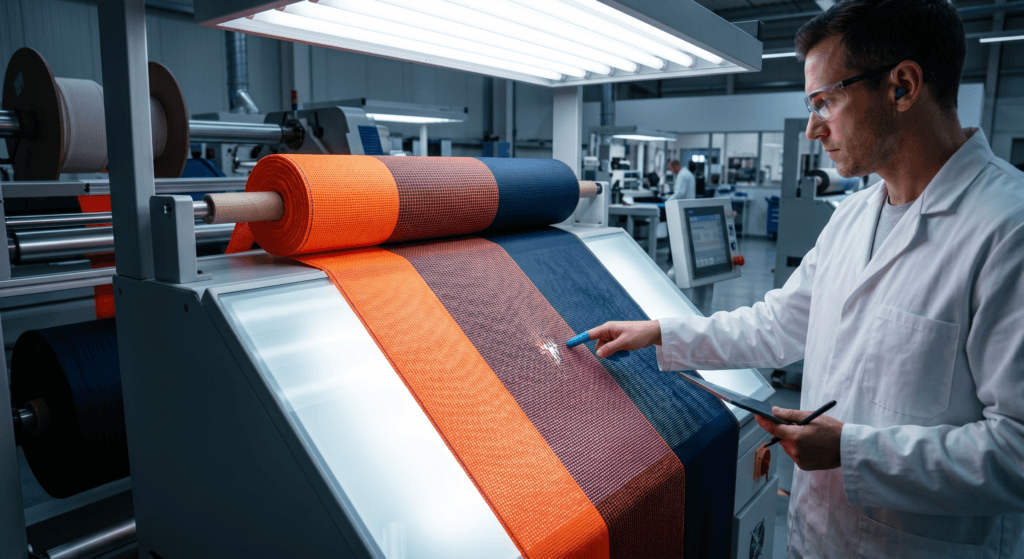 The “Light Box” Inspection: Deconstructing Fabric Defect Diagnostics and the 4-Point Quality System2026年4月28日The structural integrity and visual uniformity of […]
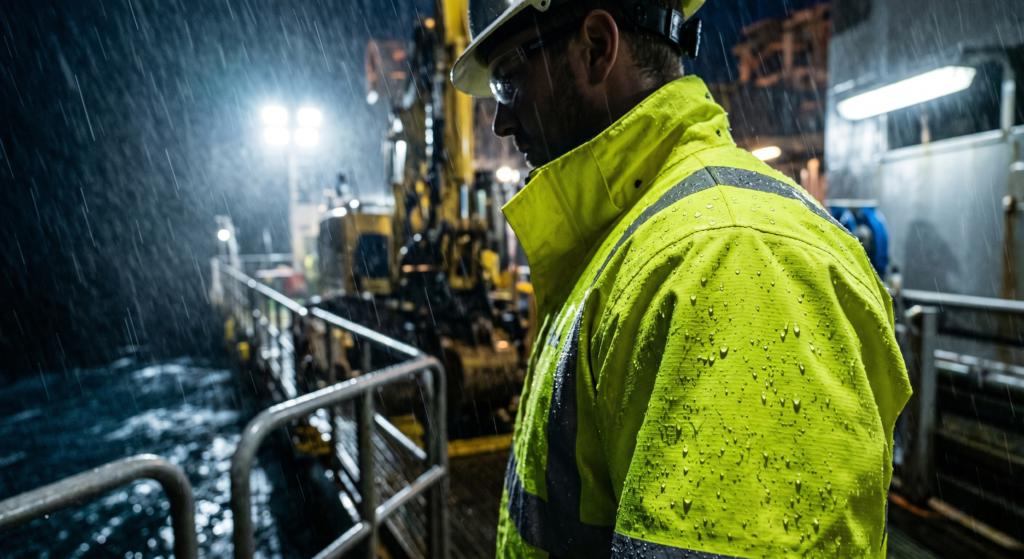 The Engineering of Waterproof Breathable Workwear: A Forensic Analysis of PU Coatings vs. PTFE Membranes2026年4月24日The selection of waterproof foul-weather gear in industrial […]
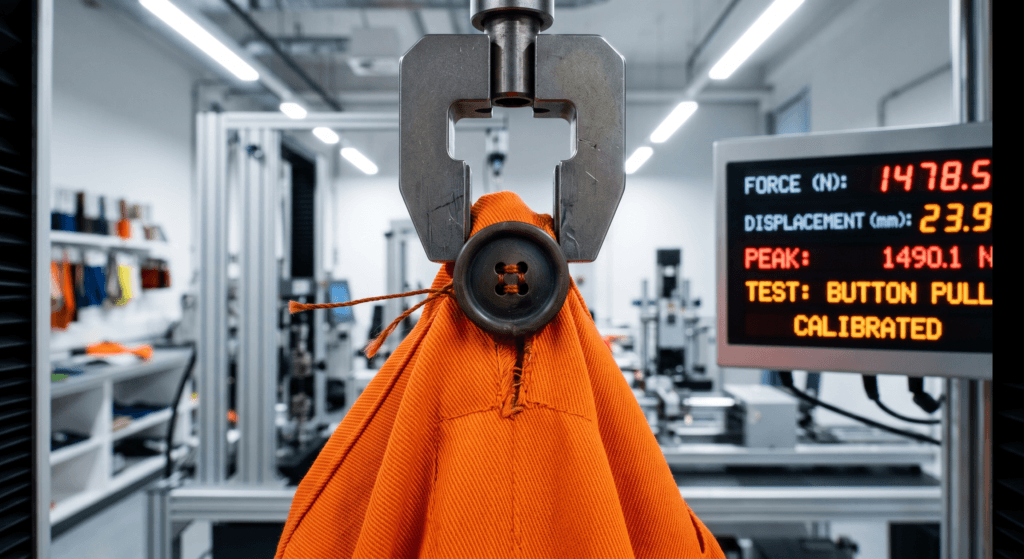 The “Button Pull” Test Protocol: Engineering Fastener Security to Mitigate Industrial Machinery and Choking Hazards2026年4月22日The “Button Pull” Test Protocol: Engineering […]
 Fabric Shrinkage in Industrial Workwear: The Sanforization Secret and the Physics of Dimensional Stability2026年4月18日Executive Summary In the global industrial workwear and […]