

Choosing the right insulation isn’t guesswork—it’s about matching numeric performance to real-world conditions.
CLO, GSM, R-Value: these terms show how well a garment traps heat, but only if you know how to read them.
This guide decodes insulation metrics so you can select workwear that keeps crews warm—and productive—without overbuying.
**Insulation ratings quantify thermal protection:
- CLO measures body-warmth retention in clothing ensembles;
- GSM (grams per square meter) indicates fabric loft and weight;
- R-Value translates to thermal resistance.
Understanding all three lets you specify gear for –5 °C mild cold up to –40 °C extreme freeze.**
Building a cold-weather system starts with numbers. Let’s break down each rating, compare materials, and see how they translate into on-site warmth.
What Is CLO and How Do You Use It?
CLO is the standard unit for clothing insulation—1 CLO keeps a resting person comfortable at 21 °C, normal humidity, and minimal air movement.
How CLO Works
- 1 CLO = 0.155 m²·K/W of thermal resistance
- A winter parka often rates 2.0–2.5 CLO (good for –10 °C light activity)
- Ensemble CLO = sum of base, mid, outer layers, plus accessories
Example:
Baselayer (0.3 CLO) + fleece mid (1.0 CLO) + shell (0.8 CLO) + insulated gloves (0.4 CLO) = 2.5 CLO total
GSM: Fabric Weight vs. Warmth
GSM stands for grams per square meter—a simple way to compare fabric mass and loft:
| GSM Range | Typical Use | Pros & Cons |
|---|---|---|
| 100–150 | Light liners & base layers | Lightweight & breathable; less warmth |
| 200–300 | Mid-layers, mid-weight jackets | Good warmth-to-weight ratio |
| 300–500+ | Heavy parkas & overalls | Excellent insulation; bulkier |
- 200 g PrimaLoft® ≈ 1.0 CLO
- 400 g Thinsulate™ ≈ 1.8 CLO
Buyer Tip: Ask for lab-tested GSM-to-CLO conversion for each material blend—manufacturers often publish conversion charts.
R-Value: Bringing Building Science to Clothing
R-Value (thermal resistance) is familiar in insulation—same principle applies to garments:
- R-Value = (Clothing thermal resistance) in m²·K/W
- 1 CLO = 0.155 m²·K/W → R-Value 0.155
- Higher R = better heat retention
Quick conversion:
R = CLO × 0.155
So 2.5 CLO parka = R 0.39
Comparing Insulation Types
| Material | Typical GSM | CLO per GSM | Wet-Loft Retention | Cost Factor |
|---|---|---|---|---|
| Down (800 fill) | 200–350 | 0.005–0.008 | Poor when wet | High |
| PrimaLoft® Gold | 200–300 | 0.004–0.006 | Excellent | Mid-High |
| Thinsulate™ (Liner) | 100–200 | 0.003–0.005 | Very good | Mid |
| Wool Felt | 300–500 | 0.003–0.006 | Good | Mid |
| Aerogel Panels | 100–150 | 0.007–0.010 | Good | Very High |
- Aerogel offers industry-leading warmth per weight but costs 3–5× more.
- Down is unbeatable in dry cold; PrimaLoft® leads when moisture is present.
Buyer FAQs
Q1: How many CLO do I need for –20 °C outdoor work?
A: For moderate activity (3 MET), aim for 2.5–3.0 CLO total (e.g., 0.5 base + 1.0 mid + 1.5 shell).Q2: Does more GSM always equal higher CLO?
A: Not always—fabric structure and loft matter. Compare manufacturer GSM-to-CLO charts.Q3: Can I mix down and synthetic in one parka?
A: Yes—hybrids pair down in the core (bulk warmth) with synthetic on shoulders (wet areas).Q4: What about breathability?
A: Look for MVTR ratings or Moisture Vapor Transmission Rate alongside R-Value or CLO.
Procurement Checklist
- [ ] Required temperature range and wind chill
- [ ] Target activity level (MET) for each task
- [ ] Target total CLO per zone
- [ ] Preferred materials vs. cost (down, synthetic, aerogel)
- [ ] GSM-to-CLO conversion data from supplier
- [ ] Hydrophobic / wet-loft retention specs
- [ ] Breathability (MVTR) and windproof ratings
- [ ] Sample trials for fit, comfort, and thermal performance
Conclusion
Insulation ratings—CLO, GSM, R-Value—are your roadmap to the right cold-weather gear.
Use them together to balance warmth, weight, breathability, and budget.
With accurate specs and real-world trials, you’ll keep your team safe, efficient, and complaint—even in bitter cold.
Need help translating your site conditions into an insulation spec?
Email: [email protected]
Website: www.workwearsolutions.net

 Architecting Resilience: Single Sourcing vs. Dual Sourcing Strategies in Global PPE Procurement2026年4月30日Executive Summary In the complex landscape of industrial […]
 Pattern Grading for Global Bodies: The Engineering of Anthropometric Fit in Industrial Workwear2026年4月29日In the highly regulated landscape of industrial Personal […]
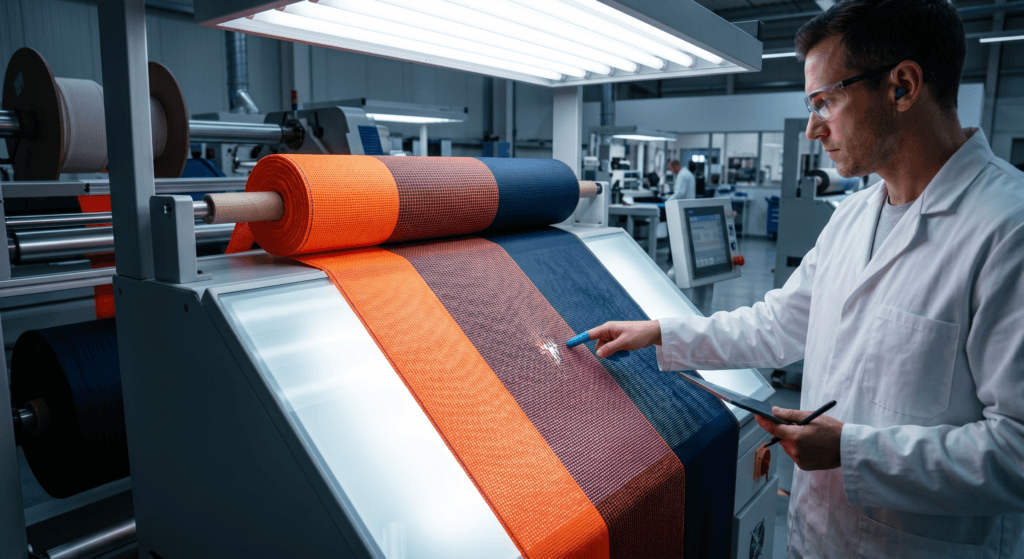 The “Light Box” Inspection: Deconstructing Fabric Defect Diagnostics and the 4-Point Quality System2026年4月28日The structural integrity and visual uniformity of […]
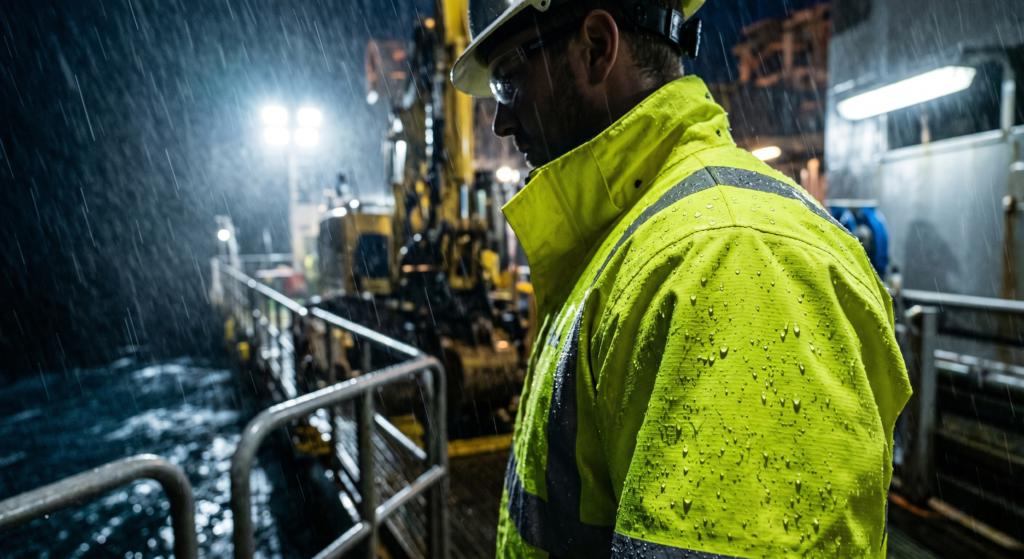 The Engineering of Waterproof Breathable Workwear: A Forensic Analysis of PU Coatings vs. PTFE Membranes2026年4月24日The selection of waterproof foul-weather gear in industrial […]
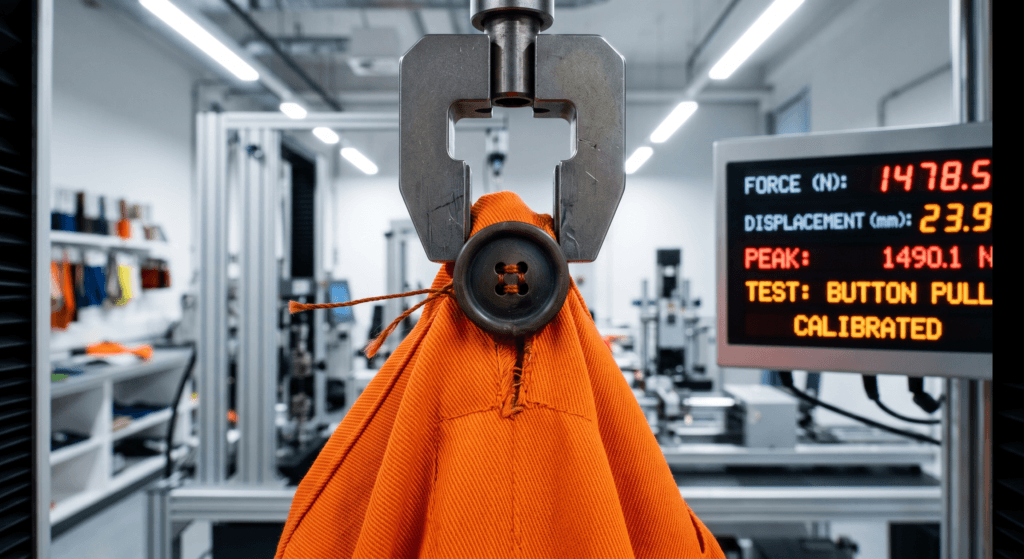 The “Button Pull” Test Protocol: Engineering Fastener Security to Mitigate Industrial Machinery and Choking Hazards2026年4月22日The “Button Pull” Test Protocol: Engineering […]
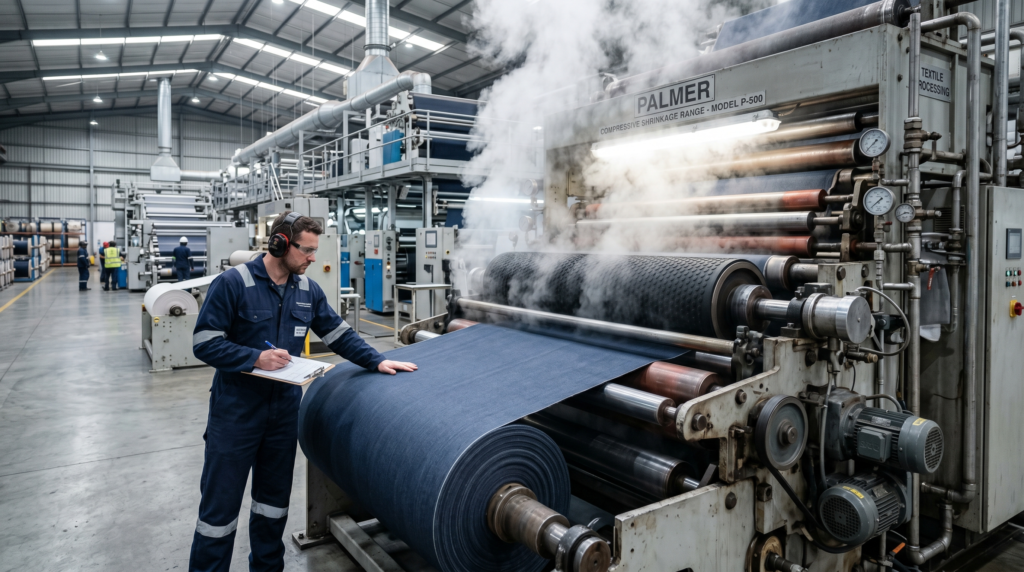 Fabric Shrinkage in Industrial Workwear: The Sanforization Secret and the Physics of Dimensional Stability2026年4月18日Executive Summary In the global industrial workwear and […]