

In the industrial sector, the worker is the engine. Yet, for decades, this engine has been encased in rigid, ill-fitting canvas casings that fight against every movement. Traditional workwear—based on static 2D patterns—creates mechanical resistance during squatting, reaching, and climbing. This resistance accumulates, leading to premature fatigue, musculoskeletal disorders (MSDs), and decreased operational efficiency.
The future of industrial PPE is Zero-Restriction Workwear. This is not just about using "stretchy fabric"; it is a fundamental re-engineering of garment architecture using dynamic structural design, articulated patterning, and biomechanical mapping.
This guide combines Part 1 (The Biomechanics of Workwear) and Part 2 (Procurement Strategies, ROI, and Engineering) to provide a complete decision-making toolkit for sourcing ergonomic industrial apparel.
Google Snippet: Quick Answer
Zero-Restriction Workwear utilizes dynamic structural design—such as gusseted crotches, articulated knees, and mechanical stretch panels—to eliminate fabric resistance. By mirroring the body’s natural range of motion, these garments reduce metabolic energy expenditure by up to 10-15% and significantly lower the risk of strain injuries. Key features to look for include 3D patterning, 4-way stretch reinforcements, and ISO 11228 ergonomic compliance.
1. The Hidden Cost of "Fighting Your Clothes"
The Physics of Resistance
- Mechanical Drag: When a worker squats in standard rigid trousers, the fabric tightens across the thighs and pulls down from the lower back. It takes roughly 10–15% more muscular force to overcome this fabric tension than to move naked.
- The "Hiking" Effect: Reaching overhead in a standard jacket pulls the hem up, exposing the kidneys to cold/danger and forcing the worker to constantly re-tuck and re-adjust (wasted motion).
Musculoskeletal Impact (MSDs)
- Chronic Strain: Constant low-level resistance creates micro-trauma in joints and soft tissue.
- Circulation Restriction: Tight fabric behind the knees (when kneeling) or at the waist constricts blood flow, accelerating leg fatigue.
The Productivity Drain
- Micro-Stoppages: A worker adjusting their waistband or pulling at tight sleeves 20 times an hour loses significant cumulative time.
- Fatigue Onset: Fighting garment resistance burns glycogen faster, leading to slower work rates in the final 2 hours of a shift.
2. The Science of Dynamic Structure: Beyond "Spandex"
True Zero-Restriction is achieved through geometry, not just elastane.
| Design Feature | Structural Function | Biomechanical Benefit |
|---|---|---|
| Diamond Crotch Gusset | A diamond-shaped insert replacing the 4-seam intersection at the crotch. | Allows 180-degree leg splits and deep squats without the fabric pinching or ripping at the seam. |
| Articulated Knees | Pre-bent fabric shape using darts (folds) and pleats. | Matches the natural curvature of the leg. Prevents the pant cuff from rising when the worker kneels. |
| Underarm Gussets | Panel inserts running from the waist to the elbow. | "High-Reach" capability. Allows arms to be raised above the head without the jacket hem lifting (Jack-knifing). |
| Curved Waistbands | Conical patterning rather than a straight strip. | Prevents "gaping" at the back when bending over; keeps the pant sitting on the hips securely. |
| Mechanical Stretch | Weaving technique (crimped yarn) that provides elasticity without elastane. | Provides 12-15% stretch durability that won’t degrade in industrial high-heat dryers. |
3. Material Selection: The "Hybrid" Approach
The most effective Zero-Restriction garments use a "Body Mapped" approach, placing different materials in specific zones.
| Zone | Material Requirement | Why? |
|---|---|---|
| Main Chassis | Mechanical Stretch Poly/Cotton (T400) | Provides basic mobility and extreme durability. "Memory" yarn ensures it snaps back to shape. |
| High-Flex Zones (Knees/Seat) | 4-Way Stretch Cordura® Nylon | Maximum abrasion resistance combined with extreme flexibility for squatting/kneeling. |
| Ventilation Zones (Back/Pit) | Perforated Mesh Panels | Heat release. Overheating causes muscle stiffness; cooling promotes mobility. |
| Hardware | Flexible/Rubberized Buttons | Rigid metal buttons dig into the stomach during bending; flexible closures move with the body. |
4. Case Study Comparisons by Industry Segment
| Industry Segment | The Restriction Problem | Structural Solution | Outcome When Implemented |
|---|---|---|---|
| Logistics / Warehouse | High-step climbing onto forklifts; constant reaching. Crotch blowouts are common. | Action Trousers: Diamond crotch gusset + Elasticated waist inserts. | Durability: Crotch seam failures dropped by 90%. Speed: Pick-rates improved by 5% due to easier movement. |
| Roofing / Flooring | 80% of the day spent kneeling or squatting. Knee circulation cutoff. | Articulated Knee System: 3D patterning + integrated stretch back-panel. | Health: Workers reported 40% less knee/back pain. Knee pads stayed in place without tight straps. |
| Auto Manufacturing | Overhead assembly work. Jacket lift exposes skin to sharp metal. | Full-Motion Jacket: Underarm gusset panels + bi-swing back pleats. | Safety: Eliminated "exposed skin" incidents. Reduced shoulder fatigue from overhead reaching. |
| Arboriculture (Tree Care) | Extreme climbing range of motion required. | 4-Way Stretch High-Tenacity Nylon: Full chassis stretch. | Agility: Climbers could maneuver safely in trees without pants snagging or restricting splits. |
5. Common Procurement Mistakes in Ergonomic Workwear
| Mistake | Impact | Prevention Tip |
|---|---|---|
| Confusing "Loose" with "Mobile" | Buying oversized baggy clothes creates snag hazards and does not solve restriction (excess fabric gets in the way). | Look for "Active Fit" with articulation, not just larger sizes. |
| Over-reliance on Spandex (Lycra) | Cheap spandex (elastane) degrades in UV light and high-heat industrial washing, leading to "bagging out." | Specify T400 or PBT (Polybutylene Terephthalate) yarns which are chemically resistant and hold shape. |
| Ignoring Seam Placement | Seams placed directly over the knee cap or under the armpit cause chafing and restrict blood flow. | Ensure seams are off-set or rotated away from high-pressure joints. |
| Static Fittings | Workers try on clothes standing still in a fitting room. | Mandate a "Movement Audit": Squat, reach, and climb during the size run. |
| Standard Belt Loops | Using thin belt loops with heavy tool belts causes the pants to sag and pinch. | Require Wide Tunnel Loops to distribute tool belt weight evenly. |
Example: A German automotive plant switched from standard 100% cotton coveralls to a "Zero-Restriction" design with a bi-swing back and flex-waist.
- Result: The "Time-to-Task" for overhead assembly dropped by 1.2 seconds per unit because workers didn’t have to adjust their sleeves.
- Impact: Multiplied by 500 cars a day, this equaled massive productivity gains.
6. ROI Analysis: The Economics of Comfort
Zero-Restriction workwear costs 15–30% more upfront due to complex sewing (more manufacturing minutes). Here is why it pays off.
| Metric | Standard Rigid Workwear | Zero-Restriction Workwear | Financial Implication |
|---|---|---|---|
| Lifespan (Seam Failures) | 3–4 Months (Crotch rips common) | 9–12 Months (Stress dispersed by gussets) | 50% Reduction in annual purchasing volume. |
| Productivity (Movement) | Resistance slows movement | Fluid movement saves 20 mins/week | ~17 hours gained per worker/year. |
| Sick Days (Back/Joint Pain) | High risk of cumulative strain | Reduced strain on joints | Lower absenteeism and insurance claims. |
| Employee Morale | Frustration / Discomfort | Value / Comfort | Higher retention rates for skilled labor. |
The Formula: (Cost of Injury + Cost of Replacement + Cost of Lost Productivity) > (Premium Price of Ergonomic Gear).
7. Buyer Checklist for Zero-Restriction Sourcing
- [ ] The "Squat Test": When the wearer squats fully, does the waistband pull down? If yes, the "Back Rise" is too low or the mechanical stretch is insufficient.
- [ ] Gusset Verification: Physically check the crotch and underarms. Is there a separate panel of fabric (diamond/oval)?
- [ ] Knee Articulation: Lay the pants flat. Do the legs look bent/curved? (They should not lie perfectly flat).
- [ ] Fabric Recovery: Stretch the fabric and hold for 10 seconds. Does it snap back instantly? (If it stays stretched, it will look sloppy in a week).
- [ ] Seam Strength: Are the stress points (gusset corners) bar-tacked? Dynamic movement puts high stress on seams.
- [ ] Weight: Is the garment lightweight? Heavy fabrics increase inertia and fatigue.
8. Frequently Asked Questions (FAQ)
Q1: Will stretch fabric tear easily in rugged environments? A: Not if chosen correctly. Cordura® Stretch or Ripstop Mechanical Stretch is engineered for high tear strength. Avoid "fashion stretch" fabrics.
Q2: Can we industrially wash these garments? A: Yes, but the specification is key. Demand ISO 15797 compliant stretch fabrics. Avoid fabric softeners as they destroy elastane performance.
Q3: Does ergonomic design look unprofessional or "sporty"? A: Modern designs hide the technical features. A "Clean Front" pant can have hidden articulated knees and gussets while looking crisp and uniform.
Q4: Is this required by OSHA/HSE? A: Not explicitly. However, employers have a duty to minimize ergonomic hazards. Providing restriction-free clothing is a recognized administrative control for MSD prevention.
Q5: What is the best fabric weight for year-round mobility? A: A 240–260 GSM (7-7.5 oz) blend is the "Goldilocks" zone—light enough to flex, heavy enough to resist abrasion.
9. Advanced Sourcing Strategies: The "System" Approach
-
Layering Integration: Zero-restriction outer shells fail if the thermal underwear underneath is rigid. Source base layers and mid-layers that also feature 4-way stretch to create a fully synchronized system.
-
Wearer Trials with Feedback Loops: Do not guess. Issue the new gear to the 10 most active workers (e.g., maintenance crew). Use a simple 1-5 scale to rate "Ease of Climbing" and "Comfort while Kneeling."
-
Pattern Grading for Diversity: Standard grading just makes patterns bigger. Dynamic Grading ensures that the knee dart actually lands on the knee for a 6’4" worker and a 5’5" worker. Request specific inseam lengths, not just S/M/L/XL.
-
Suspension Systems: For heavy tool belt users, consider workwear with integrated suspender attachments or stretch waistbands with internal grip tape. This decouples the pant weight from the hips.
10. Conclusion
Workwear should be a tool, not a cage.
In the drive for industrial efficiency, Zero-Restriction Workwear represents the lowest hanging fruit. By removing the mechanical resistance from the worker’s daily motions, you simultaneously boost productivity, extend the lifespan of the garment (no more blown-out seams), and protect your workforce from chronic injury.
The shift from "Static Canvas" to "Dynamic Ergonomics" is not a trend; it is the new standard for high-performance safety equipment.
📩 Ready to upgrade your workforce to High-Mobility, Ergonomic Workwear? We specialize in 3D-patterned, mechanical stretch industrial gear designed for the toughest jobs. Email: [email protected] 🌐 www.workwearsolutions.net

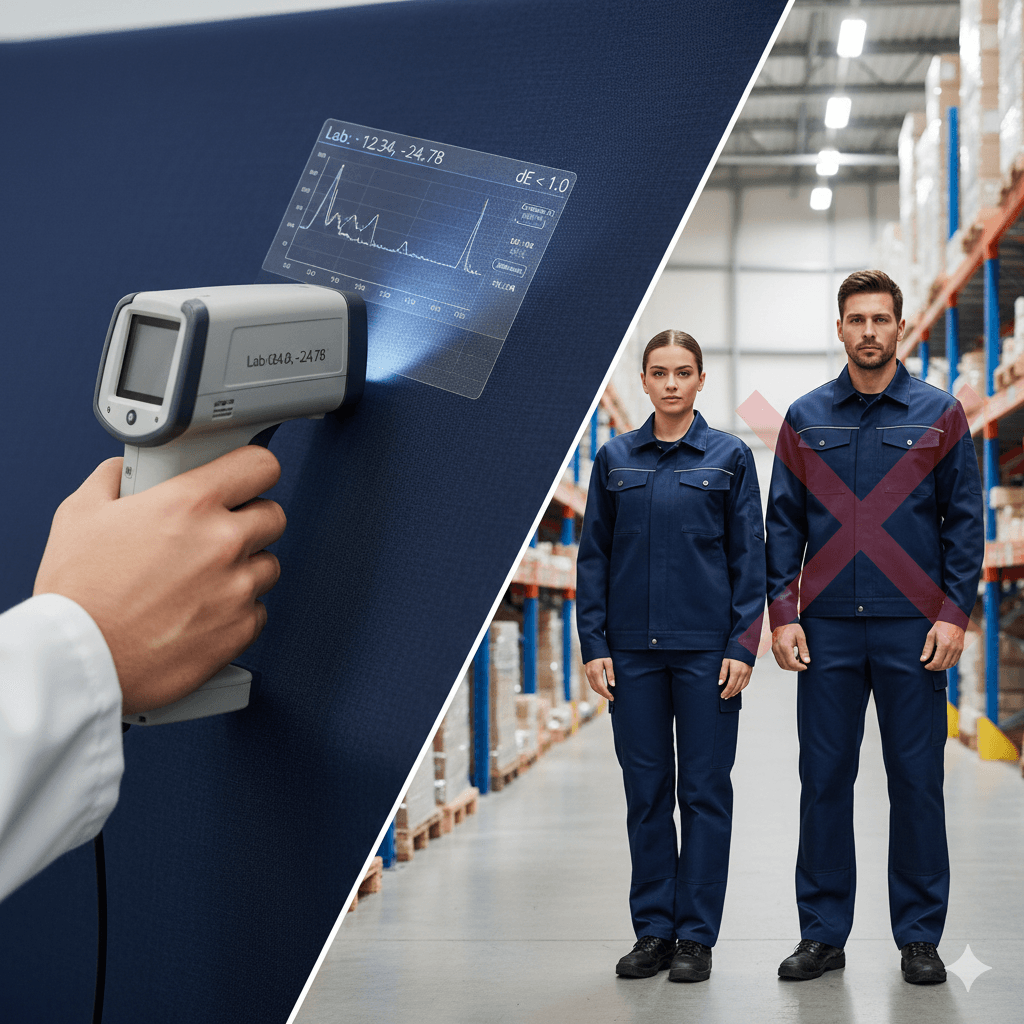 Color Consistency: The Delta-E Standard and the End of the “Clown Suit” Effect2026年2月4日In the corporate world, a uniform is a brand’s […]
 Why Zippers Fail (and How We Prevent It): The Engineering of Closure Reliability2026年2月4日In the hierarchy of industrial garment components, the […]
 The Anatomy of a Seam: Engineering Durability at the Needle Point2026年2月4日In the world of industrial workwear, the fabric gets all […]
 Future Lab PPE Trends: The Convergence of Lightweight Protection & Sustainability2026年1月28日In the sterile corridors of pharmaceutical R&D, biotech […]
 Chemical Protection Classes A/B/C: The Definitive Guide to Risk-Based PPE Selection2026年1月28日In the hazardous materials (HazMat) industry, […]
 Freezer Gloves & Boots Trends: The Intersection of Thermal Physics and Grip Technology2026年1月28日In the unforgiving environment of a -30°C cold storage […]