
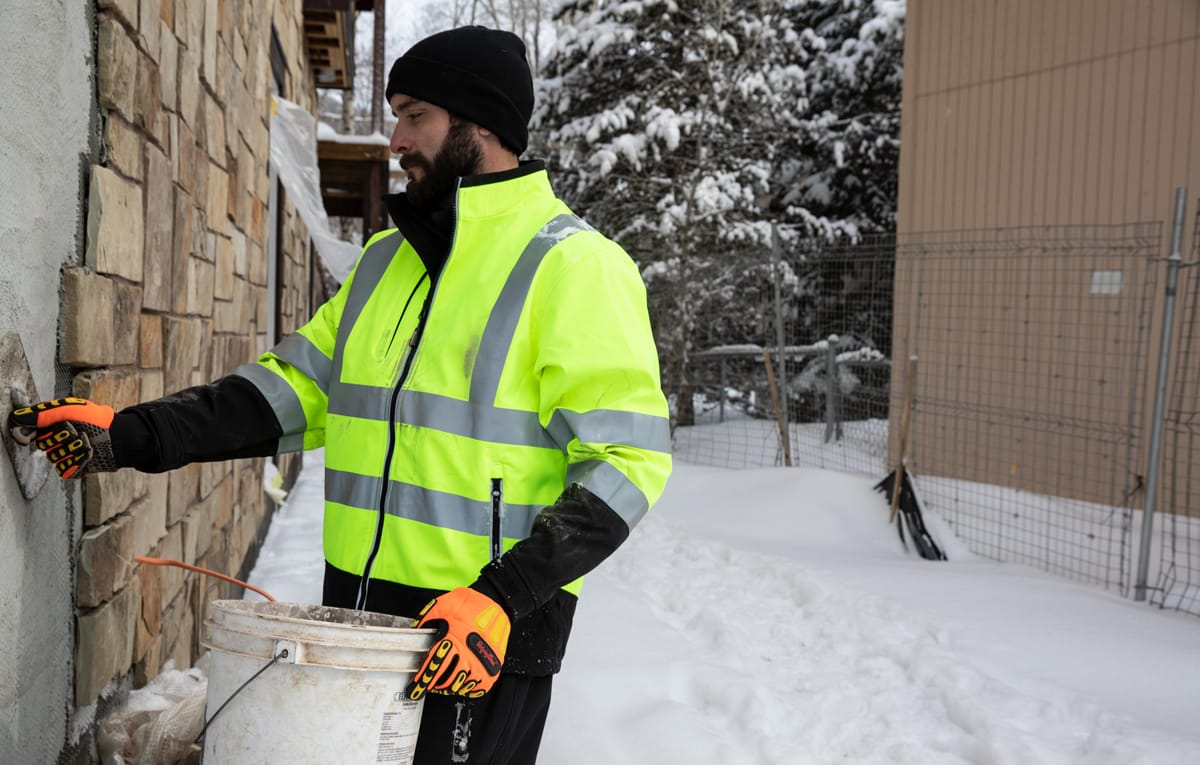
Executive Summary: Data is the New Price Tag
For the last 50 years, the global supply chain spoke one language: Price. The procurement conversation began and ended with "What is the cost per unit?"
Today, a new dialect has emerged, driven by the existential pressure of Climate Change and the regulatory force of ESG (Environmental, Social, and Governance) mandates. That dialect is Carbon Data.
Major corporations and government bodies are no longer satisfied with vague claims of "Eco-Friendly" or "Green." They require hard, verified data to calculate their Scope 3 Emissions—the indirect emissions that occur in their supply chain. This is where the Life Cycle Assessment (LCA) comes in.
An LCA report is no longer just a scientific study; it is a commercial "Entry Ticket". Without it, suppliers are increasingly locked out of high-value tenders, public procurement contracts, and supply chains of Fortune 500 companies. This guide explains why LCA has become the gold standard for transparency and how it serves as the ultimate tool for ESG compliance and competitive advantage.
Google Snippet: Quick Answer
Why are buyers demanding LCA reports? Buyers require Life Cycle Assessment (LCA) reports to scientifically quantify the environmental impact of a product from "Cradle to Grave." This data is essential for companies to:
- Report Scope 3 Emissions accurately (required by EU CSRD and US SEC rules).
- Avoid Greenwashing risks by backing claims with ISO 14040 verified data.
- Win Tenders where sustainability accounts for 20-30% of the evaluation score. Essentially, an LCA converts environmental impact into a tradable data point.
1. The "Black Box" Problem: Why "Trust Me" is Dead
In the past, a supplier could slap a green leaf logo on a box and call it sustainable. This led to rampant Greenwashing.
The Information Asymmetry
- The Buyer’s Dilemma: A buyer at a construction firm needs to source workwear. Supplier A offers a "Green Jacket" for $20. Supplier B offers a "Standard Jacket" for $18. Is Supplier A’s jacket actually better? Or is it just marketing?
- The Regulatory Risk: If the buyer chooses Supplier A and claims to be "reducing carbon," but the jacket is actually made in a coal-powered factory, the buyer faces legal liability and reputational damage.
The LCA Solution
LCA opens the "Black Box." It breaks down the product’s impact into quantifiable metrics:
- kg CO2e: Carbon Dioxide Equivalent (Global Warming Potential).
- Liters H2O: Water scarcity footprint.
- MJ Energy: Primary energy demand.
When a buyer demands an LCA, they are saying: "Don’t tell me it’s green. Show me the math."
2. The Regulatory Tsunami: It’s Not Optional Anymore
The demand for LCA is not a fad; it is a response to a tidal wave of legislation hitting the EU and North America.
| Regulation | Region | Requirement | Role of LCA |
|---|---|---|---|
| CSRD (Corporate Sustainability Reporting Directive) | EU | Large companies must disclose their environmental impact, including supply chain (Scope 3). | LCA provides the primary data needed to populate these reports. Without supplier LCAs, companies must use inaccurate industry averages. |
| Digital Product Passport (DPP) | EU | Products must carry a digital record of their sustainability credentials. | LCA data will be the core content of the Digital Product Passport. |
| SEC Climate Disclosure Rule | USA | Publicly traded companies must disclose climate-related risks and GHG emissions. | Requires auditable data from suppliers to verify carbon footprint claims. |
| Green Public Procurement (GPP) | Global | Government tenders favoring low-carbon goods. | LCAs (often in the form of EPDs) are the standard documentation to prove eligibility. |
3. The Tender "Entry Ticket": Scoring Sustainability
In modern large-scale procurement (especially in construction, utilities, and government), the evaluation matrix has shifted.
The Old Matrix:
- Price: 70%
- Quality: 30%
The New ESG Matrix:
- Price: 40%
- Quality: 30%
- Sustainability (ESG): 30%
How LCA Wins the Contract
In this new matrix, being the cheapest option is no longer a guarantee of winning.
- Scenario: You are bidding to supply uniforms to a National Railway.
- Competitor A: $15.00/unit. No LCA. Carbon footprint unknown (assumed high default).
- Competitor B (You): $16.50/unit. LCA Report attached. Proven 40% carbon reduction.
- Result: You score maximum points in the "Sustainability" column. Even with a higher price, your Total Score is higher. You win the contract.
LCA is the differentiator that justifies a premium price.
4. Technical Deep Dive: What Exactly is in the Report?
For procurement managers, understanding the scope of the LCA is critical.
The System Boundaries
- Cradle-to-Gate (Partial): Measures impact from raw material extraction -> Factory Gate. (Most common for B2B).
- Cradle-to-Grave (Full): Measures extraction -> Manufacturing -> Use Phase (Washing) -> Disposal/Recycling.
Key Standards
- ISO 14040 & 14044: The global standards ensuring the assessment is rigorous and peer-reviewed.
- EPD (Environmental Product Declaration): A standardized, public document summarizing the LCA results. It is like a "Nutrition Label" for a product.
The Data Points Buyers Look For
- GWP (Global Warming Potential): Measured in kg CO2 equivalent.
- ADP (Abiotic Depletion Potential): Depletion of non-renewable resources (fossil fuels).
- Water Consumption: Blue water footprint.
5. Case Study: The Price of Silence vs. The Value of Data
Case: A European Utility Company Sourcing High-Vis Vests
- The Challenge: The utility company committed to Net Zero by 2030. They needed to cut emissions in their procurement.
- The Supplier: A workwear manufacturer in China.
- Action: The manufacturer invested $5,000 to conduct a third-party LCA on their recycled polyester vest.
- The Result: The LCA proved that their vest produced 2.5 kg CO2e, compared to the industry average of 6.0 kg CO2e.
- The ROI:
- The manufacturer used this verified data to win a 3-year contract worth $2 Million.
- The Utility Company used the data to report a 50-ton carbon saving in their annual ESG report.
- Return on Investment: 40,000% on the cost of the LCA study.
6. Implementation Strategy: How Buyers Should Ask for LCA
If you are a buyer, you cannot just say "Send me the LCA." You must be specific.
Step 1: Define the Scope
"We require a Cradle-to-Gate LCA for the [Product Name], compliant with ISO 14044."
Step 2: Request Primary Data
"Do not use generic database averages. We need primary data from your specific factory regarding energy mix (e.g., solar vs. coal) and material transport distances."
Step 3: Verify the Verifier
"The LCA must be critically reviewed by an independent third party to ensure objectivity."
Step 4: Ask for an EPD
"Can you provide a registered Environmental Product Declaration (EPD) based on this LCA?" (This makes the data easier to compare with competitors).
7. Comparative Analysis: Product with LCA vs. Without
| Feature | Product Without LCA | Product With LCA |
|---|---|---|
| Price | Typically Lower | Slightly Higher (Internalizes cost of transparency) |
| Risk | High (Potential Greenwashing) | Low (Verified Data) |
| Market Access | Limited to price-sensitive markets | Global Access (EU, US, Gov Tenders) |
| Buyer Perception | Commodity | Strategic Asset |
| Marketing Claims | "Eco-Friendly" (Vague) | "3.2 kg CO2e Verified" (Specific) |
| Future Proofing | None | Prepared for Carbon Tax / DPP |
8. Common Myths & FAQ
Q1: Is LCA expensive? A: A full ISO-compliant LCA can cost between $3,000 and $10,000 depending on complexity. However, "Simplified LCAs" for internal benchmarking are cheaper. The cost is falling as AI-driven LCA tools emerge.
Q2: Can I compare LCAs from different suppliers? A: Proceed with caution. You can only compare them if they use the same Product Category Rules (PCR) and system boundaries. An LCA calculating "Cradle-to-Gate" cannot be compared to "Cradle-to-Grave."
Q3: What if my score is bad? A: A "bad" score is better than no score. Honesty builds trust. A high carbon footprint allows you to say: "We measured it, it’s high, and here is our plan to reduce it by 10% next year." That is a valid ESG strategy.
Q4: Do I need an LCA for every single product? A: No. Start with your "Hero Products" (highest volume or highest impact). You can often group similar products into product families if the manufacturing process is identical.
9. Advanced Strategy: LCA as a Design Tool
Smart suppliers don’t just use LCA for reporting; they use it for Eco-Design.
- Hotspot Analysis: The LCA might reveal that 60% of your carbon footprint comes from the energy used in the weaving mill.
- Action: You install solar panels at the mill.
- Result: You run the LCA again. Your score drops. You have now created a better product and a marketing story backed by science.
10. Conclusion: No Data, No Deal
The era of "blind procurement" is ending. In the coming years, an LCA will be as standard as a Safety Data Sheet or a Quality Certificate.
For suppliers, investing in LCA is not an administrative burden; it is an investment in future relevance. It transforms your product from a physical commodity into a digital asset capable of navigating the complex regulatory landscape of the 21st century.
For buyers, requiring LCA is the only way to truly manage supply chain risk and deliver on the promise of a sustainable future.
If you can’t measure it, you can’t manage it. And if you can’t manage it, you won’t be able to sell it.
📩 Need help navigating the LCA landscape? We provide fully transparent, ISO-verified LCA data for our industrial workwear ranges to support your ESG goals. Email: [email protected] 🌐 www.workwearsolutions.net China-based. Global Standards. Data-Driven Partners.

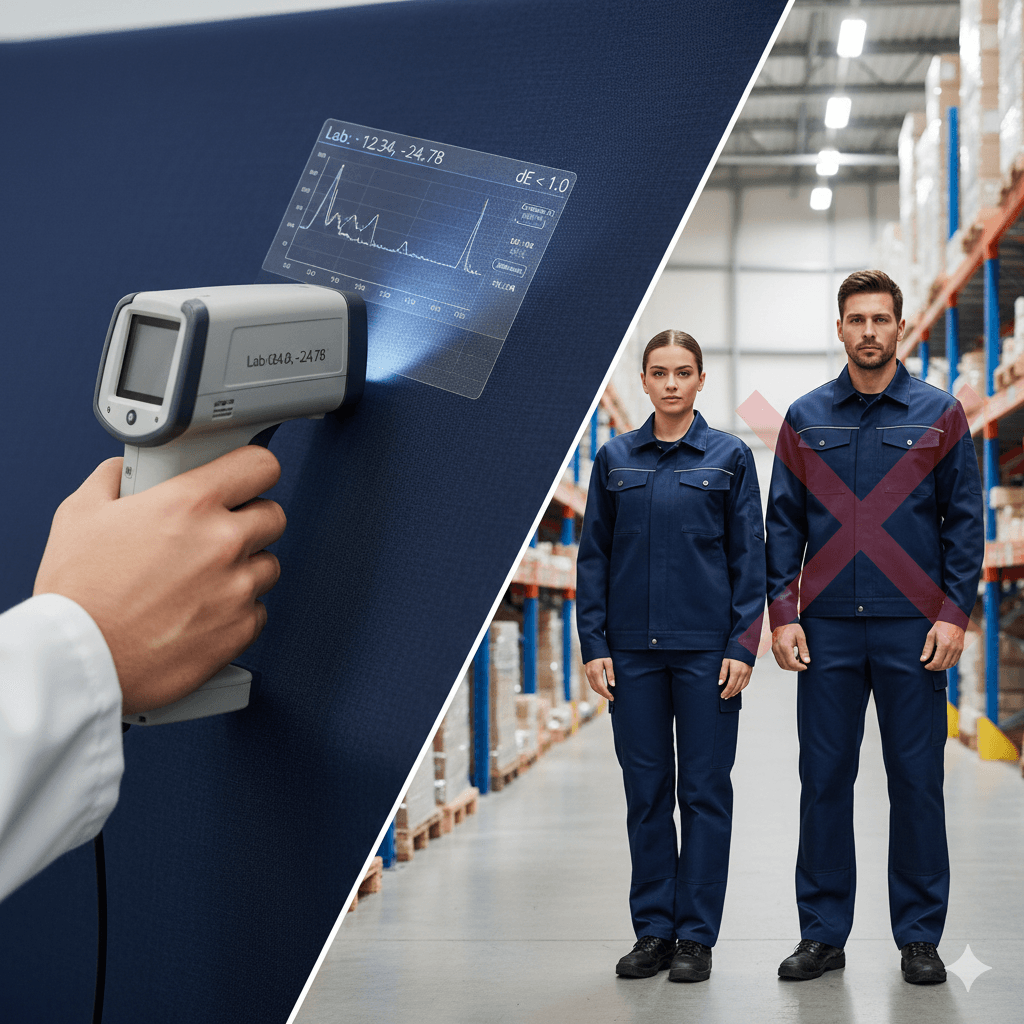 Color Consistency: The Delta-E Standard and the End of the “Clown Suit” Effect2026年2月4日In the corporate world, a uniform is a brand’s […]
 Why Zippers Fail (and How We Prevent It): The Engineering of Closure Reliability2026年2月4日In the hierarchy of industrial garment components, the […]
 The Anatomy of a Seam: Engineering Durability at the Needle Point2026年2月4日In the world of industrial workwear, the fabric gets all […]
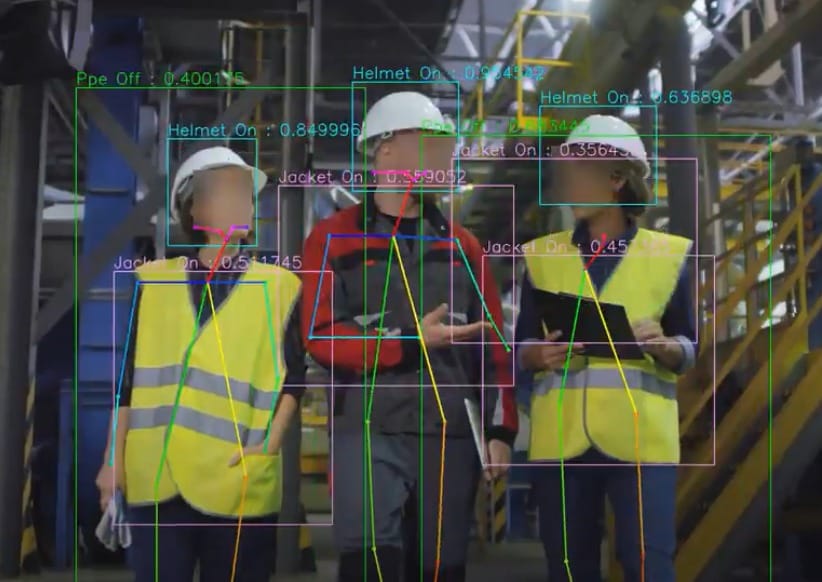 Future Lab PPE Trends: The Convergence of Lightweight Protection & Sustainability2026年1月28日In the sterile corridors of pharmaceutical R&D, biotech […]
 Chemical Protection Classes A/B/C: The Definitive Guide to Risk-Based PPE Selection2026年1月28日In the hazardous materials (HazMat) industry, […]
 Freezer Gloves & Boots Trends: The Intersection of Thermal Physics and Grip Technology2026年1月28日In the unforgiving environment of a -30°C cold storage […]