
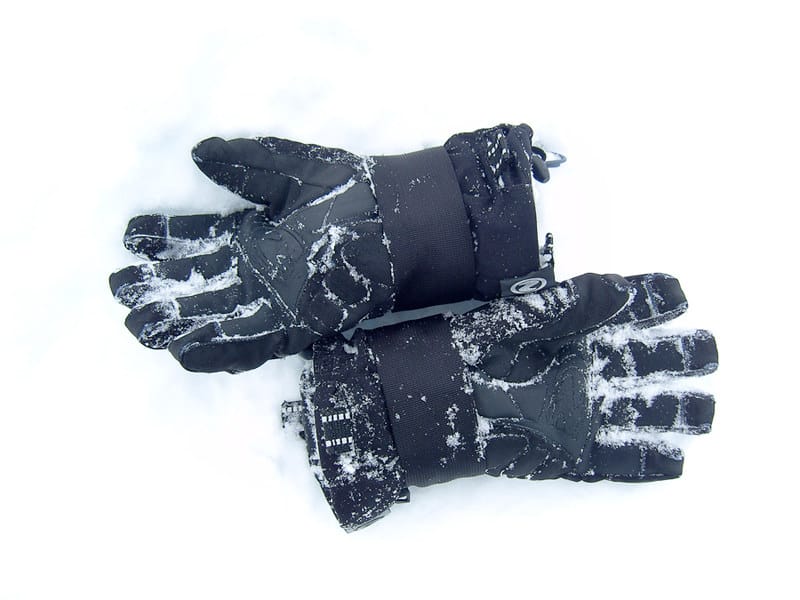
Executive Summary: Decoding the "Black Box" of Manual Labor
In the era of Industry 4.0, while robotic arms and AGVs have taken over heavy lifting and rough processing, 40% to 60% of critical manufacturing processes (such as fine assembly, complex maintenance, and wire harnessing) still rely on the dexterity of human hands. However, this "last mile" of human labor has long remained a "black box"—difficult to quantify, difficult to trace, and difficult to standardize.
Smart Gloves are the ultimate solution to this problem. They are not merely Protective Personal Equipment (PPE); they are precision IoT terminals worn on the hand. By integrating Micro-Electro-Mechanical Systems (MEMS) sensors, they convert worker hand movements into millimeter-level digital trajectories, comparing them against Standard Operating Procedures (SOPs) in real-time.
This guide provides a deep dive into how Smart Gloves use High-Precision Motion Recognition to reconstruct Employee Training, Quality Control, and EHS (Environment, Health, and Safety) Management, offering a complete playbook for procurement decision-makers from technical selection to ROI analysis.
Google Snippet: Quick Answer
What are Industrial Smart Gloves and how do they standardize operations? Industrial Smart Gloves are wearable devices integrated with Inertial Measurement Units (IMUs), pressure sensors, and haptic feedback systems. They capture hand position, speed, and posture in 3D space at high frequencies. The system uses algorithms to judge whether a worker has completed a specific sequence of actions (e.g., "Grab," "Twist," "Press"). If a step is missed or performed incorrectly, the glove immediately issues a haptic vibration alert, reducing new hire training time by over 50% and cutting critical assembly error rates to near zero.
1. The Core Challenges: Why SOPs Fail on the Factory Floor
Lengthy Training Cycles & Tribal Knowledge
- The Problem: Traditional training relies on oral instruction from senior staff ("shadowing") and paper manuals. New hires need weeks to develop muscle memory, and different mentors often teach inconsistent methods.
- The Smart Glove Solution: The glove uses a "Digital Shadowing" mode. It guides the new employee to follow the "Golden Motion" recorded by an expert. The system provides real-time correction, enabling "learning by doing" and reducing reliance on senior mentors.
The "Ghost Problem" in Quality Traceability
- The Problem: A product is found with a loose screw or missing washer after leaving the factory, but it is impossible to determine which station or worker made the error, or to prove if the torque requirement was met during the shift.
- The Smart Glove Solution: Every action (tightening, pressing, grabbing) is recorded with a timestamp. The product gains an "action-level" digital digital twin, achieving full lifecycle traceability.
Visual Blind Spots & Detection Limits
- The Problem: Traditional Computer Vision (AI Cameras) is easily obstructed by the worker’s body, tools, or machinery (Occlusion), and struggles in low-light or oily environments.
- The Smart Glove Solution: The sensors are located on the back of the hand. Whether the line of sight is blocked or the hand is inside a machine chassis, the data is captured precisely, eliminating visual blind spots.
2. Technical Anatomy: How Smart Gloves Work
Smart gloves are a fusion of traditional PPE protection and modern microelectronics. Understanding their internal architecture is crucial for making the right procurement decision.
| Component | Technical Specification | Industrial Application |
|---|---|---|
| Sensor Array (IMU) | 9-Axis Sensors (3-axis Gyroscope + 3-axis Accelerometer + 3-axis Magnetometer); Sampling Rate: 100Hz-200Hz. |
The Core of Motion Capture. Precisely calculates Euler angles, angular velocity, and linear acceleration of the hand in 3D space. Used to judge if specific gestures are completed. |
| Haptic Feedback | Linear Resonant Actuator (LRA) or Eccentric Rotating Mass (ERM); Programmable vibration patterns. |
Instant Interaction. Single vibration for correct action (Confirmation); continuous vibration for error (Alert). Keeps the worker focused without needing to look at a screen. |
| Scanner Engine (Optional) | Ultra-lightweight 1D/2D Barcode Scanner integrated on the back of the hand. | Hands-Free Operation. Replaces bulky handheld PDA guns. Workers don’t need to pick up and put down a scanner, increasing picking efficiency by 30%+. |
| Connectivity Module | Bluetooth Low Energy (BLE) 5.0 / 5.2; Wi-Fi 6; LoRaWAN. | Ensures low power consumption while transmitting data in real-time to tablets, industrial PCs, or Cloud MES systems. |
| Power Management | High-density Lithium Polymer Battery; Hot-swappable or Fast Charging. |
Must support 10-12 hours of continuous operation to cover a full shift. |
| Base Material | Conductive Yarn + Cut Resistance (Level A-F) / Oil-proof Coating. | More than just electronics. As PPE, it must first be a qualified protective glove, meeting EN 388 and ANSI 105 standards. |
3. Use Case Deep Dive: Transforming Operations
Scenario A: Immersive Digital Training
- Traditional Pain Point: High turnover rates among young workers; senior staff are exhausted by repetitive teaching.
- The Smart Glove Workflow:
- Record the Baseline: The most skilled technician wears the glove and performs the task once. The system records their trajectory, speed, and dwell time, generating a "Golden Motion Model."
- Guided Learning: The new hire wears the glove and sees motion guidance on a tablet.
- Real-time Correction: If the new hire reaches for material in the wrong order or holds a tool at the wrong angle, the glove vibrates immediately to warn them.
- Outcome: It’s like having an "invisible tutor" holding their hand. Training cycles are shortened by 40%-60%.
Scenario B: Quality Control & Mistake Proofing (Poka-Yoke)
- Industry: Automotive Assembly (Tier 1), Aerospace Maintenance.
- Example: Assembling a valve requires 5 steps, and 4 screws must be tightened in a specific "X" pattern.
- Smart Control: Through position sensing (interacting with station beacons) and motion recognition, the glove knows exactly which screw the worker is addressing. If the worker tries to skip Screw #2 and go to Screw #3, the glove vibrates violently, and can even interlock with the electric torque gun to disable it until the sequence is corrected.
- Outcome: Achieves process-level mistake proofing, not just end-of-line detection.
Scenario C: Ergonomics & Safety Management
- Core Function: Prevention of Repetitive Strain Injury (RSI) and Musculoskeletal Disorders (MSDs).
- Data Analysis: Sensors continuously monitor wrist twist angles, repetition frequency, and impact force.
- Health Alerts: If the system detects a worker’s wrist has been in a "High-Risk Posture" for too long or fatigue levels are peaking, it automatically sends a report to management suggesting a station rotation or a break.
- Outcome: Reduces workers’ compensation claims, demonstrates corporate care for employee well-being, and meets ESG governance requirements.
!
4. Technology Comparison: Smart Gloves vs. Computer Vision (AI Cameras)
Many factories hesitate between "installing cameras" and "wearing gloves." Here is a critical comparison:
| Assessment Dimension | Computer Vision (AI Cameras) | Smart Gloves |
|---|---|---|
| Interference Resistance | Weak. Severely affected by lighting changes (shadows/glare), smoke, and Occlusion (blocked view). | Strong. Data remains precise whether the environment is pitch black or the hand is inside a machine chassis. |
| Privacy Acceptance | Low. Workers often resist being "watched" by cameras; involves facial recognition compliance risks (GDPR). | High. Only records hand motion data; does not involve facial or identity-sensitive information. Easier for unions to accept. |
| Deployment Flexibility | Poor. Requires installing gantries, adjusting focal lengths, and cabling. Changing station layout requires re-calibration. | Excellent. Plug-and-play, mobile. Perfect for roaming inspections, large-scale assembly, and non-fixed stations. |
| Data Dimensions | Primarily 2D images; difficult to judge force and micro-angles. | Includes 3D physical data like force, acceleration, and rotation angles. |
| Computation Cost | High. Requires expensive GPU servers to process video streams. | Low. Edge computing is done on the glove or gateway; data packet size is minimal. |
5. ROI Analysis: The Financial Case
investing in a Smart Glove system is a hardware + software investment.
Model Assumptions: A high-value electronics assembly line with 20 workers. Investment approx. $1,000 per unit/year (Hardware + Software amortized).
| Cost Driver | Traditional Method Annual Loss | Smart Glove Optimization | Estimated Annual Savings |
|---|---|---|---|
| Quality Rework Costs | 2% error rate; annual rework costs $50,000 | Real-time correction drops error rate to 0.1% | $47,500 |
| Training Efficiency Loss | New hire takes 2 weeks to reach proficiency; loss of $20,000 | Shortened to 3 days; loss of $4,000 | $16,000 |
| Claims & Recalls | Avg. 1 client claim/return per year ($30,000) | Full process data traceability allows defense/avoidance | $30,000 |
| Picking/Entry Efficiency | Handheld gun scanning (8 items/min) | Hands-free scanning (12 items/min) (+50% efficiency) | $25,000 (Time Value) |
| Total Annual Savings | ~$118,500 |
ROI Conclusion: For high-value manufacturing (Automotive, Aerospace, Medical Devices, High-end Electronics), the Payback Period is typically between 3 to 6 months.
6. Buyer Checklist for Implementation
As a supplier committed to long-term quality, we recommend verifying the following details before purchasing:
- [ ] Modular Design: The electronic module (Sensor) and the fabric glove must be detachable. The fabric is a consumable (washable/replaceable); the electronics are an asset.
- [ ] Ergonomics: The sensor module should weigh less than 40g and must not impede finger joint flexion. Ensure XS to XXL sizing is available; fit directly affects data accuracy.
- [ ] Durability Testing: Request bending test reports (usually >10,000 cycles) and drop test reports from the vendor.
- [ ] System Integration (API/SDK): Does the software offer an open API? Can it integrate directly with your existing SAP, MES, or WMS? This is key to unlocking the value of the data.
- [ ] Hygiene & Maintenance: Is there a clear washing guide? Are electronic contacts gold-plated to prevent corrosion?
- [ ] Data Security: Is ergonomic data processed locally? Is cloud transmission encrypted? Does it comply with local data privacy regulations?
7. Frequently Asked Questions (FAQ)
Q1: Will smart gloves replace workers? A: No. They are a "Digital Co-pilot" for workers. The goal is to eliminate the burden of manual data entry and the stress of memorizing complex flows, allowing workers to focus on the craft itself while protecting their health.
Q2: How long does the battery last? A: Industrial smart gloves are designed to support a full shift (8-12 hours). They typically come with charging cabinets (swap at shift change) or hot-swappable batteries.
Q3: What if the glove gets dirty? A: Superior smart gloves use a "Core + Carrier" separation design. The fabric glove can be detached and washed in industrial laundry or replaced cheaply, while the electronic core is wiped down and re-attached.
Q4: What are the network requirements? A: Most devices support "Offline Mode." In areas without Wi-Fi, data is stored locally on the glove/gateway and automatically uploads once the worker returns to a coverage area.
8. Advanced Sourcing Strategies
-
Start with a Pilot Program: Do not deploy to the whole factory immediately. Choose the station with the highest pain point (e.g., the assembly table with the highest rework rate), deploy 5-10 units, run for 30 days, and collect data to verify ROI.
-
Focus on the "Total Solution," not just Hardware: The hardware is just the base; the Algorithms and Software Platform are the core. Ask if the supplier offers pre-trained algorithm models for specific actions (e.g., "Using a Torque Wrench"), which saves massive development time.
-
Customization Services: As a PPE supplier, we know different conditions need different base materials. Verify if the supplier can provide smart gloves customized with Cut-Resistant, Oil-Proof, or Anti-Static materials.
9. Conclusion: Empowering the Frontline
In the "Last Mile" of digital transformation, Smart Gloves are the bridge between humans and the digital world. They not only improve efficiency and quality but, more importantly, they quantify the value of skilled labor and protect worker safety through data.
For companies pursuing stable quality and compliant production, adopting Smart Gloves is no longer a "nice-to-have"—it is the necessary path to the factory of the future.
Ready to introduce Motion Recognition and Standardized Operations to your facility? We provide complete upgrade solutions, from high-quality traditional protective gloves to cutting-edge smart wearable devices, focused on stable quality and long-term cooperation.
📩 Contact our Technical Sales Team: [email protected] 🌐 Visit us: www.workwearsolutions.net China-based. Global Standards. Long-term Partners.

 Color Consistency: The Delta-E Standard and the End of the “Clown Suit” Effect2026年2月4日In the corporate world, a uniform is a brand’s […]
 Why Zippers Fail (and How We Prevent It): The Engineering of Closure Reliability2026年2月4日In the hierarchy of industrial garment components, the […]
 The Anatomy of a Seam: Engineering Durability at the Needle Point2026年2月4日In the world of industrial workwear, the fabric gets all […]
 Future Lab PPE Trends: The Convergence of Lightweight Protection & Sustainability2026年1月28日In the sterile corridors of pharmaceutical R&D, biotech […]
 Chemical Protection Classes A/B/C: The Definitive Guide to Risk-Based PPE Selection2026年1月28日In the hazardous materials (HazMat) industry, […]
 Freezer Gloves & Boots Trends: The Intersection of Thermal Physics and Grip Technology2026年1月28日In the unforgiving environment of a -30°C cold storage […]