
Self-healing fabrics represent one of the most transformative breakthroughs in advanced textile engineering and functional materials science over the past two decades. Unlike conventional industrial fabrics that degrade irreversibly once damaged, self-healing textiles are designed to autonomously restore functionality after minor mechanical damage, such as micro-cuts, abrasions, punctures, or coating cracks.
For industries where PPE failure directly translates into safety risks, downtime, and compliance violations, this capability fundamentally changes how durability, lifecycle cost, and risk management are evaluated.
However, despite their clear technical advantages, self-healing fabrics remain constrained by high raw material costs, complex manufacturing processes, and limited large-scale industrial validation. As a result, adoption is not yet widespread. Instead, early commercialization is most likely to occur in capital-intensive, high-risk sectors—notably oil & gas, mining, and military/defense, where performance, reliability, and mission continuity outweigh unit cost concerns.
This guide follows the same structured analytical framework as the dairy PPE reference article. It integrates technology fundamentals, material science, industry applications, procurement risks, ROI modeling, and future outlooks, providing a complete decision-making toolkit for manufacturers, safety managers, and procurement professionals evaluating self-healing fabric adoption.
Google Snippet: Quick Answer
Self-healing fabrics are advanced textiles capable of autonomously repairing minor cuts, abrasions, or surface damage through chemical, thermal, or mechanical activation.
They significantly reduce garment scrap rates and extend service life, but high costs currently limit adoption. The most realistic early applications are in oilfields, mining environments, and military systems, where extreme conditions justify premium materials.
1. Why Self-Healing Fabrics Matter in Industrial Workwear
In most industrial environments, PPE does not fail because the entire fabric structure collapses. Instead, localized damage—small cuts, abrasions, coating failures, or seam-area wear—renders garments unsafe or non-compliant long before the base textile reaches the end of its theoretical lifespan.
1.1 The Hidden Cost of Minor Damage
Minor damage has disproportionately large consequences in industrial PPE:
- Micro-cuts compromise chemical splash resistance
- Abrasion weakens high-stress zones such as knees, elbows, cuffs, and shoulders
- Coating cracks allow liquid ingress, leading to contamination risks
- Visible damage triggers audit failures even if structural strength remains
- Damaged PPE often requires immediate replacement, not repair
In high-risk industries, a single damaged garment can lead to:
- Mandatory work stoppage
- Increased injury exposure
- Emergency PPE replacement logistics
- Lost productivity and compliance penalties
Self-healing fabrics directly target this inefficiency by restoring functional integrity at the damage site, allowing PPE to remain safely in service.
2. What Are Self-Healing Fabrics?
Self-healing fabrics are textiles engineered with intrinsic or extrinsic repair mechanisms that allow them to recover from mechanical or environmental damage without manual intervention.
2.1 Core Definition
A self-healing fabric is capable of:
- Sealing micro-cuts or surface cracks
- Rebonding broken polymer chains
- Restoring coating continuity
- Recovering partial mechanical and barrier performance
This recovery may occur:
- Automatically over time
- Through exposure to heat, pressure, or moisture
- During normal wear-rest cycles
Importantly, self-healing does not mean the fabric becomes “indestructible.” Instead, it delays failure, extends usable life, and reduces premature disposal.
2.2 Levels of Self-Healing Capability
Not all self-healing fabrics offer the same performance. Capabilities vary significantly depending on technology and application intent.
| Healing Level | Damage Type | Recovery Method | Typical Use Case |
|---|---|---|---|
| Level 1 | Surface scratches, coating cracks | Heat or pressure activation | Military uniforms, tactical gear |
| Level 2 | Micro-cuts (<1 mm) | Chemical rebonding | Oilfield coveralls, mining jackets |
| Level 3 | Small punctures | Capsule-based healing systems | Experimental defense PPE |
Understanding these levels is critical for correct procurement decisions.
3. How Self-Healing Fabrics Work: Core Technologies
Self-healing functionality is achieved through several distinct material science approaches. Each has unique advantages, limitations, and ideal application environments.
3.1 Polymer Chain Rebonding Systems
This approach relies on reversible chemical bonds embedded within the polymer structure. When damaged, these bonds can re-form under suitable conditions.
Activation Triggers
- Ambient temperature
- Body heat
- Mechanical pressure
- Time-dependent molecular diffusion
Advantages
- Multiple healing cycles
- Uniform healing across fabric surface
- No additional layers or capsules
- High long-term durability
Limitations
- Healing speed can be slow
- Reduced efficiency in cold environments
- Requires precise polymer formulation
This is currently the most scalable and industrially viable self-healing technology.
3.2 Microcapsule-Based Healing Systems
In this system, microscopic capsules containing healing agents are embedded in coatings or fibers. When damage occurs, capsules rupture and release material that fills the crack.
Advantages
- Rapid and visible healing
- Effective for coating restoration
- Strong initial repair effect
Limitations
- One-time healing per capsule
- Increased fabric stiffness
- Higher manufacturing cost
- Reduced breathability
This technology is often used in research-driven or niche defense applications.
3.3 Shape Memory Polymer (SMP) Systems
Shape memory polymers allow fabrics to return to a predefined shape when exposed to thermal activation.
Advantages
- Excellent deformation recovery
- Maintains garment fit and structure
- Useful for load-bearing textiles
Limitations
- Limited cut or puncture recovery
- High energy input required
- Less effective for barrier restoration
SMPs are best suited for structural or form-critical applications, not primary cut protection.
3.4 Bio-Inspired and Hybrid Systems
Inspired by human skin regeneration and plant vascular systems, these approaches aim to deliver adaptive, multi-cycle healing.
Current Status
- Largely experimental
- Extremely high cost
- Low production scalability
While promising, these systems remain long-term research candidates rather than near-term industrial solutions.
4. Why Cost Remains the Biggest Barrier
Despite their performance advantages, self-healing fabrics face significant cost challenges that limit widespread adoption.
4.1 Cost Comparison with Conventional Industrial Fabrics
| Fabric Type | Relative Cost | Durability | Repairability |
|---|---|---|---|
| Standard Polyester/Cotton | 1× | Medium | None |
| High-Durability Aramid | 3–4× | High | None |
| Self-Healing Polymer Fabric | 6–12× | Very High | Autonomous |
4.2 Primary Cost Drivers
- Specialized polymer raw materials
- Multi-stage coating or extrusion processes
- Strict quality control requirements
- Low current production volumes
- Limited supplier base
Until economies of scale improve, self-healing fabrics will remain premium materials.
5. Industries Most Likely to Adopt First
5.1 Oil & Gas Industry
Oilfield environments combine chemical exposure, abrasion, flame risk, and harsh weather, making PPE failure both common and costly.
Why Oilfields Are Ideal Early Adopters
- High PPE damage rates
- Expensive downtime
- Strong safety compliance requirements
- Sufficient budgets for premium materials
Key Applications
- Flame-resistant coveralls
- Chemical-resistant jackets
- Reinforced outer shells
5.2 Mining Industry
Mining PPE faces constant mechanical stress from rock contact, confined spaces, and heavy equipment.
Unique Challenges
- Abrasive surfaces
- Remote replacement logistics
- High worker turnover costs
Self-Healing Value
- Extended garment life
- Reduced inventory dependency
- Improved worker trust in PPE reliability
5.3 Military & Defense Sector
In defense applications, mission failure costs far exceed material costs.
Why Cost Is Secondary
- Long deployment cycles
- Limited resupply opportunities
- Extreme environmental exposure
Applications
- Combat uniforms
- Tactical gloves
- Reinforced load-bearing zones
Additional Advantage
- Reduced visual damage maintains camouflage effectiveness.
6. Case Scenario Comparisons by Industry
| Industry | Traditional Fabric Outcome | Self-Healing Fabric Outcome |
|---|---|---|
| Oilfield Drilling | Minor tear leads to garment disposal | Fabric restores barrier integrity |
| Underground Mining | Abrasion causes early failure | Damage heals during rest cycles |
| Military Patrol | Uniform damage compromises protection | Fabric regains continuity overnight |
7. ROI Analysis: Is Self-Healing Fabric Worth It?
7.1 Cost vs Lifecycle Value Comparison
| Scenario | Conventional PPE | Self-Healing PPE |
|---|---|---|
| Unit Cost | $120 | $480 |
| Average Service Life | 6 months | 24 months |
| Replacements per 2 Years | 4 | 1 |
| Total Cost (2 Years) | $480 | $480 |
Key Insight:
In high-damage environments, total cost of ownership can reach parity or become lower despite higher upfront cost.
7.2 Indirect and Hidden Savings
- Reduced logistics complexity
- Lower emergency replacement stock
- Fewer audit failures
- Less downtime from PPE changes
- Improved worker morale and safety perception
8. Procurement Risks and Common Mistakes
| Mistake | Consequence | Prevention |
|---|---|---|
| Assuming all self-healing fabrics perform equally | Safety failure | Demand standardized test data |
| Ignoring activation conditions | Healing ineffective | Match fabric to environment |
| Overestimating healing size capability | Risk exposure | Define damage thresholds |
| Skipping field trials | Budget waste | Conduct 60–90 day pilots |
9. Buyer Checklist for Self-Healing Workwear
- [ ] Map common damage patterns
- [ ] Define acceptable healing limits
- [ ] Verify number of healing cycles
- [ ] Confirm thermal and chemical compatibility
- [ ] Conduct controlled field trials
- [ ] Calculate total lifecycle cost
- [ ] Validate regulatory compliance
10. Future Outlook: When Will Self-Healing Fabrics Go Mainstream?
Short Term (1–3 Years)
- Military deployments
- Oil & gas pilot programs
- High-end mining PPE
Medium Term (3–7 Years)
- Chemical processing
- Heavy manufacturing
- Specialized cold-weather PPE
Long Term (7–15 Years)
- Broader industrial adoption
- Integration with smart textiles
- Gradual cost convergence with aramids
11. Strategic Sourcing Recommendations
-
Adopt Hybrid Designs
Use self-healing panels only in high-wear zones. -
Prioritize ROI-Critical Roles
Equip workers with highest damage frequency. -
Demand Transparent Performance Data
Healing speed, strength recovery, cycle limits. -
Co-Develop with Manufacturers
Custom designs outperform generic solutions. -
Plan for Scalable Supply
Ensure long-term availability and consistency.
12. Conclusion
Self-healing fabrics represent a fundamental shift in how industrial durability is defined.
While cost currently limits mass adoption, their ability to reduce failure rates, extend garment life, and stabilize compliance performance makes them exceptionally valuable for oilfields, mining operations, and military environments.
As materials mature and production scales, self-healing textiles will transition from cutting-edge innovation to strategic industrial standard, redefining PPE value from simple purchase price to long-term performance and risk reduction.
📩 Exploring self-healing fabric solutions for extreme industries?
Email: [email protected]
🌐 www.workwearsolutions.net

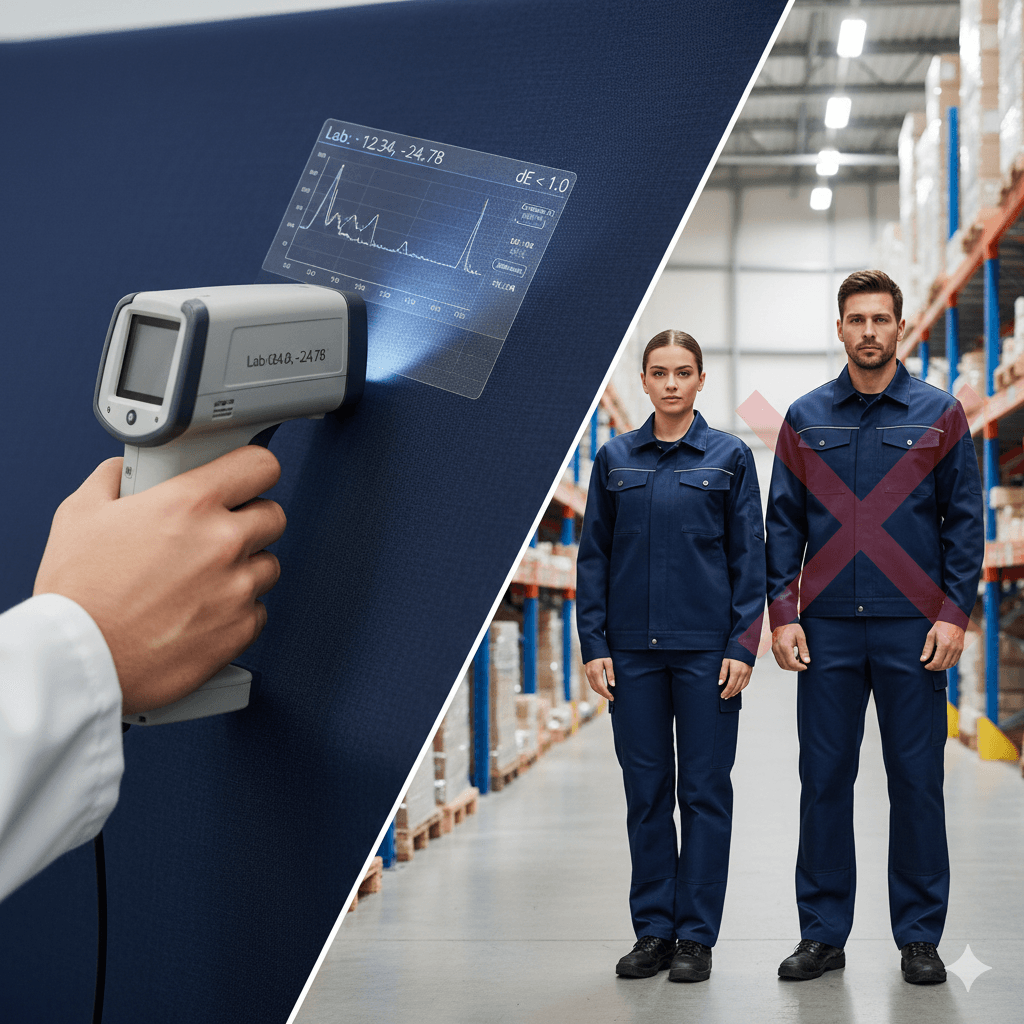 Color Consistency: The Delta-E Standard and the End of the “Clown Suit” Effect2026年2月4日In the corporate world, a uniform is a brand’s […]
 Why Zippers Fail (and How We Prevent It): The Engineering of Closure Reliability2026年2月4日In the hierarchy of industrial garment components, the […]
 The Anatomy of a Seam: Engineering Durability at the Needle Point2026年2月4日In the world of industrial workwear, the fabric gets all […]
 Future Lab PPE Trends: The Convergence of Lightweight Protection & Sustainability2026年1月28日In the sterile corridors of pharmaceutical R&D, biotech […]
 Chemical Protection Classes A/B/C: The Definitive Guide to Risk-Based PPE Selection2026年1月28日In the hazardous materials (HazMat) industry, […]
 Freezer Gloves & Boots Trends: The Intersection of Thermal Physics and Grip Technology2026年1月28日In the unforgiving environment of a -30°C cold storage […]