
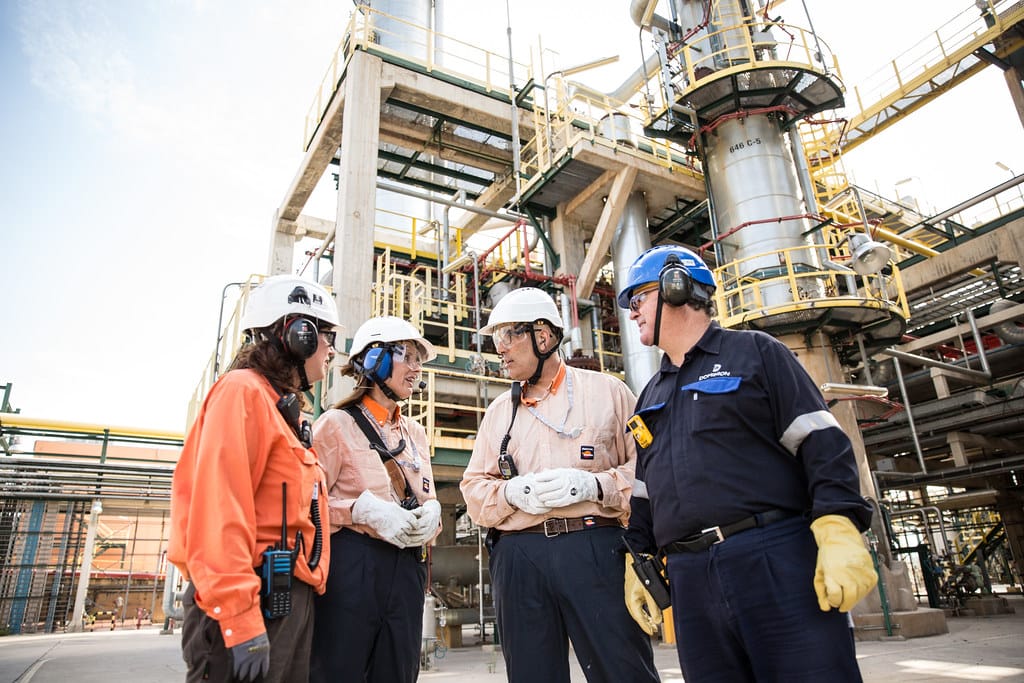
The oil & gas industry operates in some of the harshest, most hazardous environments on the planet. From offshore rigs in the North Sea, desert drilling in Saudi Arabia, to refineries in Nigeria and pipelines in Kazakhstan, workers face fire hazards, static electricity risks, explosive atmospheres, and extreme climates.
In these conditions, ordinary workwear is not enough. Every garment must be designed to protect against flash fires, prevent sparks from static discharge, and withstand rugged daily use, while keeping workers comfortable during long shifts.
For buyers, distributors, and agents serving oil & gas markets in Africa, Middle East, South America, and Central Asia, choosing the right flame-resistant (FR) and anti-static workwear is not only about compliance—it’s about saving lives and avoiding million-dollar project delays.
Oil & gas workwear must provide flame resistance (EN ISO 11612, NFPA 2112) and anti-static protection (EN 1149) to reduce ignition risks in explosive atmospheres. Key garments include FR coveralls, anti-static jackets, arc-rated base layers, and FR rain gear. Materials like modacrylic blends, aramid (Nomex, Kevlar), and treated cotton are widely used. Buyers should prioritize certified fabrics, climate adaptation, and durability under industrial laundry.
Why Oil & Gas Demands Specialized Workwear
-
Fire & Explosion Hazards
- Hydrocarbon vapors and flammable gases create constant ignition risks.
- A single spark can trigger catastrophic fires. FR + anti-static garments are non-negotiable.
-
Static Electricity Risks
- Workers moving on pipelines or storage tanks can generate static charges.
- Anti-static fibers and grounding through footwear/clothing prevent discharges.
-
Extreme Climates
- Desert rigs (45°C heat), offshore storms, Arctic pipelines (−30°C).
- Workwear must adapt to both heat stress and cold protection.
-
Compliance Pressure
- Multinationals like Shell, BP, Petrobras, Aramco demand certified PPE from suppliers.
- Contractors without compliant gear risk being banned from projects.
-
Worker Retention & Productivity
- Poor-quality FR coveralls cause heat exhaustion and discomfort.
- Comfortable, ergonomic gear ensures compliance and higher productivity.
Real-World Accident Cases
Case #1 – Refinery Fire, Nigeria (2021)
A worker wore standard cotton overalls during a flash fire caused by a leaking pipeline valve. The fabric ignited instantly, causing severe burns.
Lesson: FR-treated cotton or modacrylic blends would have self-extinguished, reducing injury.
Case #2 – Offshore Rig, Brazil (2020)
Static buildup during tank cleaning led to a spark, igniting vapors. Workers’ non-anti-static coveralls contributed to the ignition.
Fix: The company replaced gear with EN 1149-certified anti-static FR coveralls and added anti-static boots.
Case #3 – Oil Sands, Kazakhstan (2019)
Heavy winter coveralls lacked FR properties. During welding, sparks burned holes in jackets, exposing workers to hypothermia risk.
Solution: Procurement switched to FR-insulated parkas tested for both flame and cold resistance.
Case #4 – Desert Drilling, UAE (2022)
Workers complained of unbearable heat in 350gsm FR cotton coveralls. Many rolled sleeves up, leaving skin unprotected.
Outcome: Supplier introduced lightweight 220gsm modacrylic blends with moisture-wicking features. Compliance improved, and productivity rose.
Case #5 – Pipeline Maintenance, Angola (2021)
Contractors purchased uncertified FR gear from a low-cost supplier. During inspection, Shell rejected the uniforms, causing a 2-month project delay.
Lesson: Certification and audit-ready documentation are critical for oil & gas procurement.
Standards for Oil & Gas Workwear
| Standard | Purpose | Region |
|---|---|---|
| EN ISO 11612 | Protection against heat & flame | Europe / Global |
| EN 1149 | Anti-static performance | Europe |
| NFPA 2112 | Flame-resistant garments for flash fire | USA / Global |
| ASTM F1506 | FR clothing for electrical arc hazards | USA |
| IEC 61482 | Arc flash protection | Global |
| API & Company Specs | Oil majors often add stricter in-house rules | Middle East / Global |
Key Workwear Items for Oil & Gas
| Item | Function | Best Materials |
|---|---|---|
| FR Coveralls | Full-body flame protection | Modacrylic blends, aramid |
| Anti-Static Jackets | Spark prevention + climate control | Cotton-poly blends with carbon fibers |
| FR Base Layers | Extra protection under outerwear | Wool blends, arc-rated fabrics |
| FR Rain Gear | Weatherproof + flame-resistant | PU-coated FR polyester |
| FR Parkas & Cold Gear | Arctic or desert night operations | FR-treated insulated fabrics |
| FR Gloves & Balaclavas | Hand & face protection | Aramid, leather with FR lining |
| Anti-Static Safety Boots | Prevent discharge & ground the worker | Nitrile soles with conductive threads |
Material Selection & Innovations
- Treated Cotton FR → Affordable, but FR protection diminishes with washing.
- Modacrylic Blends → Permanent FR, lightweight, ideal for hot climates.
- Aramid Fibers (Nomex, Kevlar) → High-performance, strong, costly but long-lasting.
- Carbon/Steel Threads → Provide anti-static properties in fabric weaves.
- Hybrid Designs → FR + anti-static + hi-vis + climate comfort (multi-function garments).
✅ Pro Tip: Always verify if the FR treatment is inherent (permanent) or applied (can wash out).
Procurement Mistakes to Avoid
- Buying uncertified FR clothing → rejected in audits.
- Ignoring static protection → even FR coveralls can ignite if static sparks.
- Overlooking climate adaptation → workers won’t wear heavy, uncomfortable gear.
- Not testing wash durability → FR coatings can fade after 25–30 washes.
- Skipping accessories → gloves, boots, and helmets must match FR standards.
ROI & Cost-Benefit Analysis
| Scenario | Without Correct PPE | With Correct PPE | Savings |
|---|---|---|---|
| Refinery flash fire injury | $200,000+ medical/legal | $150 per coverall | $199,850+ |
| Project shutdown (non-compliance) | $1M+ in delays | $25,000 procurement | $975,000 |
| Worker turnover due to discomfort | 30% annual replacement | 10% with hybrid FR | 20% saved |
Buyer’s Toolkit
Quick Checklist
- [ ] EN ISO 11612 / NFPA 2112 certification
- [ ] Anti-static rating (EN 1149)
- [ ] Fabric weight suited to climate (220–300gsm)
- [ ] Industrial laundry test results
- [ ] Proof of supply chain traceability (audit-ready)
Buyer FAQ
Q1: What’s the difference between inherent FR and treated FR fabrics?
- Inherent = FR is part of the fiber, lasts the garment’s life.
- Treated = Chemical treatment, cheaper but may fade after washes.
Q2: Can one garment meet FR + anti-static + hi-vis?
Yes, hybrid designs integrate all three in a single coverall or jacket.
Q3: Are FR garments reusable across projects?
Yes, if maintained properly. Regular inspection and certification renewal are required.
Conclusion
In oil & gas, safety is non-negotiable. FR and anti-static workwear is not an optional expense—it’s a critical investment that saves lives, prevents disasters, and ensures projects pass compliance audits.
For traders and distributors in Africa, Middle East, South America, and Central Asia, offering certified, climate-appropriate FR & anti-static workwear is a guaranteed way to win contracts and build long-term partnerships with oil majors and contractors.
📩 Looking for certified oil & gas workwear suppliers?
Email: [email protected]
🌐 www.workwearsolutions.net

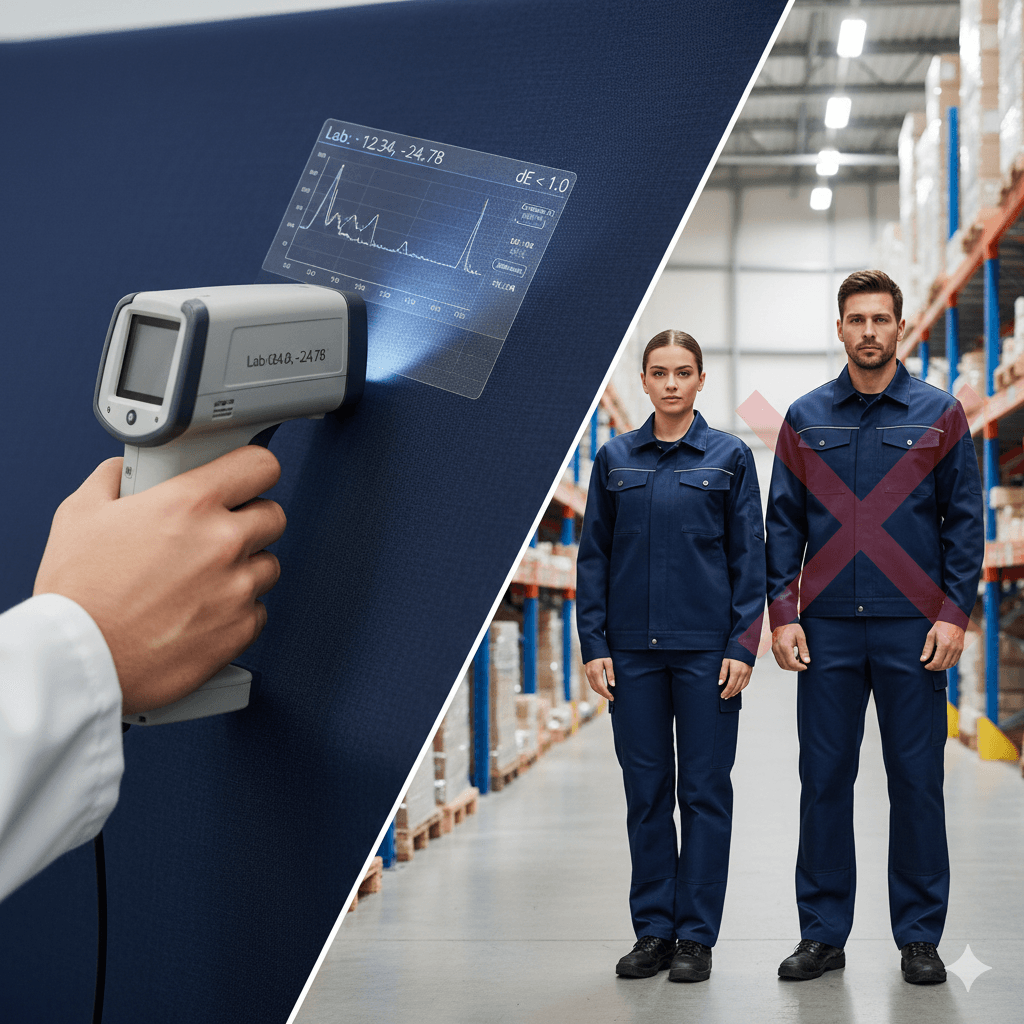 Color Consistency: The Delta-E Standard and the End of the “Clown Suit” Effect2026年2月4日In the corporate world, a uniform is a brand’s […]
 Why Zippers Fail (and How We Prevent It): The Engineering of Closure Reliability2026年2月4日In the hierarchy of industrial garment components, the […]
 The Anatomy of a Seam: Engineering Durability at the Needle Point2026年2月4日In the world of industrial workwear, the fabric gets all […]
 Future Lab PPE Trends: The Convergence of Lightweight Protection & Sustainability2026年1月28日In the sterile corridors of pharmaceutical R&D, biotech […]
 Chemical Protection Classes A/B/C: The Definitive Guide to Risk-Based PPE Selection2026年1月28日In the hazardous materials (HazMat) industry, […]
 Freezer Gloves & Boots Trends: The Intersection of Thermal Physics and Grip Technology2026年1月28日In the unforgiving environment of a -30°C cold storage […]