

For decades, flame-resistant (FR) workwear has been associated with a single trade-off:
maximum protection at the expense of comfort.
Traditional FR garments were often described by workers as heavy, stiff, hot, and restrictive. While they met safety standards, they created secondary risks—heat stress, fatigue, reduced mobility, and poor long-term wear compliance.
Today, that paradigm is changing.
Next-generation FR fabrics represent a major evolution in protective textiles. Through advances in fiber engineering, yarn design, fabric construction, and finishing technologies, modern FR materials are now:
- Thinner and lighter
- Noticeably softer and more flexible
- More breathable
- Longer-lasting through repeated industrial washing
In short: FR is no longer “thick and hard.”
It is becoming wearable protection—designed for long shifts, hot environments, and real human comfort, without compromising safety.
This guide follows the exact structural blueprint of the dairy PPE reference article. It combines:
- FR fundamentals and standards
- Material and fabric technology comparisons
- Industry-specific risk scenarios
- Procurement mistakes and ROI analysis
- Buyer checklists and sourcing strategies
The result is a complete decision-making framework for selecting next-generation FR fabrics for modern industrial operations.
Google Snippet: Quick Answer
Next-generation FR fabrics use advanced fibers and fabric engineering to deliver flame resistance with reduced weight, improved softness, and extended wash life.
They maintain compliance with standards such as NFPA 2112, EN ISO 11612, and IEC 61482, while offering superior comfort for long shifts. Modern FR workwear is no longer thick and rigid—it is designed for all-day wear in oil & gas, utilities, electrical, and manufacturing environments.
1. Why Traditional FR Workwear Is No Longer Enough
FR workwear exists to protect against life-threatening thermal hazards. But protection that workers resist wearing correctly—or continuously—fails its purpose.
1.1 The Historical FR Trade-Off
Legacy FR fabrics prioritized:
- High fabric weight
- Dense constructions
- Stiff aramid fibers
- Heavy chemical treatments
This resulted in garments that were:
- Hot and poorly breathable
- Restrictive during movement
- Slow to dry after washing
- Fatiguing over long shifts
Workers complied because they had to—not because the garments worked with them.
1.2 New Operational Realities
Modern industrial environments demand more from FR workwear:
- Longer shifts (10–14 hours)
- Hotter climates and outdoor exposure
- Higher physical activity levels
- Greater focus on heat stress prevention
- Stricter ESG and lifecycle cost analysis
Comfort is no longer a “nice to have.”
It is a safety multiplier.
2. What Are Next-Generation FR Fabrics?
Next-gen FR fabrics are not defined by a single fiber or brand. They are defined by a systems-level improvement in how flame resistance, comfort, and durability are balanced.
2.1 Core Definition
A next-generation FR fabric:
- Meets all required flame and arc standards
- Uses lighter-weight constructions
- Offers improved softness and drape
- Maintains or extends wash durability
- Supports long-duration wear without fatigue
The key shift is this:
FR protection is engineered into the fabric—not layered on top of it.
2.2 What Has Changed Compared to Traditional FR
| Aspect | Traditional FR | Next-Gen FR |
|---|---|---|
| Fabric weight | Heavy | Optimized, lighter |
| Hand feel | Stiff | Soft, textile-like |
| Breathability | Limited | Significantly improved |
| Wash life | Moderate | Extended |
| Worker acceptance | Low | High |
3. How Next-Gen FR Fabrics Work: Technology Breakdown
Modern FR comfort improvements are the result of multiple parallel innovations, not a single breakthrough.
3.1 Advanced Inherent FR Fibers
Inherent FR fibers are flame-resistant by their molecular structure, not by surface treatments.
Modern improvements include:
- Finer filament diameters
- Improved fiber flexibility
- Blended yarn systems
Examples of inherent FR fiber families:
- Modacrylic blends
- Advanced aramids
- FR viscose cellulosics
Advantages
- FR does not wash out
- Softer than legacy aramids
- More consistent long-term protection
3.2 Optimized Fabric Construction
Fabric engineering plays a critical role in comfort.
Next-gen approaches include:
- Lower yarn density with smarter weave balance
- Stretch-integrated constructions
- Zoned fabric mapping (lighter in low-risk areas)
This allows fabrics to:
- Move with the body
- Reduce pressure points
- Improve airflow
3.3 Breathability and Moisture Management
Modern FR fabrics increasingly integrate:
- Wicking yarns
- Capillary channel structures
- Faster drying performance
This reduces:
- Sweat accumulation
- Heat stress risk
- Post-wash downtime
3.4 Improved FR Chemical Treatments (for Treated FR)
For treated cotton or blends, newer FR chemistries:
- Penetrate fibers more evenly
- Reduce stiffness after curing
- Maintain softness over wash cycles
The result: treated FR that feels closer to everyday workwear.
4. Relevant Safety Standards for FR Workwear
Comfort improvements must never compromise compliance.
| Protection Area | Standard | Purpose |
|---|---|---|
| Flame Resistance | EN ISO 11612 | Heat and flame protection |
| Arc Flash | IEC 61482 | Electrical arc hazards |
| Flash Fire | NFPA 2112 | Industrial flash fire |
| Electrical Safety | ASTM F1506 | Electrical worker PPE |
| Wash Durability | ISO 6330 | Performance after laundering |
Next-gen FR fabrics are designed to meet or exceed these standards at lower fabric weights.
5. Material Selection: Comparing FR Fabric Technologies
| FR Fabric Type | Comfort Level | Durability | Notes |
|---|---|---|---|
| Traditional Aramid | Low | Very High | Extremely stiff |
| Treated Cotton FR | Medium | Medium | FR may degrade |
| Inherent FR Blends | High | High | Best balance |
| Next-Gen Lightweight FR | Very High | High | Long-shift optimized |
6. Case Study Comparisons by Industry Segment
6.1 Oil & Gas Operations
| Scenario | Traditional FR | Next-Gen FR |
|---|---|---|
| Heat buildup | High | Reduced |
| Mobility | Restricted | Improved |
| Shift endurance | 6–8 hours | 10–12 hours |
| Compliance | Forced | Voluntary |
Outcome:
Reduced heat stress incidents and higher PPE compliance.
6.2 Electrical Utilities
| Scenario | Legacy FR | Next-Gen FR |
|---|---|---|
| Arc protection | Compliant | Compliant |
| Fabric stiffness | High | Low |
| Dexterity | Limited | Improved |
| Worker feedback | Negative | Positive |
Outcome:
Better task precision and reduced fatigue-related errors.
6.3 Manufacturing & Maintenance
| Scenario | Old FR | New FR |
|---|---|---|
| All-day wear | Uncomfortable | Sustainable |
| Wash life | 50–75 cycles | 100+ cycles |
| Replacement rate | High | Lower |
7. Common Procurement Mistakes in FR Fabric Selection
| Mistake | Impact | Prevention Tip |
|---|---|---|
| Focusing only on GSM | Missed comfort gains | Evaluate fabric structure |
| Ignoring wash durability | High replacement cost | Request lifecycle data |
| Over-specifying protection | Unnecessary bulk | Match hazard analysis |
| Skipping wearer trials | Resistance | Conduct field testing |
8. ROI Analysis: Comfort Drives Real Savings
8.1 Cost Comparison (Per 100 Workers / Year)
| Cost Category | Traditional FR | Next-Gen FR |
|---|---|---|
| Garment cost | $45,000 | $55,000 |
| Replacement | $30,000 | $18,000 |
| Heat stress downtime | $25,000 | $10,000 |
| Compliance issues | $12,000 | $4,000 |
| Total Cost | $112,000 | $87,000 |
Annual Savings: ≈ 22%
8.2 Hidden ROI Factors
- Fewer heat-related incidents
- Higher worker morale
- Better retention
- Improved brand perception
- Lower audit risk
9. Buyer Checklist for Next-Gen FR Fabrics
- [ ] Confirm standard compliance
- [ ] Evaluate fabric weight vs protection
- [ ] Test softness and drape
- [ ] Verify wash-cycle durability
- [ ] Conduct long-shift wearer trials
- [ ] Analyze total lifecycle cost
- [ ] Align with heat stress management plans
10. Frequently Asked Questions (FAQ)
Q1: Are lighter FR fabrics less protective?
A: No—when properly engineered, protection is maintained.
Q2: Do next-gen FR fabrics last longer?
A: Yes, many exceed 100 industrial wash cycles.
Q3: Are they suitable for hot climates?
A: They are specifically designed for heat management.
Q4: Is inherent FR always better than treated FR?
A: Not always—but modern inherent blends offer superior consistency.
Q5: Is the cost premium justified?
A: Yes—through lower replacement and downtime costs.
11. Advanced Sourcing Strategies for FR Workwear
-
Start with High-Heat Roles
Equip the most heat-stressed workers first. -
Request Full Fabric Data Sheets
Weight, air permeability, wash life. -
Run Extended Wear Trials
Minimum 30–60 days. -
Mix Fabric Classes Strategically
Not all roles need maximum arc ratings. -
Plan for Long-Term Supply Stability
Consistent fiber sourcing is critical.
12. Conclusion
Next-generation FR fabrics mark a fundamental shift in protective workwear philosophy.
They prove that safety and comfort are not opposites, and that flame resistance does not have to mean bulk, stiffness, or fatigue.
By adopting lighter, softer, and longer-lasting FR fabrics, organizations can:
- Improve worker safety and compliance
- Reduce heat stress risks
- Lower total cost of ownership
- Support long, demanding shifts
FR is no longer something workers simply endure.
With next-gen fabrics, FR becomes something they can actually work in.
📩 Looking to source next-generation FR workwear solutions?
Email: [email protected]
🌐 www.workwearsolutions.net

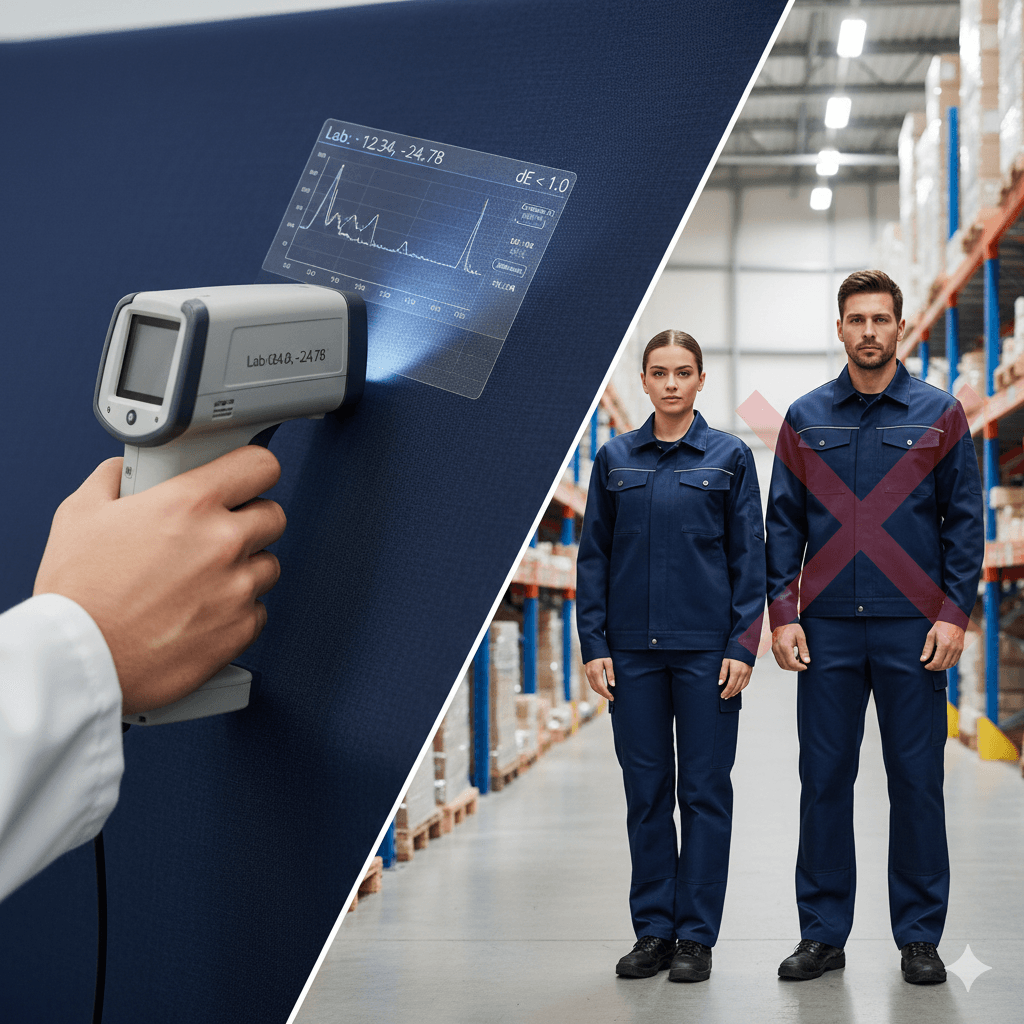 Color Consistency: The Delta-E Standard and the End of the “Clown Suit” Effect2026年2月4日In the corporate world, a uniform is a brand’s […]
 Why Zippers Fail (and How We Prevent It): The Engineering of Closure Reliability2026年2月4日In the hierarchy of industrial garment components, the […]
 The Anatomy of a Seam: Engineering Durability at the Needle Point2026年2月4日In the world of industrial workwear, the fabric gets all […]
 Future Lab PPE Trends: The Convergence of Lightweight Protection & Sustainability2026年1月28日In the sterile corridors of pharmaceutical R&D, biotech […]
 Chemical Protection Classes A/B/C: The Definitive Guide to Risk-Based PPE Selection2026年1月28日In the hazardous materials (HazMat) industry, […]
 Freezer Gloves & Boots Trends: The Intersection of Thermal Physics and Grip Technology2026年1月28日In the unforgiving environment of a -30°C cold storage […]