
For decades, the industrial sector operated on a "one-world" philosophy regarding Personal Protective Equipment (PPE): Male is the default. Women entering trades like construction, mining, and oil & gas were forced to wear "Unisex" clothing—which, in reality, is simply downsized men’s clothing.
This approach is not just uncomfortable; it is dangerous. A woman wearing a "Small Men’s" coverall faces trip hazards from long pant legs, entanglement risks from baggy sleeves, and exposure to hazardous substances due to gaping collars. Furthermore, the lack of accommodation for chest, hip, and rise measurements restricts mobility, causing premature fatigue and musculoskeletal injury.
This guide combines Part 1 (Anthropometric Science & Safety Hazards) and Part 2 (Procurement Strategies & ROI) to provide a complete decision-making toolkit for sourcing gender-specific workwear.
Google Snippet: Quick Answer
Proper workwear fit for women is an issue of safety, not just aesthetics. Men’s workwear relies on a "straight-line" silhouette (shoulders > waist > hips). Women’s anatomy requires articulated tailoring to accommodate a smaller waist-to-hip ratio, bust allowance, and shorter torso length. Implementing gender-specific PPE reduces trip/snag hazards, improves joint mobility, and ensures vital protection (like kneepads) stays aligned with the body.
1. The Anatomy of Risk: Why "Unisex" is a Hazard
When a woman wears men’s PPE, she fights the garment with every movement.
The "Snag and Trip" Factor
- Excess Fabric: Men’s clothing scaled down often retains wide shoulders and long limbs. Baggy sleeves can catch in rotating machinery, while long pant hems create severe trip hazards on scaffolding.
- The "Crotch Drop": Men have a longer "rise" (distance from crotch to waist). On a woman, this creates a low-hanging crotch that restricts leg lifting, making climbing ladders dangerous.
Vital Organ Exposure
- The Gaping Collar: Because men have broader necks and shoulders, men’s coveralls on women often gape at the neck. In welding or chemical handling, this "funnel effect" allows sparks or hazardous liquids to enter the garment, reaching the chest area.
- Misaligned Armor: High-visibility vests or tactical armor designed for a flat male chest will slide up or to the side on a female bust, leaving the heart and lungs exposed.
Musculoskeletal Strain
- Weight Distribution: A heavy tool belt worn on a woman’s hips (which are wider) vs. a man’s hips (which are narrower) sits differently. Straight-cut men’s pants force the belt to slide up to the waist or dig into the hips, causing chronic back pain.
2. Relevant Safety Standards and Regulations
Regulatory bodies are moving from general requirements to specific inclusivity mandates.
| Standard/Body | Relevant Regulation | Impact on Sourcing |
|---|---|---|
| OSHA (USA) | 1910.132(d)(1) | Employers must select PPE that properly fits each affected employee. "Ill-fitting" PPE is a violation. |
| ISO 13688 | General Req. for Protective Clothing | Mandates that clothing must not hinder movement or cause discomfort due to fit. |
| CSA Z96-15 | High Visibility Safety Apparel | Requires that the garment fits the user correctly so that reflective tape bands are not obscured or displaced. |
| EN 340 | Ergonomics of PPE | Specifies that PPE design must account for the morphology of the user (size, curvature, gender). |
3. Anthropometric Engineering: The Technical Differences
To procure safe gear, one must understand the specific dimensional shifts required for the female form.
| Measurement Zone | Male Pattern (The "Block") | Female Pattern (The "Curve") | Safety Implication |
|---|---|---|---|
| Torso & Shoulders | Broad shoulders, longer torso length. | Narrower shoulders, shorter torso, bust allowance needed. | Prevents shoulder seams from sliding down (snag risk) and eliminates collar gaps. |
| Chest Design | Flat front. | Darted or Princess Seams to accommodate 3D shape. | Prevents fabric tension across the chest which restricts breathing and arm movement. |
| Waist-to-Hip Ratio | Straight cut (Square). | Curved cut (Hourglass/Pear). Hips are typically wider than the waist. | Prevents pants from gaping at the back (plumber’s crack) which exposes skin to chemicals/sparks. |
| The "Rise" | Longer front and back rise. | Shorter front rise, curved back yoke. | Ensures the pant crotch sits against the body, allowing full range of motion for climbing. |
| Limb Length | Longer arms and legs relative to torso. | Shorter limbs, different muscle mass distribution. | Keeps knee pads centered on the knee, not the shin. Keeps cuffs out of machinery. |
4. Case Study Comparisons by Industry Segment
| Industry Segment | The "Unisex" Problem | The Female-Fit Solution | Operational Outcome |
|---|---|---|---|
| Mining & Resources | Bathroom Access: To use the restroom, women in standard coveralls must remove the entire suit (including hard hat/radio), which is unsanitary and time-consuming. | Drop-Seat Coveralls: An elasticized, zippered rear panel allowing use without removing the top half. | Health: Reduced UTIs (women no longer "hold it"). Efficiency: Restroom break times reduced by 15 mins. |
| Construction | Fall Protection: Standard harnesses have chest straps that crush breast tissue and leg straps that cut into hips. | V-Form Harness: Cross-chest design avoids the bust; hip straps angled for female pelvis. | Compliance: 100% harness usage rate achieved (previously women avoided them due to pain). |
| Logistics | Hand Protection: "Small" men’s gloves have palms that are too wide and fingers that are too thick. | Female Lasting: Gloves with narrower palms and longer, slender fingers. | Dexterity: Scanner accuracy improved by 12% because gloves weren’t slipping off. |
| Law Enforcement | Ballistic Vests: Flat panels leave gaps at the armpit and crush the chest. | Contoured Armor: Cupped plates and shorter torso cut. | Survival: Eliminated the "gap" where a bullet/knife could enter; improved mobility in chases. |
5. Common Procurement Mistakes in Women’s Workwear
| Mistake | Impact | Prevention Tip |
|---|---|---|
| The "Shrink it and Pink it" | Taking a male pattern, sizing it down, and dyeing it pink. It still fits poorly and looks patronizing. | Ignore color. Focus on pattern engineering (waist-hip ratio, rise depth). |
| Buying by Size S/M/L only | A woman’s "Medium" varies wildly. A size 12 hip might need a size 10 waist. | Source brands offering Numeric Sizing (6, 8, 10…) and Leg Lengths (Short, Reg, Tall). |
| Ignoring the "Modesty" Factor | Low-rise pants designed for men expose female workers when they bend over. | Specify High-Waist or Contoured Waistbands that sit higher on the back. |
| Assuming Demand is too Low | "We only have 5 women, it’s not worth a special order." | This opens the company to discrimination lawsuits and OSHA citations. |
| Overlooking Maternity | Pregnant workers are often forced to wear massive men’s clothing, creating extreme trip hazards. | Source Maternity Workwear (stretch panels, adjustable waists) for temporary use. |
Example: A UK railway company issued "Unisex" rain gear. The jackets were so long on female engineers that they couldn’t reach their tool belts without lifting the hem. Correction: They switched to a female-fit jacket with a shorter hem and articulated elbows. Tool access speed increased, and frustration plummeted.
6. ROI Analysis: The Economics of Equity
Providing gender-specific PPE costs slightly more per unit due to lower manufacturing volumes, but the ROI is substantial.
| Metric | Unisex Workwear | Women’s Specific Workwear | Financial Implication |
|---|---|---|---|
| Accident Rate | Higher (Trips, snags, reduced dexterity). | Lower (Fitted gear stays out of the way). | Lower Insurance Premiums and liability costs. |
| Garment Lifespan | Low. (Hems drag on floor; fabric stressed by tight hips). | High. (Correct fit reduces fabric stress and drag). | Reduced Replacement Costs. |
| Productivity | Worker stops to adjust sleeves/waist 15x per hour. | "Set and Forget" fit. | Time Savings: Estimated 20 mins/day/worker. |
| Retention | "I don’t feel welcomed or safe here." | "The company values my safety." | Lower Turnover: Saving $5k-$10k in recruitment costs per skilled trade. |
7. Buyer Checklist for Women’s Workwear Sourcing
- [ ] Try-On Trials: Never buy from a catalog. Conduct a "movement audit" (squat, reach, climb) with female staff.
- [ ] The "Squat Test": When squatting, does the waistband gap at the back? If yes, the pattern is male/straight.
- [ ] Chest Capacity: Does the button-down shirt gape at the bust? Look for hidden placket buttons or "No-Gape" technology.
- [ ] Knee Pad Alignment: When kneeling, does the pad hit the knee cap or the shin? (Women have shorter lower legs).
- [ ] Adjustability: Are there internal waist adjusters or adjustable cuffs to fine-tune the fit?
- [ ] Thermal Layering: Is there room for thermal underwear without the garment becoming restrictive?
8. Frequently Asked Questions (FAQ)
Q1: Can’t women just wear a belt with men’s pants? A: No. Because men’s pants are straight-cut, cinching them with a belt creates bunching fabric at the waist, which can chafe and interfere with tool belts. It solves the gravity issue but creates an ergonomic one.
Q2: Is women’s FR (Flame Resistant) clothing different? A: Yes. The fabric standards (NFPA 2112) are the same, but the fit is critical. Baggy FR clothing traps more oxygen (fuel) during a fire, and tight clothing transmits heat faster to the skin. Correct fit is vital for burn protection.
Q3: Is it expensive to stock a separate inventory? A: Many modern suppliers offer "Managed Uniform Programs" where they stock the sizes, and you order on-demand. This removes the need for you to hold niche inventory.
Q4: What about boots? A: Women’s feet aren’t just smaller; they have a higher arch and a narrower heel. Men’s boots create "heel slip," leading to blisters and instability. You must source Women’s Last footwear.
Q5: How do we handle non-binary employees? A: Focus on "Fit" rather than "Gender." Label the clothing as "Straight Fit" (Male pattern) and "Curved Fit" (Female pattern) and allow employees to choose the shape that fits their body best.
9. Advanced Sourcing Strategies: Implementation
-
The "Fit Clinic": Before signing a contract, have the vendor bring a full size run to the site. Have every female employee fitted by a professional. Keep this data on file.
-
Voice of the Worker (VoW): Establish a "Women in Safety" committee to review PPE options. If the gear looks bad or feels bad, compliance will drop.
-
Stretch Technology: Utilize Mechanical Stretch fabrics (like T400). Stretch creates a margin of error. If a woman is between sizes, stretch fabric will accommodate her hips/bust comfortably without needing a custom tailor.
-
Vendor Partnership: Choose a supplier who treats women’s workwear as a Core Category, not an accessory line. Ask: "Do you design your own women’s patterns, or do you just grade down men’s patterns?"
10. Conclusion
The transition from "Unisex" to Anatomically Engineered Workwear is a defining moment for industrial safety.
When a company provides a female worker with gear that fits her chest, hips, and limbs, they are sending a powerful message: "You belong here, and your safety is non-negotiable."
By optimizing fit, you optimize the worker. You remove the physical distractions of slipping straps and tripping hems, allowing her to focus entirely on the task at hand. Better fit is not a luxury—it is a fundamental safety control.
📩 Need help sourcing Female-Specific Industrial PPE? We specialize in anatomically correct patterns for women in Mining, Oil & Gas, and Construction. Email: [email protected] 🌐 www.workwearsolutions.net

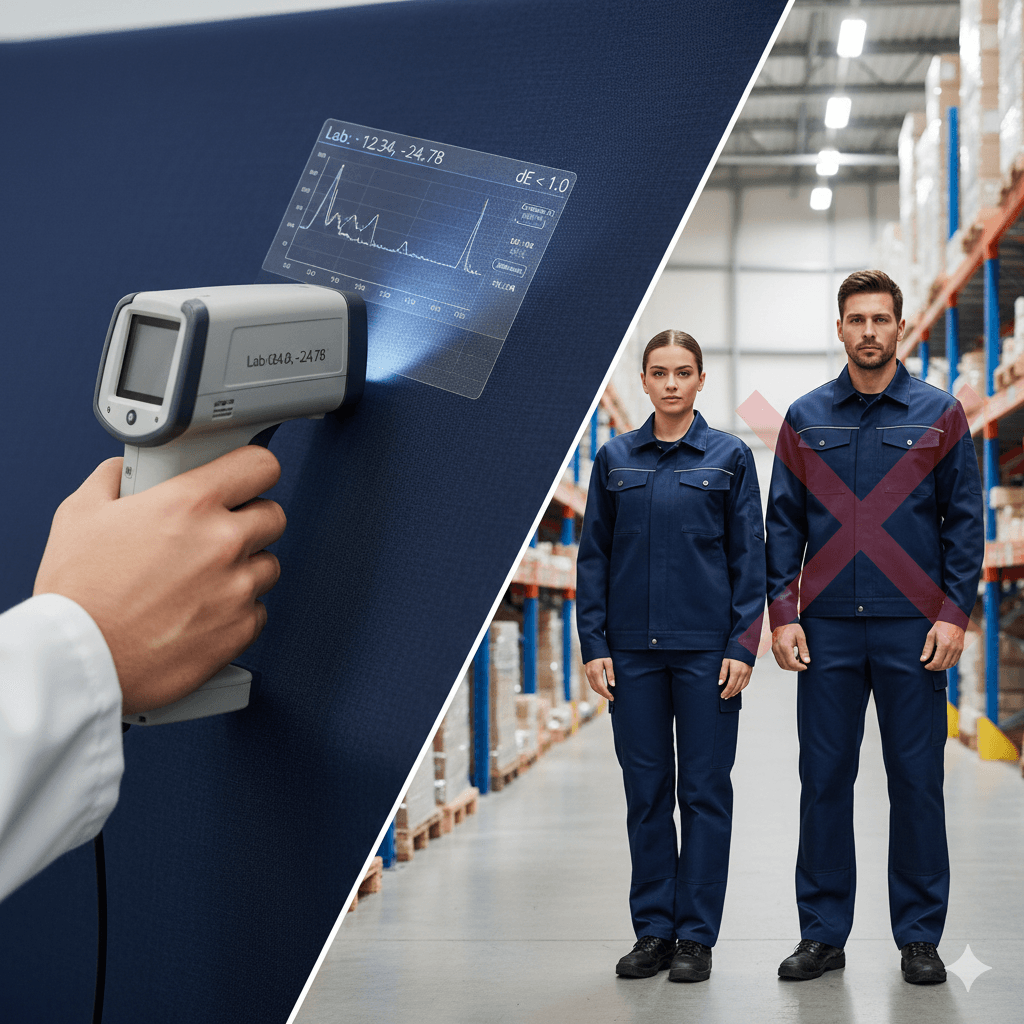 Color Consistency: The Delta-E Standard and the End of the “Clown Suit” Effect2026年2月4日In the corporate world, a uniform is a brand’s […]
 Why Zippers Fail (and How We Prevent It): The Engineering of Closure Reliability2026年2月4日In the hierarchy of industrial garment components, the […]
 The Anatomy of a Seam: Engineering Durability at the Needle Point2026年2月4日In the world of industrial workwear, the fabric gets all […]
 Future Lab PPE Trends: The Convergence of Lightweight Protection & Sustainability2026年1月28日In the sterile corridors of pharmaceutical R&D, biotech […]
 Chemical Protection Classes A/B/C: The Definitive Guide to Risk-Based PPE Selection2026年1月28日In the hazardous materials (HazMat) industry, […]
 Freezer Gloves & Boots Trends: The Intersection of Thermal Physics and Grip Technology2026年1月28日In the unforgiving environment of a -30°C cold storage […]