
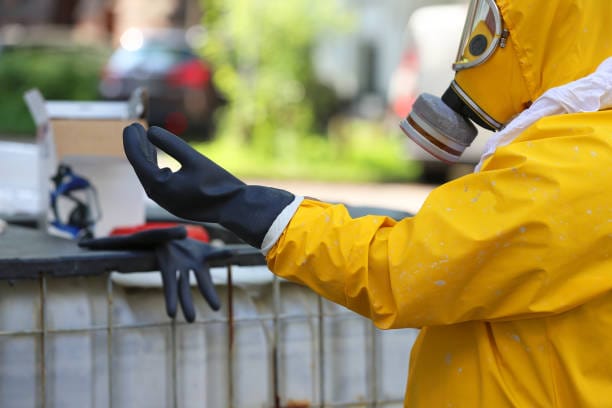
How to Choose the Right Disposable Suit for Your Industry
A Type 5/6 suit might work great in a warehouse—but fail instantly in a pesticide field or chemical tank room.
Each industry has different hazards, environments, and regulatory pressures.
So picking the right disposable suit isn’t one-size-fits-all—it’s about knowing your real risks and use case.
The right disposable protective clothing depends on your industry’s specific hazards—whether that’s dry dust, liquid splash, chemical vapor, or biological agents. Type certification (1–6), fabric material, comfort, and compliance all play critical roles in choosing the correct suit.
Industry-by-Industry Suit Selection Guide
| Industry | Common Risks | Recommended Suit Type / Material |
|---|---|---|
| Pharmaceutical | Contamination, dry powders, hygiene | Type 5/6, Tyvek®, antistatic |
| Healthcare | Infectious fluids, cross-contamination | EN 14126, microporous film, SMS isolation gowns |
| Agriculture | Pesticides, animal fluids | Type 3/4 laminated film (ChemMax®, MicroMax® TS) |
| Industrial Cleaning | Chemical splash, vapor, abrasion | Type 3/4 with sealed seams, chemical-resistant fabric |
| Food Processing | Hygiene, wet surfaces, light splashes | SMS or PE-coated, elastic cuffs, hooded |
| Painting / Coating | Paint mist, solvents | Microporous Type 5/6, anti-static, hooded |
| Construction / Mining | Dust, mechanical wear | Durable SMS or PE-coated Type 5/6 |
| Emergency Response | Chemical unknowns, biohazards | Type 3/4, EN 14126, possibly SCBA-compatible |
| Electronics | Particle-free, ESD-sensitive environments | Tyvek® low-lint, EN 1149 (antistatic) |
Key Factors to Consider
1. Hazard Type
- Dry only → Type 5
- Light spray → Type 6
- Liquid splash → Type 4
- Pressurized jets or soak → Type 3
- Biological → Must pass EN 14126
🔍 Always cross-reference with SDS (Safety Data Sheet) of substances handled.
2. Work Duration
- Short-term tasks: use breathable SMS or PE-coated suits
- Long shifts: go for lightweight, ventilated, or hooded options
- High sweat environments: avoid microporous-only suits
3. Temperature and Humidity
- Hot areas → favor breathable fabrics (Tyvek®, SMS)
- Cold or wet areas → go for laminated or coated suits
- Avoid using impermeable suits in hot zones without ventilation accessories
4. Regulatory Requirements
- Healthcare → EN 14126 + ISO 16603 for blood-borne pathogen resistance
- Cleanroom → EN 1149 (anti-static), ISO 14644 compliance
- Chemical plants → EN 14605 (Type 3/4) and chemical compatibility tested
⚠️ Some suits are “certified” only to Type 5/6—not enough for real liquid risks.
5. Disposability vs. Reusability
- For high-contamination, biohazard, or short-cycle tasks → go disposable
- For mechanical hazards or harsh abrasion → consider reinforced or limited-use coveralls
Common Selection Mistakes
| Mistake | Why It’s Risky |
|---|---|
| Using SMS for pesticide spraying | SMS is breathable, but not liquid tight |
| Buying “Type 6 only” for wet cleaning | It doesn’t protect against actual splashes |
| Using microporous in 40°C heat | Can cause heat exhaustion without ventilation |
| Ignoring EN 14126 in healthcare | Leads to non-compliance in infection zones |
| Reusing “disposable” suits | Weakens protection; degrades fabric performance |
Buyer Checklist by Industry
Before placing an order, ask:
- ✅ What’s the liquid / dust / vapor exposure in this job?
- ✅ Is the environment clean, wet, or hazardous?
- ✅ Do we need suits with hood, boots, or elastic cuffs?
- ✅ Do we require EN 14126 / EN 1149 / antistatic / flame retardant?
- ✅ How long will workers wear this per shift?
💬 At workwearsolutions, we help clients build industry-specific PPE lists—not just generic models.
Conclusion
Your industry defines your risks. Don’t buy based on price or appearance—match your disposable suits to real conditions.
Whether it’s particle control in a cleanroom or chemical exposure in agriculture, we’re here to help you choose correctly, efficiently, and compliantly.
📩 Email: [email protected]
🌐 Website: www.workwearsolutions.net

 Color Consistency: The Delta-E Standard and the End of the “Clown Suit” Effect2026年2月4日In the corporate world, a uniform is a brand’s […]
 Why Zippers Fail (and How We Prevent It): The Engineering of Closure Reliability2026年2月4日In the hierarchy of industrial garment components, the […]
 The Anatomy of a Seam: Engineering Durability at the Needle Point2026年2月4日In the world of industrial workwear, the fabric gets all […]
 Future Lab PPE Trends: The Convergence of Lightweight Protection & Sustainability2026年1月28日In the sterile corridors of pharmaceutical R&D, biotech […]
 Chemical Protection Classes A/B/C: The Definitive Guide to Risk-Based PPE Selection2026年1月28日In the hazardous materials (HazMat) industry, […]
 Freezer Gloves & Boots Trends: The Intersection of Thermal Physics and Grip Technology2026年1月28日In the unforgiving environment of a -30°C cold storage […]