
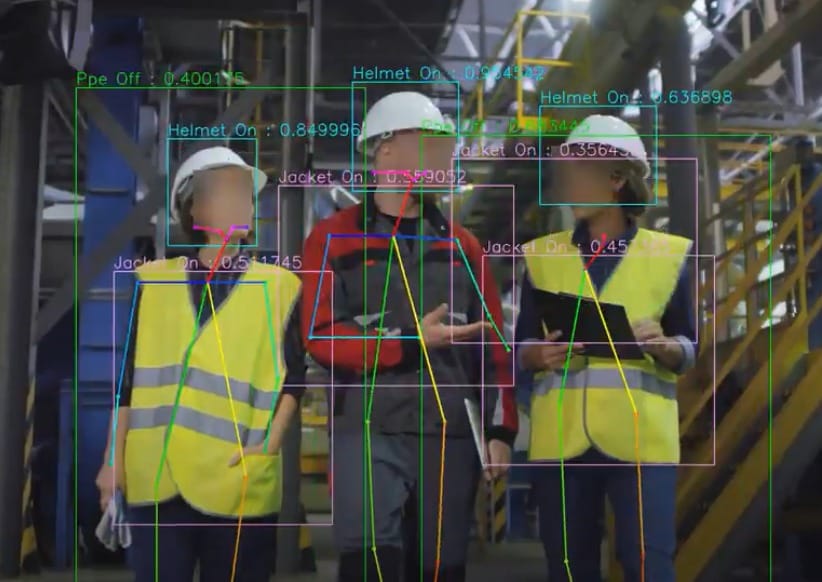
Data-Driven Fatigue Prevention for Food Processing and Cold Chain Facilities
In food processing plants and cold chain operations, safety risks are not limited to sharp tools, wet floors, or extreme temperatures.
One of the most underestimated yet dangerous threats is worker fatigue—especially during night shifts, long working hours, repetitive tasks, and cold environments.
Fatigue-Monitoring Smart Vests are designed to address this invisible risk.
By continuously monitoring heart rate, body temperature, and movement patterns, these smart garments can identify early signs of fatigue, issue alerts before errors occur, and help management reduce night-shift mistake rates and occupational injuries.
They are particularly suitable for:
- Food processing plants
- Cold storage and cold chain logistics facilities
- Dairy, meat, seafood, and frozen food factories
- 24/7 continuous production environments
This guide follows the same professional structure as the PPE dairy processing article and provides a complete decision-making framework covering technology principles, application scenarios, compliance, ROI analysis, procurement strategy, and real-world outcomes.
Google Snippet: Quick Answer
Fatigue-Monitoring Smart Vests reduce night-shift errors by tracking heart rate, body temperature, and movement to detect worker fatigue in real time.
They are especially effective in food processing and cold chain facilities, where long hours, low temperatures, and repetitive tasks significantly increase fatigue-related safety risks.
1. Why Fatigue Is a Critical Risk in Food Processing and Cold Chain Operations
1.1 Night Shifts and Rotating Schedules
Food and cold chain industries operate around the clock:
- Cold storage and logistics require 24/7 staffing
- Dairy and meat processing lines run continuously
- Loading, unloading, and quality inspection often peak at night
Scientific studies consistently show that:
- Reaction time during night shifts drops by 20–30%
- Decision-making accuracy declines significantly
- Workers often do not realize they are fatigued
Fatigue rarely appears as falling asleep. Instead, it manifests as slower reactions, reduced attention, and poor judgment—all of which are critical in food safety environments.
1.2 Cold Environments Mask Fatigue Signals
In cold storage and chilled processing areas:
- Low temperatures suppress subjective sleepiness
- Workers feel “awake” but experience higher physiological stress
- Energy consumption increases to maintain core body temperature
This is why fatigue-related incidents in cold chain facilities are often sudden and severe, with little visible warning.
1.3 Human Error and Its Chain Reaction
A single fatigue-related mistake can result in:
- Equipment misoperation → production downtime
- Knife or machinery injuries → compensation claims
- Temperature control errors → product spoilage
- Missed hygiene steps → food safety violations or recalls
Traditional PPE offers no early-warning mechanism for fatigue-related risks.
2. What Are Fatigue-Monitoring Smart Vests?
2.1 Definition
A Fatigue-Monitoring Smart Vest is an advanced wearable PPE solution that integrates biometric sensors, motion tracking, and intelligent algorithms to monitor worker fatigue in industrial environments.
Its purpose is not impact protection, but risk prediction and prevention.
2.2 Core Monitoring Parameters
| Monitoring Factor | What Is Measured | Safety Value |
|---|---|---|
| Heart Rate (HR) | Average HR, spikes | Physical stress and workload |
| Heart Rate Variability (HRV) | HR fluctuation patterns | Early fatigue and stress detection |
| Body Temperature | Skin and core trends | Cold stress or overexertion |
| Movement & Posture | Step frequency, motion range | Fatigue-induced slowdown or instability |
| Work Duration | Continuous activity time | Overwork and insufficient rest |
2.3 Difference from Consumer Wearables
| Consumer Fitness Devices | Fatigue-Monitoring Smart Vests |
|---|---|
| Designed for personal wellness | Designed for industrial safety |
| Fragmented individual data | Centralized management platform |
| No job-context awareness | Task- and environment-specific |
| Not PPE-compliant | Integrated into PPE systems |
3. How Smart Vests Detect Fatigue: Technology Explained
3.1 Heart Rate Variability (HRV)
- Prolonged workload causes HRV reduction
- HRV is one of the most reliable early fatigue indicators
- Changes often appear hours before an incident
HRV monitoring is especially valuable during night shifts when cognitive fatigue develops faster.
3.2 Body Temperature and Cold Stress
- Cold environments increase metabolic demand
- Abnormal temperature trends may indicate:
- Physical exhaustion
- Reduced circulation
- Increased error risk
Smart vests track these changes continuously, not just at shift start.
3.3 Motion Pattern Analysis
Using IMU (Inertial Measurement Units), the system identifies:
- Slower walking speed
- Reduced motion range
- Increased idle or pause time
These subtle changes often precede attention lapses and accidents.
3.4 Intelligent Thresholds and Alerts
Smart vests do not rely on fixed alarm limits. Instead, they:
- Establish individual baseline profiles
- Adapt to job type and environment
- Use dynamic thresholds to reduce false alarms
- Provide actionable alerts for supervisors
4. Why Smart Vests Are Ideal for Food Processing and Cold Chain Facilities
4.1 Long, Repetitive Tasks
Food processing work typically involves:
- High repetition
- Strict process discipline
- Minimal tolerance for error
Fatigue accumulates silently, making proactive detection essential.
4.2 Cold, Wet, and High-Humidity Conditions
Common environments include:
- 0°C to -25°C cold rooms
- High-humidity washdown zones
- Frequent transitions between hot and cold areas
These conditions amplify physical stress and fatigue.
4.3 High Dependence on Night Shifts
- Night shifts show higher injury and error rates
- Supervisors have limited visibility
- Smart vests provide data-driven night shift management
5. Typical Use Scenarios and Practical Benefits
| Application Area | Fatigue Risk | Smart Vest Benefit |
|---|---|---|
| Cold storage picking | Cold stress + night shifts | Early fatigue alerts prevent slips |
| Food cutting lines | Repetitive motion | Reduced knife injury risk |
| Cold chain loading | Heavy physical labor | Optimized rotation and rest |
| Night quality inspection | Sustained concentration | Fewer judgment errors |
6. Case Study Comparison: Night Shift Performance
| Facility Type | Before Deployment | After 6 Months |
|---|---|---|
| Dairy processing plant | 4.5% night shift error rate | 2.0% |
| Cold chain logistics hub | 12 injuries/year | 5 injuries/year |
| Meat processing factory | 30% annual turnover | 18% |
7. Integration with Safety and Food Compliance Systems
7.1 Alignment with HACCP
- Fatigue becomes a preventive control factor
- Supports proactive rather than reactive management
7.2 ISO 45001 Occupational Health & Safety
- Quantifiable fatigue risk indicators
- Supports continuous improvement cycles
7.3 Data Privacy and Ethics
- Safety-focused use, not performance punishment
- Role-based data access
- Compliance with GDPR and regional privacy laws
8. ROI Analysis: Fatigue Prevention vs Accident Costs
| Cost Factor | Typical Annual Impact |
|---|---|
| Serious workplace injury | $20,000–$80,000 |
| Food safety recall | $100,000+ |
| Employee turnover & retraining | $3,000 per worker |
| Smart vest system | $300–$600 per worker/year |
Most facilities achieve full ROI within 6–12 months.
9. Common Procurement Mistakes
| Mistake | Consequence |
|---|---|
| Focusing on hardware only | High false alarm rates |
| Ignoring cold-environment performance | Unreliable data |
| No pilot testing | Low worker acceptance |
| Treating it as surveillance | Cultural resistance |
10. Buyer Checklist for Smart Vest Deployment
- [ ] Reliable performance in low temperatures
- [ ] Washable and food-industry compliant design
- [ ] Night-shift and rotation-aware algorithms
- [ ] Central data dashboard and reporting
- [ ] Pilot program and worker training support
11. Industry Trend: From Passive PPE to Predictive Safety
Fatigue-monitoring smart vests represent a fundamental shift in PPE philosophy:
From protecting workers after an accident
to preventing accidents before they occur.
In food processing and cold chain industries, this shift directly supports:
- Safer night operations
- Higher food safety consistency
- Sustainable workforce management
12. Conclusion
Fatigue-Monitoring Smart Vests are not experimental gadgets.
They are practical, data-driven safety tools addressing one of the most costly and overlooked risks in food processing and cold chain operations.
They enable companies to:
- Reduce night-shift error rates
- Prevent fatigue-related injuries
- Strengthen food safety systems
- Improve worker retention and morale
📩 Looking for fatigue-monitoring smart vests suitable for food processing and cold chain facilities?
Email: [email protected]
🌐 www.workwearsolutions.net

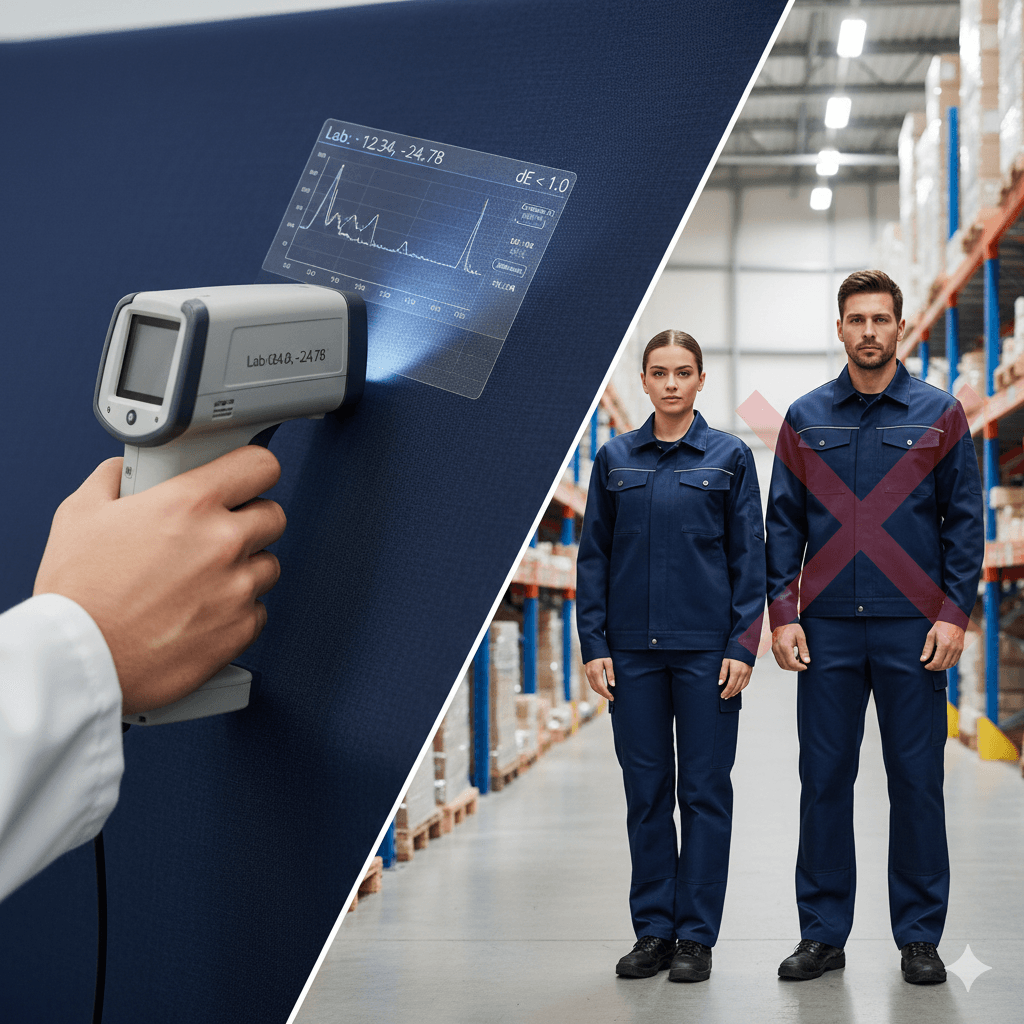 Color Consistency: The Delta-E Standard and the End of the “Clown Suit” Effect2026年2月4日In the corporate world, a uniform is a brand’s […]
 Why Zippers Fail (and How We Prevent It): The Engineering of Closure Reliability2026年2月4日In the hierarchy of industrial garment components, the […]
 The Anatomy of a Seam: Engineering Durability at the Needle Point2026年2月4日In the world of industrial workwear, the fabric gets all […]
- Future Lab PPE Trends: The Convergence of Lightweight Protection & Sustainability2026年1月28日In the sterile corridors of pharmaceutical R&D, biotech […]
 Chemical Protection Classes A/B/C: The Definitive Guide to Risk-Based PPE Selection2026年1月28日In the hazardous materials (HazMat) industry, […]
 Freezer Gloves & Boots Trends: The Intersection of Thermal Physics and Grip Technology2026年1月28日In the unforgiving environment of a -30°C cold storage […]