
Zero-Budget ESG Compliance: The “Swap & Save” Strategy for Workwear

Executive Summary: Sustainability Without the Surcharge For the majority of Procurement Managers, "ESG Compliance" (Environmental, Social, and Governance) is synonymous with "Increased Cost." The prevailing assumption is that switching to sustainable materials and ethical supply chains requires a 15-20% increase in OPEX, a premium that many budget-constrained companies cannot afford in the current economic climate. […]
Selling Eco-Workwear to Budget-Limited Buyers: The “Total Cost” Strategy

Executive Summary: Reframing the “Expensive” Narrative For industrial procurement managers operating on tight budgets, "Eco-Friendly" usually translates to "Too Expensive." The prevailing myth is that sustainable workwear is a luxury—a 20% markup for a green marketing story that offers no operational benefit. This perception is the single biggest barrier to sales. To sell recycled polyester, […]
2025 ESG Trends in NA & EU: The Green Mandate for Industrial Workwear

Executive Summary: The End of Voluntary Sustainability For the past decade, sustainability in the industrial workwear sector was largely driven by marketing departments. Brands launched "Eco-Collections" to signal virtue, while the bulk of their procurement remained cost-focused and linear. 2025 marks the point of no return. In both the European Union and North America, Environmental, […]
Traceability Supports ESG Compliance: The Digital Backbone of Sustainable Manufacturing

Executive Summary: From “Trust Me” to “Show Me” For the past decade, Environmental, Social, and Governance (ESG) reporting was largely a marketing exercise—glossy PDFs filled with optimistic goals and stock photography. Those days are over. With the enforcement of the EU Corporate Sustainability Reporting Directive (CSRD), the US Uyghur Forced Labor Prevention Act (UFLPA), and […]
Closed-Loop Recycling Systems: The “Take-Make-Recreate” Revolution in Workwear

Executive Summary: Breaking the Linear Curse For the last century, the global textile industry has operated on a linear model: Take (resources), Make (products), and Waste (landfill). In the industrial workwear sector, this is particularly egregious. Every year, millions of tons of high-performance uniforms—made from valuable petrochemicals and cotton—are incinerated or buried simply because they […]
Workwear Rental Reduces Inventory: The “Zero-Bloat” Strategy for Large Enterprises

Executive Summary: From “Ownership” to “Access” For decades, the standard approach to industrial workwear was simple: Buy it, issue it, and hope it lasts. This "Ownership Model" inevitably leads to the Inventory Bloat Paradox: Companies buy thousands of garments, yet workers constantly complain about shortages. Why? Because owning stock creates "Phantom Inventory"—uniforms hiding in lockers, […]
The New Currency of Trust: Why Buyers Require LCA (Life Cycle Assessment)

Executive Summary: Data is the New Price Tag For the last 50 years, the global supply chain spoke one language: Price. The procurement conversation began and ended with "What is the cost per unit?" Today, a new dialect has emerged, driven by the existential pressure of Climate Change and the regulatory force of ESG (Environmental, […]
Green Dyeing & Finishing: The ESG Revolution in Industrial Workwear

Executive Summary: The Shift from “Compliance” to “Competitive Advantage” The textile industry is historically one of the world’s largest polluters, responsible for 20% of global clean water pollution. For the industrial workwear sector, this presents a massive risk. As Scope 3 Emission regulations tighten in the EU (Green Deal) and North America, the environmental footprint […]
Sustainable Toughness: The Rise of Recycled Materials in Industrial Workwear
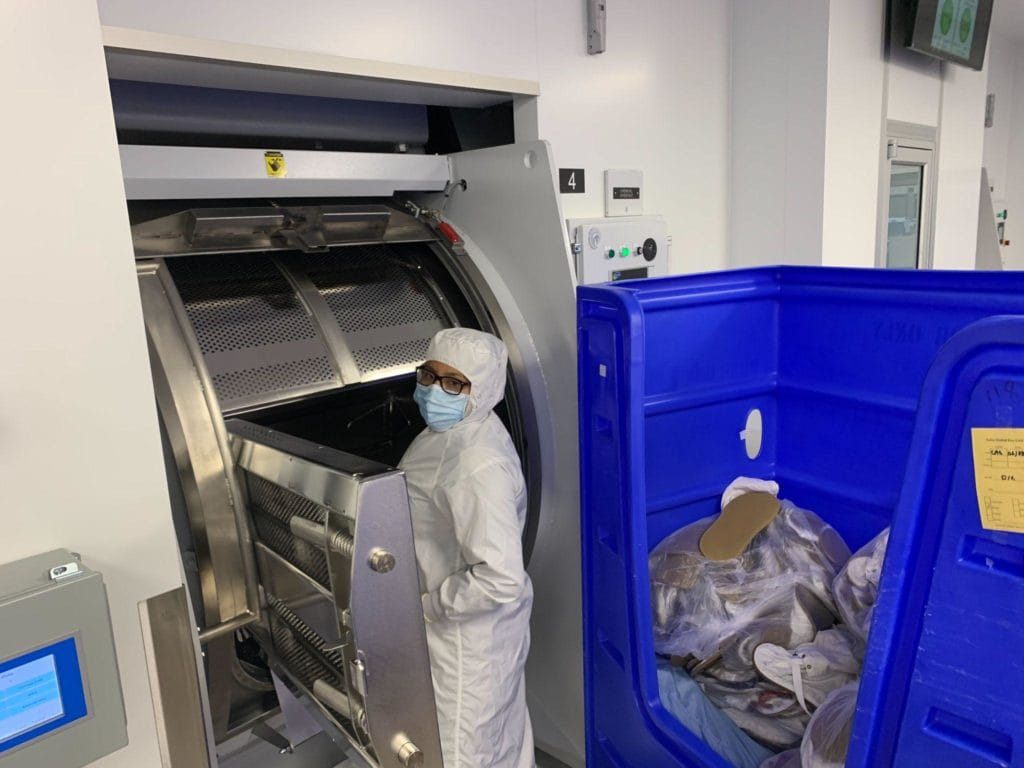
Executive Summary: Bridging the Gap Between “Green” and “Durable” For decades, the industrial workwear sector viewed "sustainable materials" with skepticism. Procurement managers operated under the assumption that recycled fabrics were weaker, prone to piling, and unable to withstand the rigors of industrial laundry (ISO 15797). That era is over. Advances in polymer chemistry and fiber […]