
Executive Summary: Moving from Autopsy to Intervention
For decades, industrial safety has relied on lagging indicators: incident reports filed after an injury, safety audits conducted after a near-miss, and root cause analysis performed after equipment failure. While these methods are necessary, they suffer from a fatal flaw: they only explain what went wrong, they do not prevent it.
The new frontier of Personal Protective Equipment (PPE) is Smart Sensing. By integrating micro-sensors (IMUs, PPGs, Gas Detectors) into standard gear, we can now capture the "Critical 5 Seconds"—the fleeting window of physiological or environmental anomaly that precedes a catastrophic event.
Whether it is the slight wobble before a fall, the rapid drop in blood oxygen before fainting in a confined space, or the micro-vibrations of a looming machinery failure, these signals exist. This guide explores how to capture them, interpret them, and use them to stop accidents before they happen.
Google Snippet: Quick Answer
What is the "Critical 5 Seconds" in industrial safety? The "Critical 5 Seconds" refers to the brief timeframe immediately preceding an accident where physiological (e.g., fatigue, heart rate spike) or physical (e.g., loss of balance, gas leak) indicators deviate from the norm. Predictive Smart PPE uses sensors to detect these deviations and triggers immediate alerts (haptic or auditory) to the worker, allowing them to correct their action or evacuate, effectively preventing the incident.
1. The Anatomy of an Accident: Why Leading Indicators Matter
Safety experts utilize the "Heinrich Triangle," which suggests that for every major injury, there are 29 minor injuries and 300 near-misses. However, beneath those 300 near-misses lie thousands of micro-events that go undetected by human senses.
The Timeline of a Fall
- T-minus 10s: Worker experiences fatigue (detectable via Heart Rate Variability).
- T-minus 5s (The Critical Window): Worker steps on a slick surface; center of gravity shifts. Gyroscopes detect unstable gait.
- T-minus 2s: Worker loses balance. Accelerometers detect rapid downward acceleration.
- T-minus 0s: Impact.
- T-plus 1s: "Man Down" alarm triggers (Traditional Smart PPE).
The goal of this technology is to intervene at T-minus 5s, not T-plus 1s.
The Hidden Dangers
- Silent Hypoxia: In confined spaces (mining, tank cleaning), oxygen levels can drop without the worker noticing until they pass out.
- Heat Stress: Core body temperature rises gradually. By the time a worker feels dizzy, they are already in the danger zone.
- Fatigue-Induced Error: Microsleeps or slow reaction times often precede heavy machinery accidents.
2. The Sensor Ecosystem: Hardware That Saves Lives
To capture these invisible signals, modern PPE integrates a sophisticated array of sensors. These are not consumer-grade fitness trackers; they are ruggedized industrial instruments.
| Sensor Type | Technical Name | What It Detects (The "Pre-Signal") |
|---|---|---|
| Motion Sensors | 9-Axis IMU (Accelerometer, Gyroscope, Magnetometer) | Detects gait instability, slips, trips, and the specific acceleration profile of a fall vs. a jump. |
| Physiological | PPG (Photoplethysmography) & EDA (Electrodermal Activity) | Monitors Heart Rate Variability (HRV) and SpO2. Detects fatigue, stress, and approaching hypoxia. |
| Environmental | Electrochemical / PID Sensors | Detects gas leaks (H2S, CO, CH4) parts-per-billion before they reach toxic levels. |
| Proximity | UWB (Ultra-Wideband) / LiDAR | Detects proximity to forklifts or heavy machinery, creating a "digital fence" around the worker. |
| Biometric | Temperature / Humidity Sensors | Monitors heat stress index inside the suit vs. outside environment. |
3. Deep Dive: Three Scenarios of "5-Second" Intervention
Scenario A: The Pre-Fall Intervention (Working at Heights)
- The Risk: A construction worker on scaffolding is dehydrated and dizzy.
- The Sensor Action: The helmet-mounted IMU detects a sway variance of >15 degrees from the vertical axis (ataxia).
- The Intervention: The helmet vibrates and speaks: "Stability Warning. Please anchor immediately."
- The Result: The worker sits down to stabilize before the fall occurs.
Scenario B: Confined Space Hypoxia (Oil & Gas Maintenance)
- The Risk: Nitrogen purge in a pipeline wasn’t fully vented.
- The Sensor Action: The smart vest detects SpO2 (Blood Oxygen) dropping from 98% to 92% in 10 seconds.
- The Intervention: The vest lights up red and vibrates violently. The Connected Worker dashboard alerts the Site Manager.
- The Result: The worker evacuates while still conscious.
Scenario C: Man-Machine Collision (Logistics Warehousing)
- The Risk: A forklift reverses around a blind corner while a worker is checking inventory.
- The Sensor Action: UWB tags on the worker and the forklift calculate a collision trajectory within 3 seconds.
- The Intervention: The forklift automatically brakes (interface control), and the worker’s badge beeps loudly.
- The Result: A near-miss is recorded, but no impact occurs.
4. Comparison: Passive vs. Active vs. Predictive PPE
| Feature | Passive PPE (Traditional) | Active PPE (Reactionary) | Predictive PPE (The Future) |
|---|---|---|---|
| Example | Standard Hard Hat | Hard Hat with "Man Down" Alert | Hard Hat with Fatigue/Gait Analysis |
| Action | Protects head during impact | Calls for help after impact | Warns worker before impact |
| Data Flow | None | One-way (Emergency Signal) | Continuous Bi-directional Analysis |
| Safety Philosophy | Damage Mitigation | Rapid Response | Incident Prevention |
| Cost Model | Low CAPEX, High Risk Cost | Medium CAPEX | High CAPEX, Low Operational Risk |
5. The Data Architecture: From Edge to Cloud
Predictive safety requires data to move faster than the accident.
-
Edge Computing (On-Device): The sensor (helmet/vest) processes raw data locally. It doesn’t send every heartbeat to the cloud; it calculates the trend. If the trend is dangerous, it alerts the worker immediately (Latency: <50ms).
-
Transmission (The Pipe): Alerts are sent via LoRaWAN (long range, low power) or Private 5G (high speed) to the central control system.
-
Cloud Analytics (The Brain): Safety managers view a "Heat Map" of the facility. If 5 workers slip in Zone B, the system flags Zone B for a cleanup, even if no one fell. This is preventive maintenance for safety.
6. ROI Analysis: The Cost of Prevention vs. The Cost of Cure
Many procurement managers balk at the price of Smart PPE ($300-$1,000 per unit). However, the ROI calculation must include the "Iceberg Costs" of accidents.
Scenario: A 500-Worker Manufacturing Plant
| Cost Driver | Traditional Model (Reactive) | Predictive Model (Smart PPE) | Savings |
|---|---|---|---|
| Major Incidents/Year | 2 (@ $120k avg cost) | 0 (Prevented) | $240,000 |
| Minor Incidents/Year | 15 (@ $5k avg cost) | 3 (80% Reduction) | $60,000 |
| Insurance Premiums | Standard Rate | 15% Reduction (Tech Discount) | $30,000 |
| Investigation Downtime | 100 Hours/Year | 10 Hours (Data is instant) | $15,000 |
| Hardware Investment | $25,000 (Standard PPE) | $150,000 (Smart PPE) | (-$125,000) |
| Net First-Year Gain | $220,000 |
Key Takeaway: The system pays for itself by preventing just one major recordable incident.
7. Implementation Challenges: The "Big Brother" Factor
The biggest hurdle to "Critical 5 Seconds" technology is not hardware—it is culture. Workers fear surveillance.
Strategies for Successful Deployment:
- Data Anonymization: Configure the system to flag "A Worker in Zone 4" rather than "John Doe." Only de-anonymize data during a genuine emergency.
- Positive Reinforcement: Do not use data to punish workers for "unsafe acts." Use it to reward teams with the highest "Safety Scores."
- Union Involvement: Involve worker representatives in the vendor selection process. Demonstrate that the sensors monitor safety, not productivity/bathroom breaks.
8. Buyer Checklist for Predictive Safety Sensors
When sourcing Smart PPE, look for these critical specifications:
- [ ] Sensor Fusion: Does it combine accelerometer and gyroscope data? (Required to distinguish a fall from a jump).
- [ ] Battery Life: Can it last a full 12-hour shift with GPS/Data active?
- [ ] Connectivity: Does it support "Store and Forward" (Offline Mode) for dead zones in the factory?
- [ ] False Positive Rate: Ask for data on how the algorithm filters out normal movements (e.g., tying shoelaces vs. falling).
- [ ] ATEX/IECEx Rating: Is the electronics module certified for explosive atmospheres?
- [ ] GDPR/Data Compliance: Where is the health data stored? Is it encrypted?
- [ ] Haptic Strength: Is the vibration strong enough to be felt through thick work clothing?
9. Frequently Asked Questions (FAQ)
Q1: Will the sensors work in extreme cold (-20°C)? A: Standard lithium batteries struggle in cold. For cold chain logistics, specify Low-Temperature Solid State Batteries or insulated sensor modules.
Q2: Can we wash Smart PPE? A: Yes, but you must choose modular designs. The sensor "brain" should be detachable, allowing the vest/glove to be laundered industrially while the electronics are charged.
Q3: Is the radiation harmful? A: No. Industrial IoT devices typically use Bluetooth Low Energy (BLE) or LoRa, which emit a fraction of the radiation of a standard smartphone.
Q4: How does the system handle "False Alarms"? A: Advanced systems allow a "Cancel Window." If the vest vibrates indicating a fall, but the worker is fine, they can tap the sensor twice to cancel the alert within 10 seconds.
10. Conclusion: The New Standard of Care
The technology to capture the "Critical 5 Seconds" is no longer science fiction; it is a commercially available reality. By shifting from reacting to tragedies to responding to signals, companies can achieve the ultimate safety goal: Zero Harm.
This is not just an equipment upgrade; it is a moral imperative to use the best available technology to bring every worker home safely, every day.
📩 Ready to pilot Predictive Safety Tech in your facility? We offer consultation on integrating Smart Sensors with your existing Workwear programs. Email: [email protected] 🌐 www.workwearsolutions.net China-based. Global Standards. Long-term Partners.

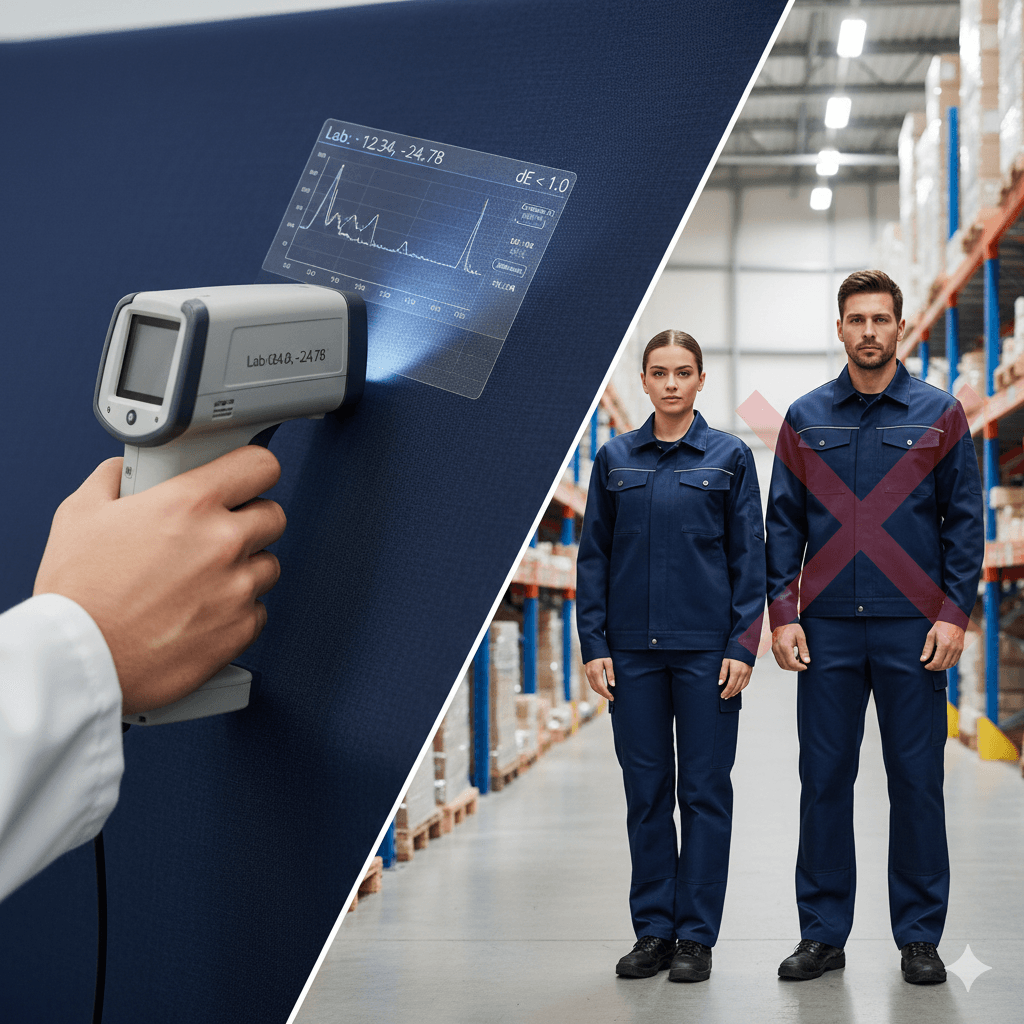 Color Consistency: The Delta-E Standard and the End of the “Clown Suit” Effect2026年2月4日In the corporate world, a uniform is a brand’s […]
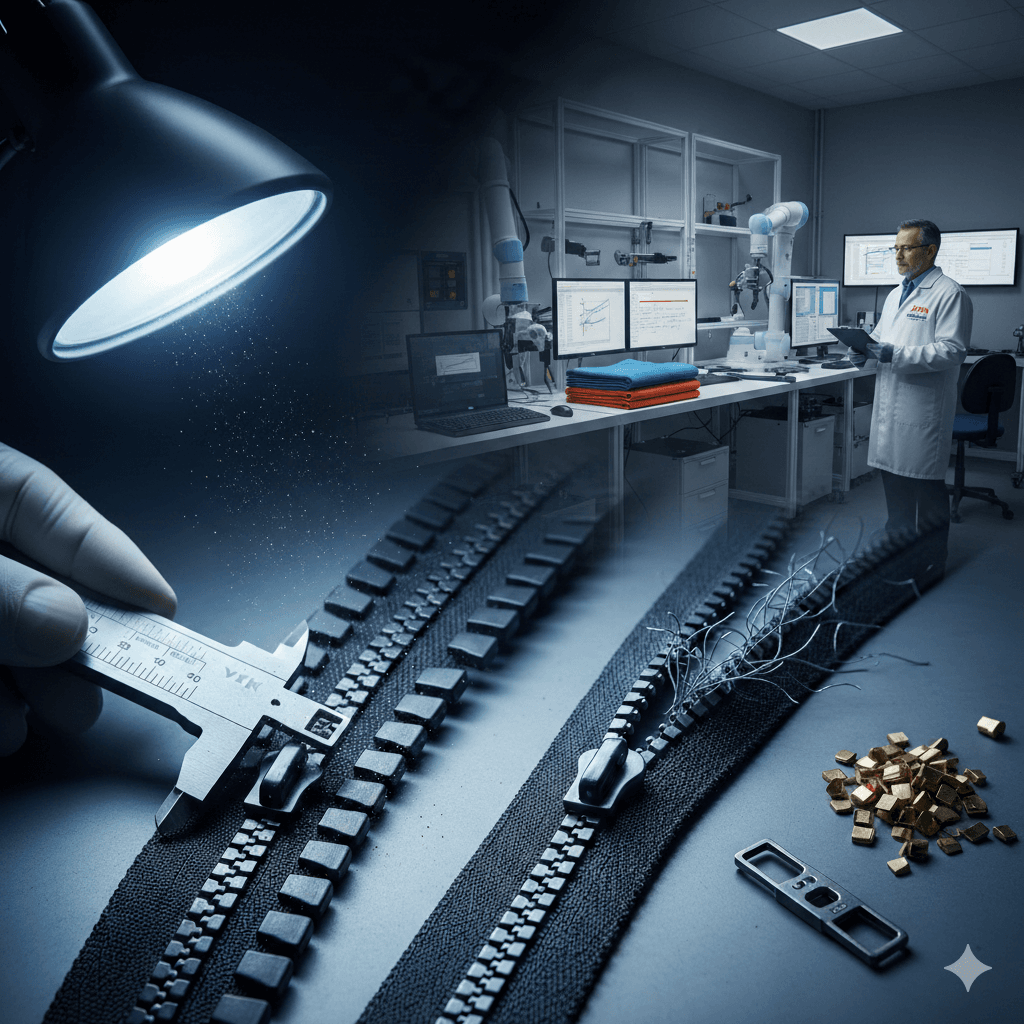 Why Zippers Fail (and How We Prevent It): The Engineering of Closure Reliability2026年2月4日In the hierarchy of industrial garment components, the […]
 The Anatomy of a Seam: Engineering Durability at the Needle Point2026年2月4日In the world of industrial workwear, the fabric gets all […]
 Future Lab PPE Trends: The Convergence of Lightweight Protection & Sustainability2026年1月28日In the sterile corridors of pharmaceutical R&D, biotech […]
 Chemical Protection Classes A/B/C: The Definitive Guide to Risk-Based PPE Selection2026年1月28日In the hazardous materials (HazMat) industry, […]
 Freezer Gloves & Boots Trends: The Intersection of Thermal Physics and Grip Technology2026年1月28日In the unforgiving environment of a -30°C cold storage […]