

In the hierarchy of industrial garment components, the zipper is often treated as an afterthought—a commodity item costing less than $1.00. This is a strategic error.
For a petrochemical worker on an offshore rig or a lineman on a utility pole, the zipper is a mission-critical mechanical device. If a zipper bursts during an arc flash event, the protective envelope is breached, leading to catastrophic burns. If a zipper jams in a chemical plant, decontamination is delayed. Even in a warehouse, a broken zipper renders a $50 jacket useless, turning an asset into a rag instantly.
Zipper failure is rarely an accident; it is a predictable result of poor specification, inferior metallurgy, and lack of torque testing.
This guide combines Part 1 (The Mechanics of Fasteners) and Part 2 (Strategic Sourcing & QA Protocols) to provide a complete decision-making toolkit for ensuring your workwear stays closed when it matters most.
Google Snippet: Quick Answer
Zipper failure is primarily caused by Slider Spreading (metal fatigue), Lateral Bursting (fabric tension), or Particle Abrasion (grit/sand). To prevent failure, industrial buyers must specify YKK Vislon (Molded) for gritty environments or Coil (Spiral) for flexibility. Critical quality indicators include ASTM D2061 Torque Testing, Holding Strength > 500N, and the use of Zinc-Alloy Die-Cast Sliders rather than pressed steel.
1. The Anatomy of Failure: Deconstructing the Device
To prevent failure, we must first understand the machine. A zipper is a complex assembly of four distinct components, each with its own failure mode.
1. The Tape (The Foundation)
- Function: The fabric strip that holds the teeth and connects to the garment.
- Failure Mode: Tape Separation. If the weave is loose, the teeth pull off the tape under lateral stress.
- The Fix: High-density polyester weaving with integral cords for tooth attachment.
2. The Elements (The Teeth)
- Function: The locking mechanism.
- Failure Mode: Chain Burst. Under heavy bending (squatting) or impact, the teeth disengage.
- The Fix: Correct sizing (e.g., #5 vs #8 vs #10) and material selection (Plastic vs. Metal).
3. The Slider (The Engine)
- Function: Joins or separates the elements.
- Failure Mode: Spreading (The #1 Cause). The slider body widens (opens up) over time due to pull-tab torque. Once widened, it no longer pushes the teeth together effectively, causing the zipper to split behind the slider.
- The Fix: Die-cast Zinc or Bronze sliders, which are harder and more rigid than stamped steel.
4. The Stops (The Brakes)
- Function: Prevents the slider from flying off the track.
- Failure Mode: Top Stop Shear. Aggressive opening rips the stop off.
- The Fix: Mechanically clamped or injection-molded stops (Top and Bottom).
2. Material Science: Coil vs. Vislon vs. Metal
Choosing the right "Species" of zipper is the first step in engineering durability.
| Type | Construction | Pros | Cons | Best Industry |
|---|---|---|---|---|
| Coil (Spiral) | Continuous polyester monofilament stitched to tape. | Self-Healing. Flexible. High lateral strength. Water-resistant options. | Can snag easily on fabric liners. Melts under high heat/friction. | Logistics, Cleanroom, General Workwear. |
| Vislon (Molded) | Individual teeth injected (Acetal/Resin) onto tape. | Grit Resistant. "Chunky" teeth ignore sand/mud. Chemical resistant. Doesn’t freeze shut. | Rigid (less drape). If a tooth breaks, it cannot be fixed. | Construction, Oil & Gas, Cold Storage. |
| Metal | Brass, Aluminum, or Nickel teeth clamped to tape. | Heat Resistant. Extremely durable against bursting. Vintage aesthetic. | Heavy. Teeth can sharpen/abrade. Conducts electricity/heat. Corrodes. | Welding, Foundry, Heavy Denim. |
The Golden Rule: Never use Coil zippers in environments with sand or cement dust (Construction). The grit gets inside the coil and grinds it down. Use Vislon.
3. The "YKK Factor": Why Brand Matters
In procurement, "YKK or Equivalent" is a dangerous phrase. In reality, there is often no equivalent.
The Metallurgy Difference
- Generic Sliders: Often made of soft stamped steel or impure alloys. They deform after 500 cycles.
- YKK Sliders: Made of proprietary zinc-alloys. They maintain their geometric shape (throat height) for 10,000+ cycles.
The Consistency Difference
- Generic: High variance in tape weaving density. One batch holds 40kg force; the next holds 20kg.
- YKK: Vertically integrated production (they make their own machines, brass, and polyester). Consistency is near Six Sigma levels.
The Traceability
- For FR (Fire Resistant) gear, the zipper tape must also be FR (Nomex® or treated). YKK provides certified FR tapes. Generics often lie, using standard polyester tape that melts in a fire, causing the suit to open.
4. Engineering Prevention: The Testing Protocols
At Zion (Workwear Solutions), we do not just buy zippers; we stress-test them. We follow ASTM D2061 (Standard Test Methods for Strength Tests for Zippers).
Test A: Crosswise Strength (Burst Test)
- The Setup: Clamps pull the closed zipper tape apart horizontally.
- The Fail Point: Cheap zippers burst at <300 Newtons.
- Our Standard: We require >600 Newtons for trouser flys and main jacket closures (Size #5 or #8).
Test B: Slider Torque Strength (Twist Test)
- The Setup: A force is applied twisting the pull tab.
- The Fail Point: The pull tab snaps off or the slider body warps.
- The Impact: A worker with gloves pulls the tab at an angle (45°). If the slider is weak, it deforms, leading to splitting.
Test C: Reciprocating Test (Fatigue)
- The Setup: A machine zips and unzips the fastener 3,000 times under tension.
- The Check: We measure "Operating Force" before and after. If friction increases by >20%, the zipper is rejecting the lubricant or abrading.
5. Failure Modes & Forensics: Investigating the "Corpse"
When a client sends back a broken garment, we perform a forensic autopsy on the zipper.
| Symptom | Diagnosis | Root Cause | Prevention Strategy |
|---|---|---|---|
| Splitting behind slider | Slider Spreading | The slider mouth has opened up >0.1mm due to pulling stress. | Upgrade to Die-Cast Slider. Add "Donning" instructions (don’t pull apart). |
| Teeth missing at bottom | Pin Box Failure | The worker rips the jacket open at the bottom ("The Hulk Move"). | Use Reinforced Box & Pin (3-layer mesh reinforcement). |
| Stuck / Jammed | Fabric Entrapment | The inner storm flap got caught in the slider. | Design an Inner Placket Stitch or use a stiffer webbing barrier near the zip. |
| Corrosion / Green Powder | Chemical Attack | Brass reacting with leather tanning agents or industrial acids. | Switch to Nickel-Free or Vislon (Plastic) for chemical environments. |
6. ROI Analysis: The "Cheap" Zipper Tax
Saving $0.20 on a zipper is the most expensive mistake a manufacturer can make.
Scenario: 1,000 Winter Parkas.
| Metric | Generic Zipper Option | Premium YKK Option |
|---|---|---|
| Unit Cost of Zipper | $0.40 | $0.80 |
| Cost Savings | $400 (Total) | $0 |
| Failure Rate (Year 1) | 5% (50 units) | 0.1% (1 unit) |
| Cost of Repair ($15/unit) | $750 | $15 |
| Admin/Shipping Cost | $500 | $10 |
| Net Financial Impact | -$850 Loss | Breakeven |
Conclusion: The $400 saving upfront resulted in $1,250 in failure costs. The premium zipper is mathematically cheaper.
7. Buyer Checklist for Zipper Specification
Don’t just write "Zipper" on your tech pack. Be specific.
Size & Type:
- [ ] Main Closure: Minimum Size #5 (Standard) or #8 (Heavy Duty). Size #3 is for pockets only.
- [ ] Type: Vislon (Molded) for Construction/Cold; Coil for Indoor/Logistics; Metal for Welding.
Slider Features:
- [ ] Auto-Lock: Slider locks in place when tab is down (essential for trouser flys to prevent "XYZ" incidents).
- [ ] Non-Conductive: For electricians, the slider must be plastic or rubber-coated metal.
- [ ] Pull Tab: Extended cord or rubber grip for gloved operation.
Construction:
- [ ] Double Stitching: Is the zipper tape sewn with two rows of stitching for security?
- [ ] Bartacks: Are there stress-relief bartacks at the bottom stop and top stop?
8. Frequently Asked Questions (FAQ)
Q1: What is a "Two-Way" or "Dual" Zipper? A: A zipper with two sliders. It allows the jacket to be opened from the bottom hem up.
- Why it matters: Essential for workers who sit in vehicles or squat. Opening the bottom releases tension on the hips, preventing the zipper from bursting.
Q2: How do I fix a split zipper in the field? A: Temporary fix: Use pliers to gently squeeze the back of the slider body (the throat) to tighten it.
- Long term: The slider is metal-fatigued. The zipper needs replacement.
Q3: Does sand ruin zippers? A: Yes, sand acts as an abrasive paste.
- Solution: Use large-tooth Vislon zippers (sand falls out) and avoid greasing zippers (grease holds sand).
Q4: Can zippers be Fire Resistant? A: Yes. Nomex® Tape zippers (brass teeth) are standard for FR. Never use Vislon (plastic) for Arc Flash gear unless covered by a double FR placket, as plastic can melt.
Q5: Why do zippers stick after washing? A: Detergents strip the factory lubrication.
- Maintenance: Rub a wax pencil or paraffin wax along the teeth to restore smoothness.
9. Advanced Engineering: The Zion Solution
At Workwear Solutions, we treat the zipper as a structural component.
- The "Zipper Garage": We engineer a small fabric hood at the top of the collar. This protects the chin from abrasion and protects the slider from impact.
- The "Placket Guard": We sew a stiff nylon webbing strip alongside the zipper tape. This physically prevents the soft lining fabric from entering the slider mouth, eliminating 90% of jams.
- Batch Testing: We maintain a library of "Master Samples." Random zippers from bulk production are pulled and torque-tested against the master to ensure no "quality fade" from the supplier.
10. Conclusion
A zipper is small, but its impact is massive. It is the gatekeeper of the garment’s functionality.
When a zipper fails, the worker is exposed, the workflow is interrupted, and the brand’s reputation is tarnished. The difference between a failure and a non-event is Engineering. By choosing the right material (Vislon vs. Coil), the right brand (YKK), and the right integration (Bar-tacks and Guards), we turn the weakest link into a reliable anchor.
Don’t let a $0.50 component ruin a $500,000 contract.
📩 Need a Zipper Specification Audit for your high-stress uniforms? We specialize in component-level engineering for extreme durability. Email: [email protected] 🌐 www.workwearsolutions.net

 Architecting Resilience: Single Sourcing vs. Dual Sourcing Strategies in Global PPE Procurement2026年4月30日Executive Summary In the complex landscape of industrial […]
 Pattern Grading for Global Bodies: The Engineering of Anthropometric Fit in Industrial Workwear2026年4月29日In the highly regulated landscape of industrial Personal […]
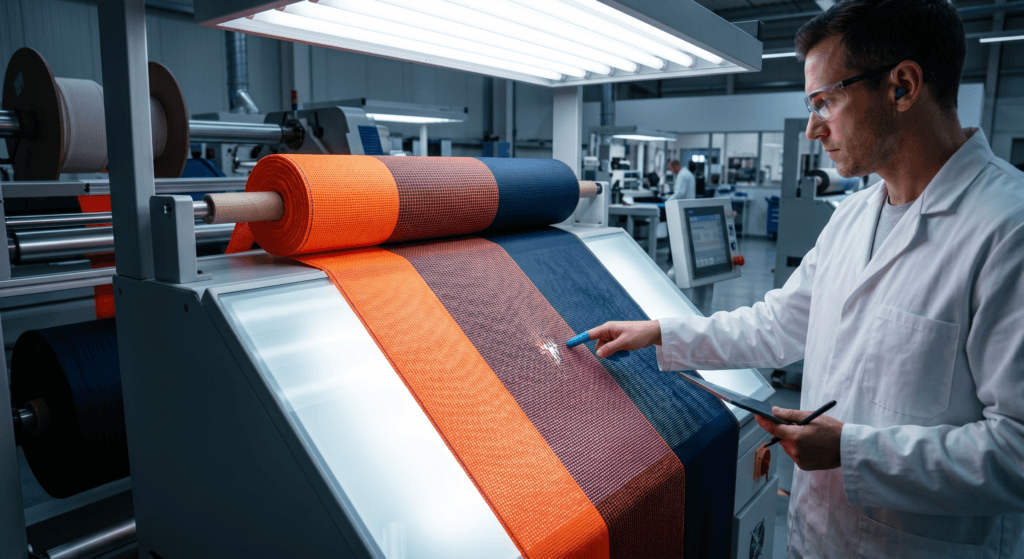 The “Light Box” Inspection: Deconstructing Fabric Defect Diagnostics and the 4-Point Quality System2026年4月28日The structural integrity and visual uniformity of […]
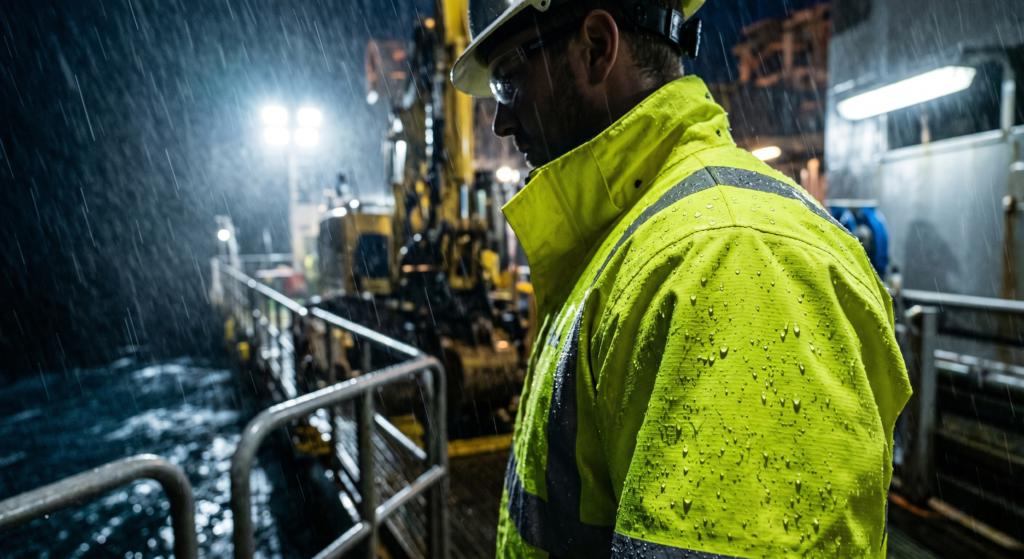 The Engineering of Waterproof Breathable Workwear: A Forensic Analysis of PU Coatings vs. PTFE Membranes2026年4月24日The selection of waterproof foul-weather gear in industrial […]
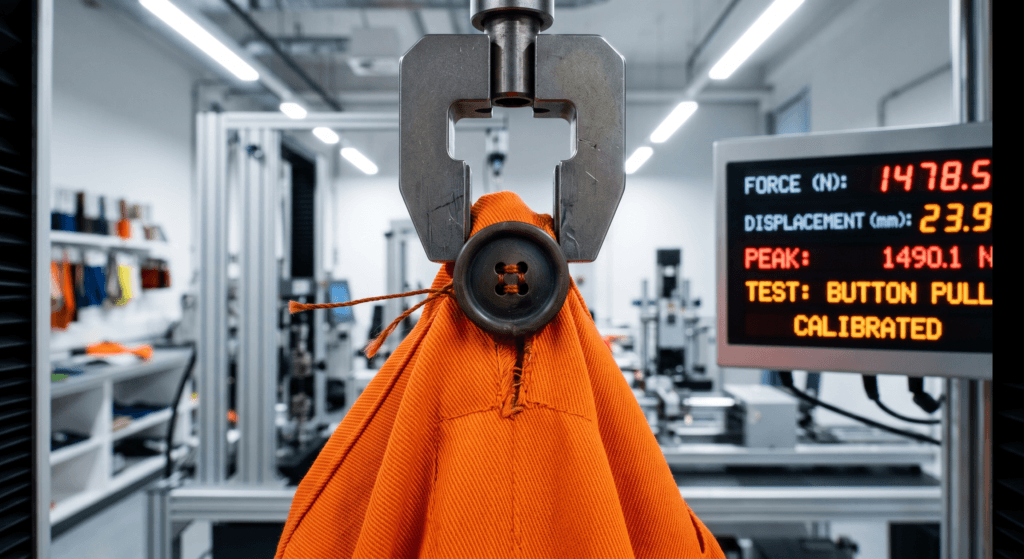 The “Button Pull” Test Protocol: Engineering Fastener Security to Mitigate Industrial Machinery and Choking Hazards2026年4月22日The “Button Pull” Test Protocol: Engineering […]
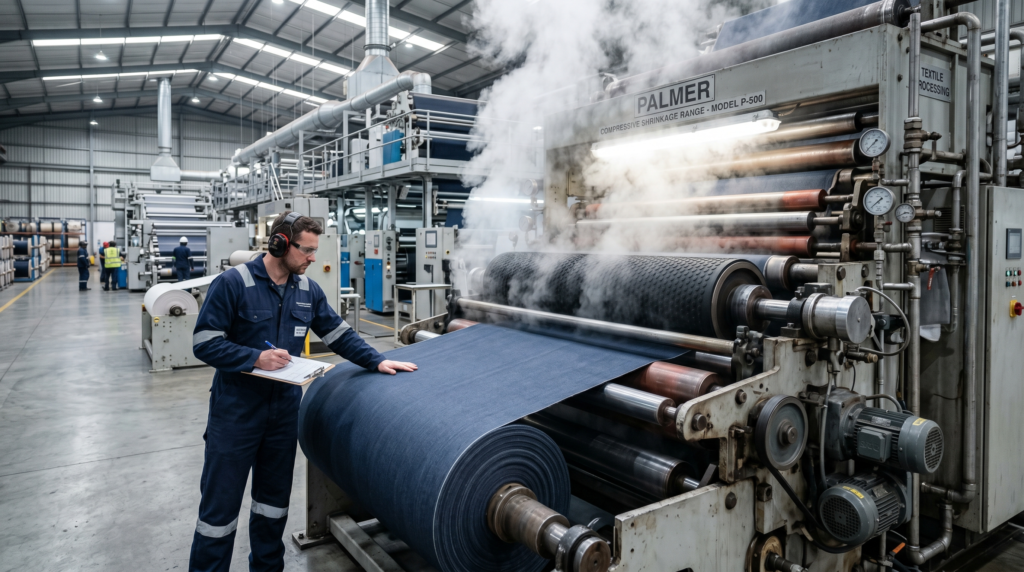 Fabric Shrinkage in Industrial Workwear: The Sanforization Secret and the Physics of Dimensional Stability2026年4月18日Executive Summary In the global industrial workwear and […]