

In the high-stakes world of cold chain logistics and food processing, the environment is the enemy. Operating at temperatures plummeting to -40°C (-40°F), the cold store is an extreme environment where human physiology fights a constant battle against hypothermia, frostbite, and metabolic exhaustion.
For decades, the industry’s answer to this challenge was rudimentary: Bulk. The "Michelin Man" aesthetic—suits stuffed with inches of heavy polyester batting—became the standard. While these suits provided insulation, they came at a steep cost. They were heavy, stiff, and essentially vapor barriers that trapped sweat. A worker who exerted themselves stacking pallets would be drenched in perspiration, which would then freeze the moment they sat on a forklift, leading to rapid, dangerous cooling.
The Evolution is here. The modern approach to cold-store PPE is driven by material science and biomechanics. By leveraging Aerogel technology, Phase-Change Materials (PCMs), and Articulated Ergonomics, manufacturers have created gear that is 30% lighter, 50% thinner, yet thermally superior.
This guide combines Part 1 (The Thermodynamics of Cold) and Part 2 (Strategic Sourcing & ROI) to provide a complete decision-making toolkit for equipping your freezer teams with the next generation of protection.
Google Snippet: Quick Answer
Modern -40°C cold-store workwear prioritizes "Thermal Efficiency per Gram" over sheer bulk. The evolution shifts from heavy quilt to Aerogel insulation (NASA-derived) and High-Loft Synthetics that maintain warmth even when compressed. Key features include breathable membranes (RET < 12) to prevent sweat freezing, articulated joints for mobility, and high-tenacity outer shells to resist conveyor abrasion. This results in a 20% reduction in worker fatigue and significantly extended asset lifespan.
1. The Physics of the Freeze: Why Old Gear Failed
To appreciate the new technology, one must understand the three vectors of heat loss in a freezer environment.
Conduction (The Contact Freeze)
- The Hazard: A forklift driver sitting on a vinyl seat or leaning elbows against icy metal racking.
- Old Gear Failure: Standard polyester batting compresses under weight. When a worker sits, the 2-inch loft becomes 2mm. With the air pockets gone, the insulation value drops to near zero, and the cold travels straight to the body.
- The Evolution: Compression-Resistant Insulation (like Primaloft® Gold or 3M Thinsulate™). These fibers maintain their structure under pressure, preserving the air gap and blocking conductive heat loss.
Convection (The Wind Chill)
- The Hazard: Blast freezers use high-velocity fans to circulate sub-zero air rapidly. A room at -20°C with fans running feels like -40°C due to wind chill stripping the boundary layer of heat from the body.
- Old Gear Failure: Loose weaves or cheap outer shells allowed cold air to penetrate the insulation.
- The Evolution: Windproof Breathable Laminates. Modern shells act as a force field against moving air while still allowing moisture vapor to escape from the inside.
Metabolic Moisture (The "Sweat Trap")
- The Hazard: The "Stop-Start" work cycle. A worker exerts high energy manually stacking boxes (sweating), then sits inactive on a forklift (cooling).
- Old Gear Failure: Sweat trapped in cotton or non-wicking linings turns into ice crystals against the skin. This "Post-Exercise Chill" is a primary cause of hypothermia in active workers.
- The Evolution: Hydrophobic Wicking Linings and Venting Systems. These pull moisture away from the skin to the outer layer, where it can evaporate, keeping the micro-climate dry.
2. Material Revolution: From Wool to Aerogel
The most significant leap in cold store PPE is the transition from "passive bulk" to "active technology."
| Component | Traditional Material | Modern Evolution | Performance Gain |
|---|---|---|---|
| Insulation | Quilted Polyester Batting (300gsm+) | Aerogel Composites / Clo Insulation | 50% Bulk Reduction. Aerogel is the lowest thermal conductivity solid on Earth, providing extreme warmth in thin layers. |
| Outer Shell | 420D Oxford Nylon (Stiff at -20°C) | High-Tenacity Nylon 6.6 (Supplex) | Remains flexible at -40°C; does not "crackle" or restrict movement. |
| Lining | Quilted Taffeta (Cold feel) | Aluminized Reflective Mesh | Radiant Barrier. Reflects 90% of body heat back to the skin, boosting warmth without adding weight. |
| Flex Zones | None (Rigid canvas) | 4-Way Stretch Inserts | Located at armpits and lower back to allow reaching/bending without exposing the kidneys ("The Chimney Effect"). |
3. Design Engineering: The "Agility" Factor
It’s not just what it’s made of; it’s how it’s built. The geometry of the garment has been re-engineered.
Articulated Joints
- The Problem: In a straight-leg pant, bending the knee pulls the hem up and tightens the fabric across the thigh, compressing the insulation exactly where it’s needed most.
- The Solution: Pre-bent Knees and Elbows. The pattern is cut in a curved shape (3D Patterning). This means the insulation stays lofted even when the worker is kneeling or driving, and the cuff stays down over the boot.
The High-Back "Bib" Protection
- The Problem: When a worker bends over to lift a box, a standard jacket rides up, exposing the lower back (kidneys) to the freeze.
- The Solution: Salopettes (Bib & Brace) with an extra-high back panel ensure vital organs remain covered regardless of body position.
The "Glove System"
- The Problem: Thick gloves destroy dexterity (can’t use scanners/pens). Thin gloves lead to frostbite.
- The Solution: The 3-Layer Approach.
- Liner: Touchscreen compatible silk/synthetic.
- Thermal: High-loft insulation.
- Shell: Durable grip, waterproof.
- Result: Worker removes the shell for 10 seconds to scan, keeping the thermal layer on, then re-gloves.
4. Case Study: The "Productivity" Shift
Client: Cold Chain Logistics Center, Chicago (300,000 sq. ft.). Issue: Pick rates dropped by 15% in the last 2 hours of every shift. Workers complained of fatigue, stiffness, and cold feet.
The Intervention: We replaced 400gsm generic freezer suits with 200gsm Aerogel-infused suits featuring stretch panels and a specialized boot system.
The Results (6 Months Later):
- Weight Reduction: Total gear weight dropped from 3.5kg to 1.8kg.
- Productivity: Late-shift pick rates stabilized (no drop-off vs. start of shift).
- Sick Leave: Musculoskeletal complaints (back pain) reduced by 40% due to less restriction.
- Cost: While the unit price was 30% higher, the replacement frequency dropped from 6 months to 12 months due to better durability.
5. Relevant Standards for Cold Environments
Buying based on "Temperature Ratings" (e.g., "Rated to -50°C") is dangerous marketing. There is no global standard for "Temperature Ratings." You must buy based on ISO/EN Standards.
| Standard | What it Measures | Target Metric for -40°C |
|---|---|---|
| EN 342 | Protection sets against cold (< -5°C). | Icler (Insulation Value): Look for > 0.35 m²K/W for moving activity, > 0.50 for sedentary (forklift). |
| EN 343 | Protection against Rain/Moisture. | Breathability (Ret): Class 3 or 4 (Ret < 12) is vital. If moisture can’t escape, it freezes inside. |
| ISO 11079 | Ergonomics of the thermal environment. | Determines the IREQ (Required Clothing Insulation) based on metabolic rate and duration of exposure. |
Critical Note: A suit rated "-50°C" assumes moderate activity. If a worker is sitting still on a forklift, that same suit might only be safe to -20°C. Always verify the Activity Level in the certification data.
6. ROI Analysis: The Cost of "Cheap" Cold Gear
Cheap freezer wear hardens in the cold, cracks at the seams, and loses insulation loft after washing. The "Total Cost of Ownership" (TCO) tells a different story than the price tag.
Scenario: 50 Forklift Drivers.
| Metric | Generic Freezer Suit ($50) | Engineered Cold System ($120) |
|---|---|---|
| Lifespan | 3–4 Months (Zippers break, fabric tears) | 12–18 Months (YKK Heavy Duty, Nylon 6.6) |
| Annual Quantity | 150 – 200 suits | 50 suits |
| Total Spend | $7,500 – $10,000 | $6,000 |
| Hidden Cost | Slow movement, frequent "warm-up" breaks. | High agility, fewer breaks needed. |
| Net Result | Higher Cost + Lower Performance | Lower Cost + Higher Performance |
7. Buyer Checklist for Cold-Store Sourcing
Use this checklist to audit potential suppliers.
Thermal & Comfort Audit:
- [ ] Insulation Type: Is it branded (Primaloft/Clo/Thinsulate) or generic? Generic poly-fill collapses quickly.
- [ ] Compression Test: Pinch the knee pad. Does it bounce back instantly?
- [ ] Collar: Is it fleece-lined and high enough to protect the neck without chafing?
- [ ] Breathability: Is the RET value listed? (Target <12).
Durability Audit:
- [ ] Zippers: Are they Size 10 YKK Vislon (large plastic teeth)? Small coil zippers freeze and snap. Metal zippers freeze to skin.
- [ ] Leg Zippers: Do they go up to the hip/knee? Essential for putting on boots without removing the suit.
- [ ] Reinforcement: Are there Cordura® patches on the inner ankle (scuff guards) and knees?
Visibility Audit:
- [ ] Tape: Is the reflective tape "Cold Crack" resistant? Standard tape cracks and peels at -30°C.
8. Frequently Asked Questions (FAQ)
Q1: How do I wash cold store clothing without ruining it? A: Never use fabric softeners (they clog the breathable pores). Wash at 40°C maximum using liquid detergent. Tumble dry on low heat—heat helps reactivate the water-repellent finish, but high heat melts the synthetic insulation fibers.
Q2: Should I buy a Coverall (One-piece) or Jacket & Bib (Two-piece)? A:
- Coverall: Best for maximum heat retention (no waist gap). Preferred for sedentary drivers.
- Two-Piece: Better for active pickers (flexibility) and allows removing the jacket during breaks or warmer tasks to prevent overheating.
Q3: Why do zippers fail so often in freezers? A: Metal becomes brittle; ice jams the slider. You must specify plastic molded teeth (Vislon) zippers with large pull tabs (for gloved hands). Avoid metal coil zippers at all costs.
Q4: Can I rely on the "Clo" value alone? A: No. Clo measures thermal resistance, but not windproofing or breathability. A high Clo sweater with no wind shell is useless in a blast freezer. You need the System (Shell + Insulation + Lining).
Q5: What is "Voice-Pick" compatible gear? A: Many warehouses use voice-directed picking headsets. The jacket collar must be designed so it doesn’t interfere with the headset wire or microphone. Look for internal cable loops and snag-free collars.
9. Conclusion
The evolution of -40°C workwear mirrors the evolution of the industry itself: Smarter, Faster, Lighter.
We have moved past the era of "bulk equals warmth." The modern cold-store warrior requires a technical system that manages moisture, reflects heat, and resists abrasion, all while weighing less than a laptop.
For procurement, the lesson is clear: Do not buy insulation by the inch; buy it by the performance metric. Investing in advanced materials reduces the physiological load on your workforce, turning safety compliance into a competitive productivity advantage.
Warm workers work harder. It’s that simple.
📩 Need a Cold Store Audit or samples of Aerogel Workwear? We specialize in extreme-cold PPE solutions for global logistics chains. Email: [email protected] 🌐 www.workwearsolutions.net

 Architecting Resilience: Single Sourcing vs. Dual Sourcing Strategies in Global PPE Procurement2026年4月30日Executive Summary In the complex landscape of industrial […]
 Pattern Grading for Global Bodies: The Engineering of Anthropometric Fit in Industrial Workwear2026年4月29日In the highly regulated landscape of industrial Personal […]
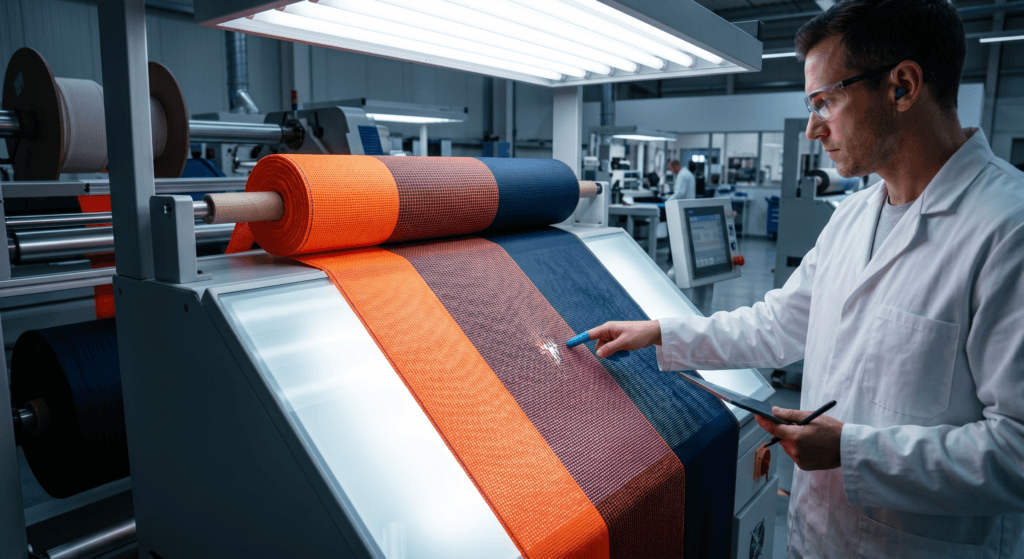 The “Light Box” Inspection: Deconstructing Fabric Defect Diagnostics and the 4-Point Quality System2026年4月28日The structural integrity and visual uniformity of […]
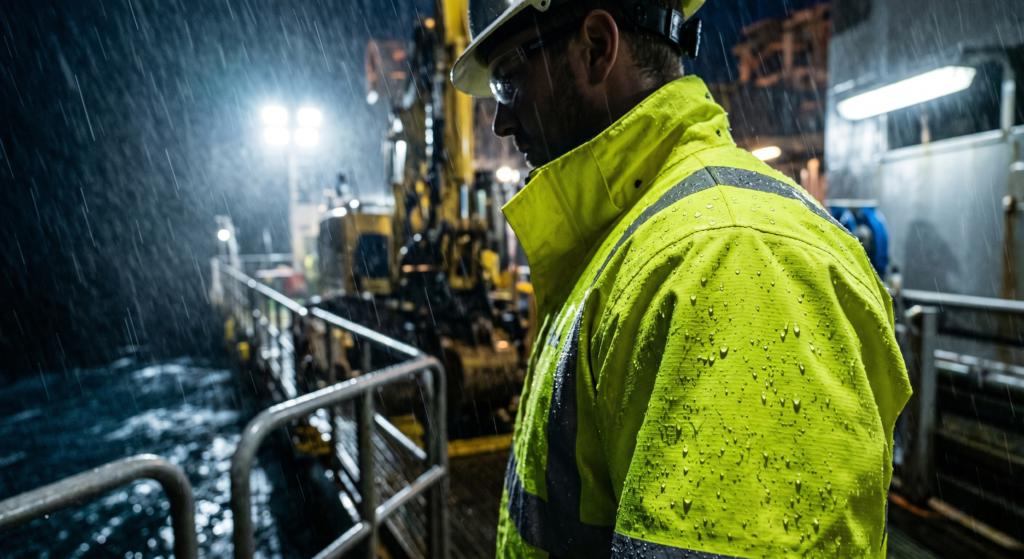 The Engineering of Waterproof Breathable Workwear: A Forensic Analysis of PU Coatings vs. PTFE Membranes2026年4月24日The selection of waterproof foul-weather gear in industrial […]
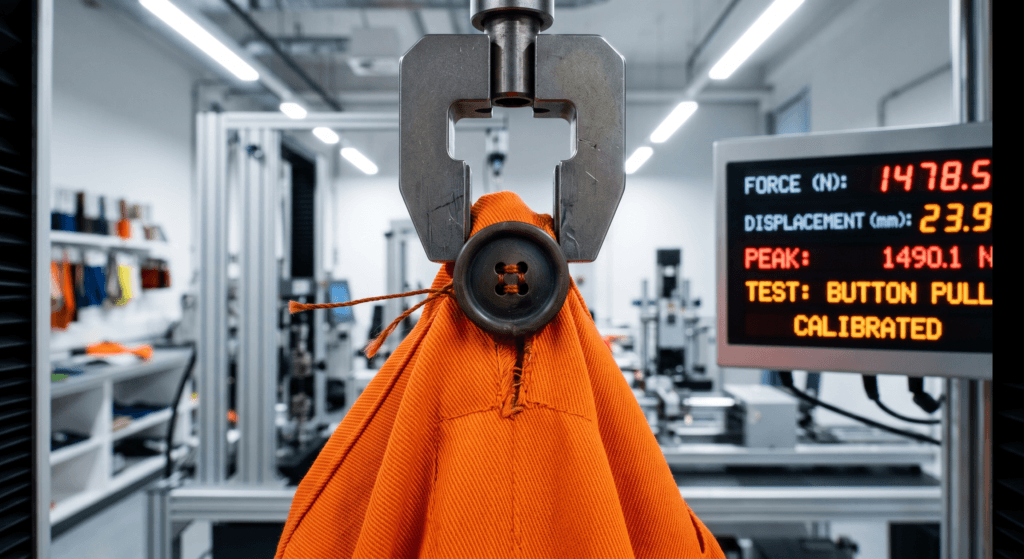 The “Button Pull” Test Protocol: Engineering Fastener Security to Mitigate Industrial Machinery and Choking Hazards2026年4月22日The “Button Pull” Test Protocol: Engineering […]
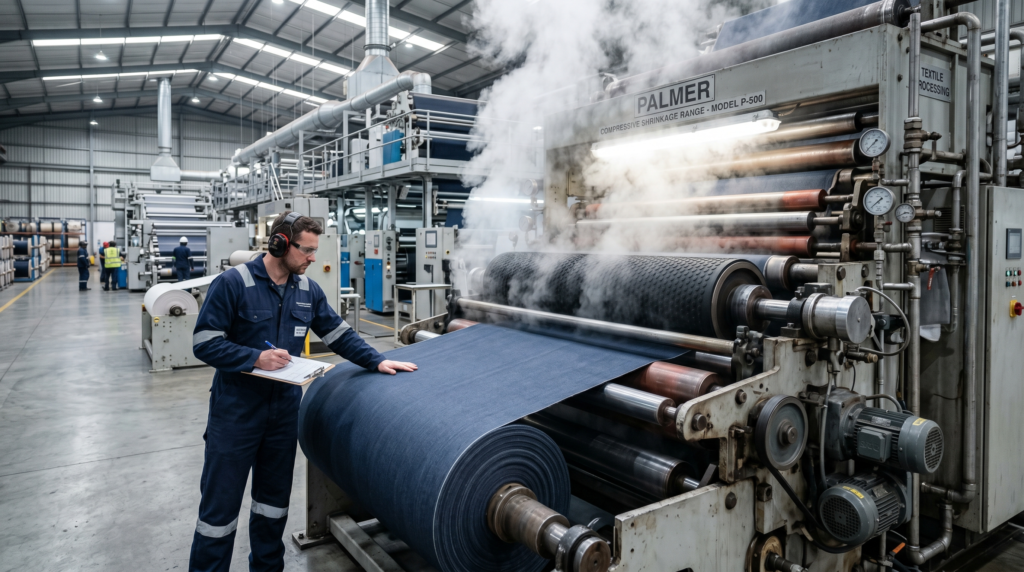 Fabric Shrinkage in Industrial Workwear: The Sanforization Secret and the Physics of Dimensional Stability2026年4月18日Executive Summary In the global industrial workwear and […]