

In the volatile landscape of global procurement, Time is Inventory. A 45-day lead time forces companies to hold excessive safety stock, tying up capital and risking obsolescence. Reducing that cycle to 30 days is not just about "working faster"; it requires a fundamental re-engineering of the Critical Path.
Traditional manufacturing operates on a Linear Waterfall Model: Order -> Fabric Mill -> Dying -> Shipping -> Cutting -> Sewing. This model is riddled with "dead time." To achieve a 30-day turnaround, procurement must shift to a Parallel Processing Model, leveraging Greige Stock Programs, Standardized Fit Blocks, and Segmented Production Planning.
This guide combines Part 1 (Supply Chain Mechanics) and Part 2 (Operational Tactics) to provide a complete decision-making toolkit for slashing lead times without sacrificing quality.
Google Snippet: Quick Answer
Reducing workwear lead times from 45 to 30 days requires moving from "Make-to-Order" (MTO) to "Assemble-to-Order" (ATO). Key strategies include: 1) Pre-positioning Greige Fabric (undyed stock) to cut 15 days of milling time, 2) Using Standardized Pattern Blocks to eliminate the 7-day sampling phase, and 3) Booking "Ghost Capacity" with factories to guarantee production slots before the final PO is issued.
1. The Anatomy of the 45-Day Cycle (and Where it Bleeds)
To cut time, you must first audit where time is lost.
| Stage | Traditional Process | Time Cost | The Bottleneck |
|---|---|---|---|
| 1. Fabric | Weave and dye fabric after PO. | 20 Days | Milling is the slowest step. |
| 2. Approval | Submit lab dips & size sets. | 10 Days | Mailing physical samples back and forth. |
| 3. Production | Cut, Sew, Trim, Pack. | 12 Days | Waiting for line space (queueing). |
| 4. Transit | Ex-Factory to Port. | 3 Days | Documentation delays. |
| Total | Standard Workflow | 45 Days | Reactive & Sequential. |
The Goal: Compress Stage 1 and Eliminate Stage 2 to hit the 30-Day Target.
2. Strategy 1: The "Greige" Advantage (Decoupling Fabric)
Fabric production accounts for 50% of the lead time. You cannot weave faster, but you can weave earlier.
The Concept
Instead of waiting for an order to weave fabric, the supplier holds "Greige" (Raw/Undyed) Fabric in stock. When the PO arrives, they only need to Dye and Finish the fabric.
- Impact: Removes the weaving time (10–12 days) from the critical path.
- Risk: Low. Greige fabric can be dyed any color (Navy, Orange, Grey) depending on demand, so it is flexible inventory.
The "Vertical" Solution
Partner with Vertically Integrated manufacturers (who own the mill and the sewing factory).
- Benefit: They control the dye house schedule. A non-vertical factory has to wait in line at a 3rd party mill.
3. Strategy 2: Standardization as an Accelerator
Customization kills speed. Every new pocket shape or collar width requires a new pattern, a new sample, and a new approval loop.
The "Standard Block" Library
- Pre-Approved Patterns: Agree on a standard "Chassis" (e.g., Jacket Type A, Pant Type B) at the start of the year.
- Action: When ordering, you simply say "Type B Pant in Navy."
- Time Saved: Eliminates 7–10 days of pattern making and sampling approvals. The factory hits the "Cut" button immediately.
Digital Approvals (3D Sampling)
- The Tech: Use CLO3D or Browzwear to approve design changes virtually.
- Action: Instead of sewing and mailing a physical sample (5 days), review a realistic 3D render (4 hours).
- Time Saved: 5–7 days per iteration.
4. Strategy 3: Segmented Production (The "Agile" Line)
Traditional factories wait for all fabric to arrive before cutting. Agile factories cut in waves.
Phased Delivery (Split Shipments)
- Scenario: You order 10,000 units.
- Traditional: Wait 45 days for 10,000 units.
- Segmented: Receive 2,000 units in 30 days (Air Freight/Fast Track) to fill immediate gaps, while the remaining 8,000 arrive later via sea.
- Benefit: Solves the immediate inventory crisis without rushing the whole order.
"Ghost" Capacity Booking
- The Tactic: Book production line space before you have the final size breakdown.
- The Deal: "I promise 5,000 units for June. I will give you the sizes on May 1st."
- Result: The factory reserves the needles. You skip the queue.
5. Case Study: The 30-Day Transformation
Client: European Logistics Firm (5,000 employees). Problem: Frequent stock-outs due to 50-day lead times. New hires waited weeks for uniforms.
The Intervention:
- Material: Switched from custom weave to a Stock Program Fabric (held by the factory).
- Design: Standardized the "Driver Polo" into a single approved fit block.
- Logistics: Implemented a "Rolling Forecast" (giving the factory 3 months visibility).
The Result:
- Lead time dropped to 28 Days.
- Air freight costs reduced by 90% (no more panic shipping).
- Unit cost decreased by 5% due to predictable line planning.
6. ROI Analysis: Speed vs. Cost
Does speed cost money? Often, it saves money by reducing "Panic Costs."
Scenario: 1,000 Jackets.
| Cost Factor | 45-Day Lead Time | 30-Day Engineered Time | Impact |
|---|---|---|---|
| Inventory Holding | High ($5,000 buffer stock) | Low ($2,000 buffer stock) | Cash Flow Freed |
| Rush Fees | Frequent Air Freight ($10k) | Scheduled Sea Freight ($2k) | Massive Savings |
| Stock-Out Cost | Lost Sales / Downtime | Zero Downtime | Reliability |
| Material Cost | Standard | +2% (Greige holding fee) | Negligible vs. Savings |
Conclusion: The small premium for fabric holding is eclipsed by the savings in logistics and inventory capital.
7. Implementation Checklist for Buyers
Step 1: The Agreement
- [ ] SLA: Sign a Service Level Agreement defining the 30-day trigger (e.g., "30 days from PO receipt").
- [ ] Liability: Define penalties for late delivery (e.g., 5% discount per week late).
Step 2: The Preparation
- [ ] Fabric Bond: Pay a deposit to the factory to hold 2,000 meters of Greige/Dyed fabric in their warehouse.
- [ ] Trim Stock: Pre-order zippers, buttons, and labels. These small items often cause 2-week delays. Keep them at the factory.
Step 3: The Execution
- [ ] Weekly WIP: Demand a "Work In Progress" report every Friday showing fabric status, cutting status, and sewing output.
- [ ] Pre-Book Freight: Book the shipping container 14 days before ex-factory date.
8. Frequently Asked Questions (FAQ)
Q1: Can any factory do 30 days? A: No. Only Tier 1 factories with strong cash flow and management systems can handle this. Small workshops live "hand-to-mouth" and cannot hold stock.
Q2: Does faster production mean lower quality? A: Not if you use Standardized Blocks. Speed comes from removing waiting time, not rushing the sewing time. Rushed sewing kills quality; removed bottlenecks improve it.
Q3: What if I need a custom color? A: Custom color adds 10-15 days for Lab Dips and Dyeing. For 30-day speed, you must stick to Stock Colors (Navy, Black, Royal, Grey) or pre-dye your custom fabric in bulk.
Q4: How does "CMT" (Cut, Make, Trim) help? A: If you buy the fabric yourself and ship it to the factory, you control the material availability. The factory only provides labor (CMT). This gives you total control over the timeline.
Q5: What is the "Red Zone"? A: The 4 weeks before Chinese New Year or Ramadan. Lead times double. Do not plan 30-day orders during these windows. Plan 60 days ahead.
9. Advanced Strategies: The Digital Twin
-
RFID Tracking: Use RFID tags to track bundles on the sewing line. You can see real-time if Line 4 is behind schedule and intervene immediately.
-
API Integration: Connect your ERP directly to the supplier’s system. When your stock dips below 100 units, the system auto-generates a PO. This cuts 3 days of administrative lag.
-
Near-Shoring: For ultra-fast needs, move 20% of production to a local manufacturer (e.g., Turkey/Mexico) for 14-day speed, while keeping 80% in Asia for cost. This serves as a "Speed Buffer."
10. Conclusion
Shrinking lead time is not magic; it is Mechanics.
By moving from a reactive "Buy-Make-Ship" model to a proactive "Plan-Hold-Assemble" model, you strip the fat from the timeline. The combination of Greige Stock, Pre-Approved Patterns, and Segmented Production transforms your supply chain from a sluggish chain into a high-speed conveyor belt.
Speed is the new currency. Don’t let your inventory get stuck in the past.
📩 Need help setting up a 30-Day Fast-Track Program? We specialize in supply chain acceleration and inventory buffering strategies. Email: [email protected] 🌐 www.workwearsolutions.net

 Architecting Resilience: Single Sourcing vs. Dual Sourcing Strategies in Global PPE Procurement2026年4月30日Executive Summary In the complex landscape of industrial […]
 Pattern Grading for Global Bodies: The Engineering of Anthropometric Fit in Industrial Workwear2026年4月29日In the highly regulated landscape of industrial Personal […]
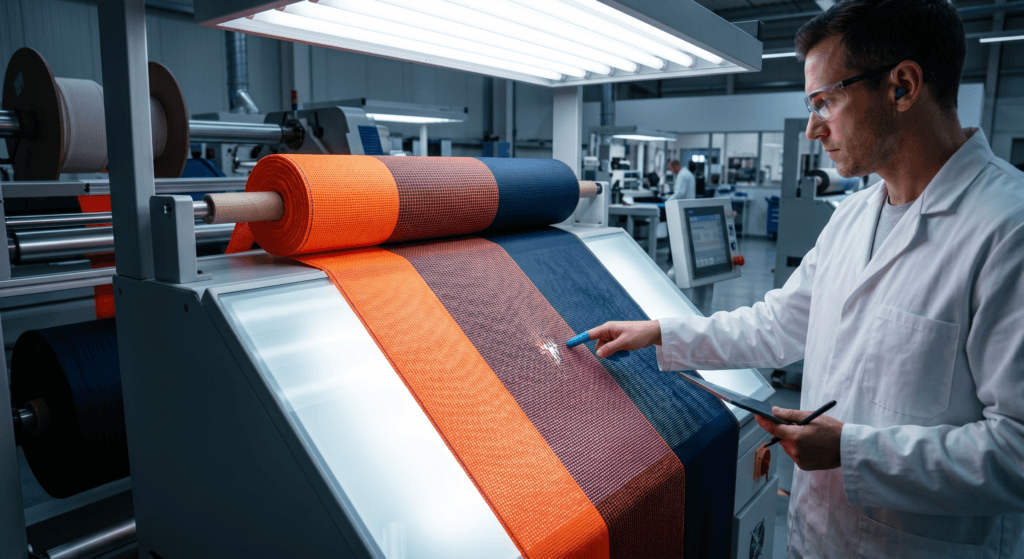 The “Light Box” Inspection: Deconstructing Fabric Defect Diagnostics and the 4-Point Quality System2026年4月28日The structural integrity and visual uniformity of […]
 The Engineering of Waterproof Breathable Workwear: A Forensic Analysis of PU Coatings vs. PTFE Membranes2026年4月24日The selection of waterproof foul-weather gear in industrial […]
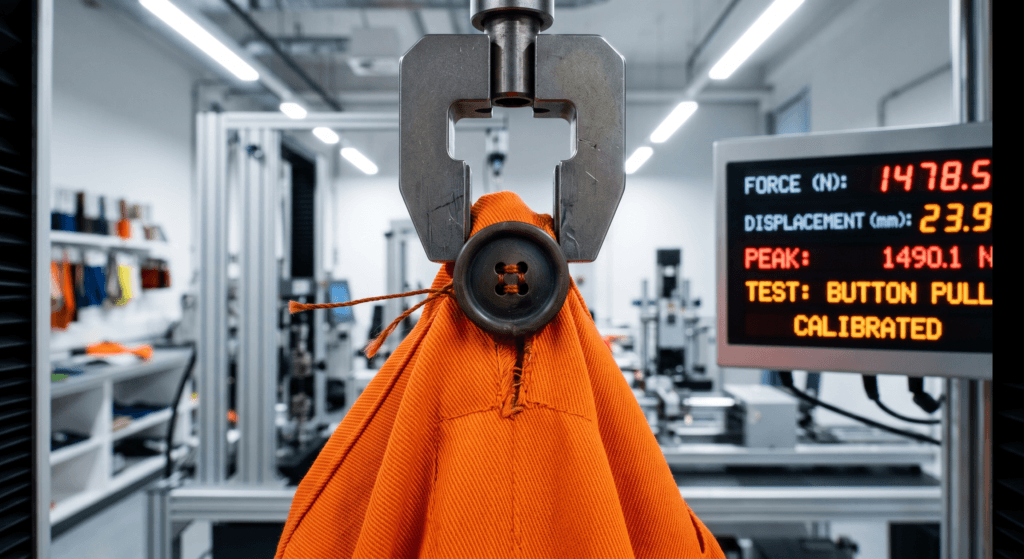 The “Button Pull” Test Protocol: Engineering Fastener Security to Mitigate Industrial Machinery and Choking Hazards2026年4月22日The “Button Pull” Test Protocol: Engineering […]
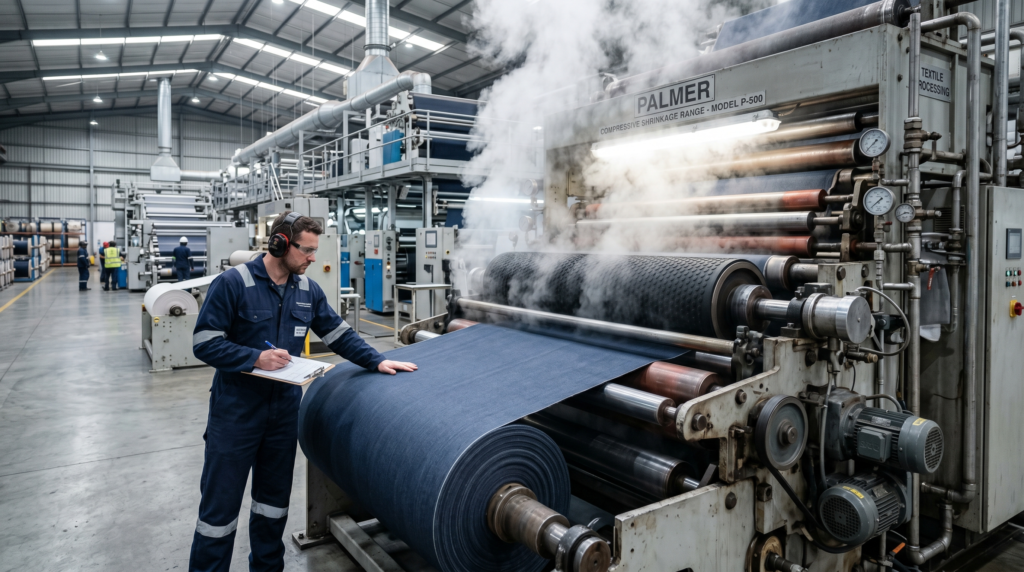 Fabric Shrinkage in Industrial Workwear: The Sanforization Secret and the Physics of Dimensional Stability2026年4月18日Executive Summary In the global industrial workwear and […]