

In the global Personal Protective Equipment (PPE) market, a piece of paper is often more valuable than the product itself. The CE Certificate, UL Mark, or ISO Accreditation is the legal license that allows safety gear to enter the market.
However, the industry is flooded with counterfeits. During recent global supply chain disruptions, it was estimated that over 60% of PPE certificates submitted by new suppliers were either fake, manipulated, or irrelevant. Purchasing based on a fake certificate does not just mean losing money; it means exposing your workforce to mortal danger and your company to corporate manslaughter charges.
This guide combines Part 1 (The Anatomy of a Valid Document) and Part 2 (Forensic Verification Techniques) to provide a complete decision-making toolkit for auditing supplier documentation.
Google Snippet: Quick Answer
Identifying fake PPE certificates requires a three-step forensic audit: Number, Format, and Issuer.
- Check the Notified Body Number: Every CE certificate must carry a 4-digit code linked to an accredited lab in the NANDO database.
- Verify the Scope: Ensure the certificate explicitly covers the "Model Number" and "standards" (e.g., EN ISO 11612) of the garment, not just the fabric.
- Contact the Issuer: The only 100% foolproof method is to email the validation department of the issuing body (e.g., SGS, BTTG, SATRA) with the document number.
1. The Ecosystem of Deception: Why Fakes Exist
The High Barrier to Entry
Obtaining legitimate certification for complex PPE (Category III – e.g., Fire Resistant or Arc Flash) is expensive and slow.
- Cost: $20,000–$50,000 per model range.
- Time: 3–6 months for testing and auditing.
- Audit: Requires annual factory inspections (Module C2/D).
The Shortcut
Unscrupulous suppliers bypass this by:
- Photoshop Editing: Changing the company name or expiry date on a valid certificate.
- "Draft" Deception: Presenting a "Test Report" (raw data) as a "Type Examination Certificate" (legal approval).
- The "China Export" Trick: Using a CE logo that stands for "China Export" rather than "Conformité Européenne" (European Conformity).
2. Anatomy of a Valid Certificate (Category III PPE)
To spot a fake, you must know what a real one looks like. For high-risk PPE (FR, Arc, Chemical), the documentation is strictly defined by EU Regulation 2016/425.
The "Module B" Certificate (EU Type Examination)
This proves the design passes the test.
- Header: Must state "EU Type-Examination Certificate" (Module B).
- Notified Body Number: A 4-digit code (e.g., 0120, 0338, 2777) usually printed under the CE mark or in the header.
- Validity: Must have an Issue Date and an Expiry Date (max 5 years).
- Manufacturer: Must match the name on your invoice exactly.
The "Module C2 or D" Certificate (Production Control)
This proves the factory produces consistent quality.
- Crucial Rule: A Module B certificate is invalid without an accompanying Module C2 or D certificate for Category III PPE.
- What it tracks: It proves the factory is audited annually by the Notified Body.
3. The "Big Three" Verification Steps
If a supplier sends you a PDF, do not file it. Audit it.
Step 1: The NANDO Check (The Number)
Every valid EU certificate is issued by a "Notified Body" (NB).
- Locate the 4-digit number on the certificate (e.g., "Notified Body 0338").
- Go to the European Commission NANDO Database.
- Search by "Body". Enter the code.
- The Test: Does the body exist? Is it accredited for "Personal Protective Equipment Regulation (EU) 2016/425"?
- Red Flag: If Body 1234 is accredited for "Elevators" but issued a certificate for "Gloves," it is a fake.
Step 2: The Format Analysis (The Text)
Read the fine print. Fakers often use confusing legal language to trick buyers.
- "Certificate of Compliance": This is often a meaningless document issued by a non-accredited agency. It is NOT a CE certificate.
- "Declaration of Conformity" (DoC): This is a document signed by the manufacturer, not the testing lab. It is required, but it is not proof of testing on its own.
- Standard Mismatch: Does the certificate cite EN 471 (Old High Vis standard)? It should cite EN ISO 20471 (Current). Expired standards render the cert void.
Step 3: The Issuer Validation (The Email)
This is the "Nuclear Option" and the only way to catch high-quality Photoshop fakes.
- Find the official website of the Notified Body (e.g., bttg.co.uk, sgs.com). Do not use the link in the PDF (it might be fake).
- Look for their "Certificate Checker" tool or "Verification Email."
- Send the PDF and ask: "Is certificate number XYZ123 valid for Supplier ABC?"
- Result: They will confirm if it is valid, suspended, or withdrawn.
4. Case Study: Real vs. Fake Comparison
| Feature | Valid Certificate | Suspicious / Fake Certificate |
|---|---|---|
| Title | "EU Type-Examination Certificate" | "Certificate of Compliance" or "Attestation of CE" |
| Issuer | A known Notified Body (e.g., SATRA, BTTG) with a 4-digit code. | "Italian Certification Institute" (Generic names) or no NB number. |
| Scope | Lists specific Model Numbers (e.g., "Jacket Model 505"). | Lists generic categories (e.g., "Protective Clothing Series"). |
| Standards | Current (e.g., EN ISO 11612:2015). | Obsolete (e.g., EN 531) or Wrong (e.g., FDA standards on a CE cert). |
| Images | Often includes a photo or technical drawing of the garment. | No images, or generic stock photos. |
5. Common Forgery Techniques Exposed
The "Bait and Switch" (Component vs. Product)
The supplier provides a valid certificate for the Fabric (e.g., Pyrovatex® cotton) but claims it covers the Finished Garment.
- The Reality: The fabric is safe, but if the manufacturer uses polyester thread and plastic zippers, the garment will melt.
- The Check: The certificate MUST say "Protective Clothing" or "Garment," not just "Textile Material."
The "Borrowed" Certificate
The supplier sends a valid certificate belonging to a different factory, claiming "This is our partner."
- The Risk: You have no legal link to that factory. If the "partner" stops supplying, your supplier might switch to a cheaper factory without telling you.
- The Check: The name on the Certificate must match the name on the Purchase Order and Invoice. If not, demand an "Extension" or "Own Brand Label" (OBL) certificate in your supplier’s name.
The "Photoshop" Date Change
The supplier takes an expired certificate (from 2018) and digitally alters the date to 2025.
- The Check: Look for pixelation around the dates. Also, standards change. If a "2025" certificate cites a 1998 standard, it’s a bad edit.
6. ROI Analysis: The Cost of Verification
Verifying certificates costs time (labor). However, compared to the cost of a recall, it is negligible.
Scenario: Procurement of 1,000 Arc Flash Suits ($100,000 value).
| Activity | Cost | Outcome |
|---|---|---|
| Verification (2 Hours) | $100 (Internal Labor) | Peace of Mind. Confirmed safety. |
| Skip Verification | $0 | Risk. 50% chance of fake gear. |
| Fake Gear Failure | $2,000,000+ | Lawsuits, accident investigation, stock written off, brand ruined. |
The Math: Investing $100 to protect a $100,000 asset and a $2M liability is an ROI of 2,000,000%.
7. The "Red Flag" Checklist for Buyers
Use this rapid-fire checklist when reviewing a new supplier’s documentation package.
Visual Checks:
- [ ] Is the PDF text selectable? (If it’s a blurry scan, be suspicious).
- [ ] Is the CE mark proportional? (Fakes often stretch the logo).
- [ ] Does the company address on the cert match their website/email signature?
Data Checks:
- [ ] Expiry Date: Is it still valid?
- [ ] Standard: Is the year of the standard current (e.g., 2013 or 2015, not 1998)?
- [ ] Model Number: Does the cert reference the exact item code you are buying?
Validation Actions:
- [ ] NANDO: Have I checked the Notified Body is accredited for PPE?
- [ ] Email: Have I emailed the issuer for confirmation?
- [ ] Module C2/D: For Cat III PPE, did they send the annual factory audit cert too?
8. Frequently Asked Questions (FAQ)
Q1: My supplier sent a "Test Report" instead of a Certificate. Is that okay? A: NO. A test report is raw data ("The fabric burned for 2 seconds"). A Certificate is the legal conclusion ("This passes the law"). You cannot import or use PPE based solely on a test report.
Q2: What is the "China Export" CE mark? A: It is a deceptive logo where the ‘C’ and ‘E’ are spaced very close together. A real CE mark has a circular spacing (you can draw two circles creating the letters). "China Export" has no legal safety standing.
Q3: Can I check certificates online? A: Yes. Most major bodies (SGS, TUV, BSI, UL, SATRA) have online "Certificate Directories." Google "SATRA Certificate Check" to find them.
Q4: What if the certificate is in Chinese? A: For EU compliance, the certificate must be available in English or the language of the member state. Do not accept documents you cannot read.
Q5: The supplier says "Certification is pending." Can I buy? A: Risky. "Pending" means "Not Certified." If the test fails next week, your stock is illegal. Only order when the paper is in hand.
9. Advanced Strategy: Digital Compliance
For large organizations, manual checking is too slow.
- Supplier Portals: Force suppliers to upload valid PDFs into your ERP (SAP/Oracle) before a PO can be issued.
- Expiry Alerts: Set automated reminders 3 months before a certificate expires to force the supplier to renew.
- Blockchain: Emerging tech allows brands to trace the "Digital Twin" of a certificate from the lab to the garment, making forgery impossible.
10. Conclusion
In the world of PPE, "Trust, but Verify" is outdated. The new maxim is "Verify, then Trust."
A certificate is not an administrative burden; it is the primary indicator of safety. A supplier who fakes a certificate is a supplier who will fake the stitching, fake the fabric, and compromise the safety of your workforce.
By mastering the "Big Three" verification steps—Number, Format, and Issuer—you transform from a passive buyer into a forensic gatekeeper, ensuring that every dollar spent buys genuine protection.
Don’t get tricked. Get certified.
📩 Need a Forensic Audit of your current supplier’s documentation? We specialize in validating global PPE compliance and unmasking counterfeit certifications. Email: [email protected] 🌐 www.workwearsolutions.net

 Architecting Resilience: Single Sourcing vs. Dual Sourcing Strategies in Global PPE Procurement2026年4月30日Executive Summary In the complex landscape of industrial […]
 Pattern Grading for Global Bodies: The Engineering of Anthropometric Fit in Industrial Workwear2026年4月29日In the highly regulated landscape of industrial Personal […]
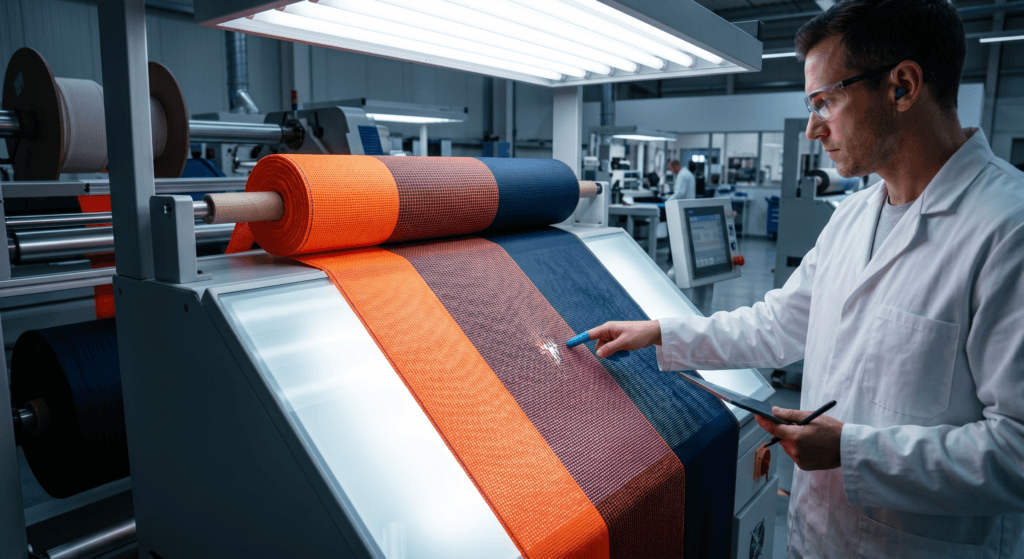 The “Light Box” Inspection: Deconstructing Fabric Defect Diagnostics and the 4-Point Quality System2026年4月28日The structural integrity and visual uniformity of […]
 The Engineering of Waterproof Breathable Workwear: A Forensic Analysis of PU Coatings vs. PTFE Membranes2026年4月24日The selection of waterproof foul-weather gear in industrial […]
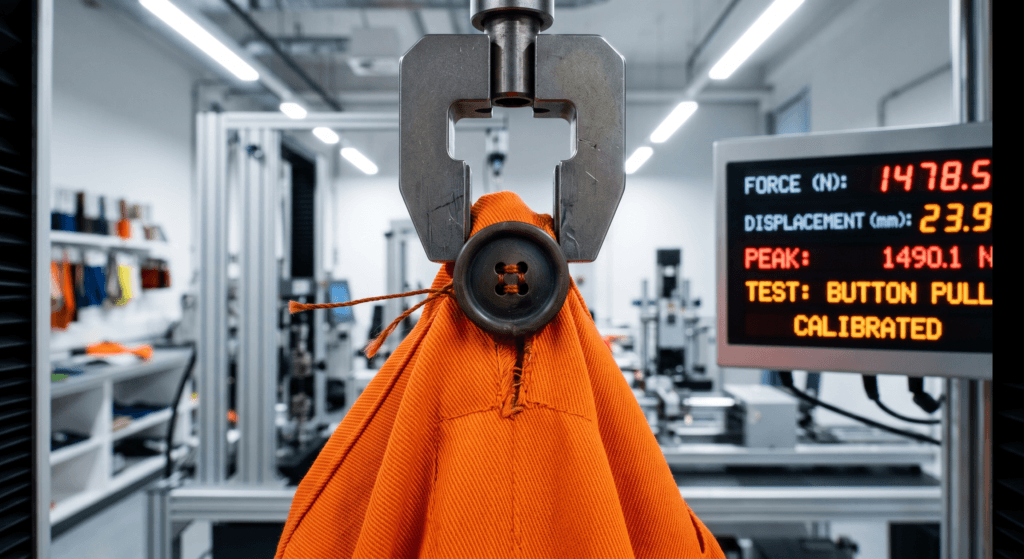 The “Button Pull” Test Protocol: Engineering Fastener Security to Mitigate Industrial Machinery and Choking Hazards2026年4月22日The “Button Pull” Test Protocol: Engineering […]
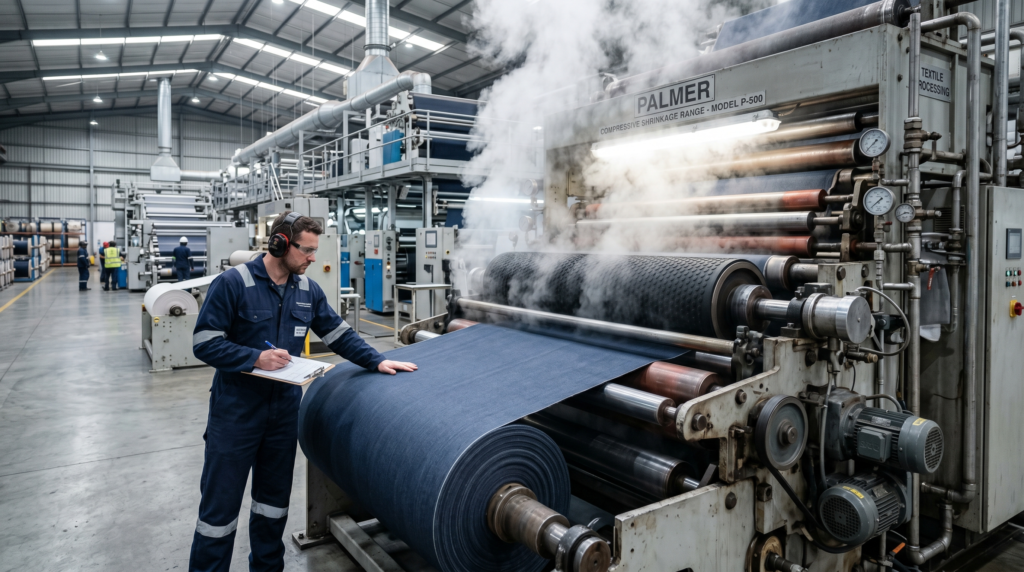 Fabric Shrinkage in Industrial Workwear: The Sanforization Secret and the Physics of Dimensional Stability2026年4月18日Executive Summary In the global industrial workwear and […]