
In the boardrooms of industrial companies, the procurement of Personal Protective Equipment (PPE) is often viewed as a commodity purchase: get the lowest price per unit to protect the bottom line. This is a fundamental financial error.
When a Procurement Officer buys a $15 coverall instead of a $30 coverall, they save $15 on the invoice. However, if that cheap coverall fails in 3 months while the premium one lasts 12 months, the company pays for four replacement cycles, four shipping fees, four administrative processing rounds, and four instances of downtime.
This guide combines Part 1 (The Mathematics of TCO) and Part 2 (Strategic Sourcing & Quality Metrics) to provide a complete decision-making toolkit for shifting from "Price-Based" to "Cost-Based" procurement.
Google Snippet: Quick Answer
Life-Cycle Cost Analysis (LCCA) reveals that the purchase price of workwear accounts for only 20–30% of its Total Cost of Ownership. The hidden costs—premature replacement, logistics administration, laundering damage, and non-compliance fines—make "cheap" low-durability garments 2–3 times more expensive annually than high-performance alternatives. By investing in higher tensile strength fabrics and reinforced construction, companies can reduce annual spend by 30% or more.
1. The Iceberg of Workwear Costs
Most companies only see the tip of the iceberg: the Unit Price. LCCA exposes what lies beneath.
The Visible Cost (CAPEX)
- Unit Price: The invoice amount paid to the supplier.
- Initial Shipping: The cost to get goods to the warehouse.
The Invisible Costs (OPEX)
- Replacement Frequency: The #1 driver of cost. A shirt that shrinks after 5 washes effectively costs 10x its price over a year.
- Procurement Labor: It costs approximately $50–$100 in internal labor to process a single Purchase Order (PO), receive goods, and stock them. Frequent re-ordering explodes this cost.
- Brand Damage: Faded, torn uniforms signal incompetence to customers.
- Safety Liability: Cheap FR (Flame Resistant) gear often loses its protective qualities after washing, leading to catastrophic legal liability in an accident.
2. The Math: Calculating Total Cost of Ownership (TCO)
To prove the value of quality, we use the Annual Cost Per Worker (ACPW) formula.
$$ACPW = \frac{Unit Price \times Annual Quantity}{Lifespan (Months)} \times 12 + Admin Cost$$
Scenario A: The "Budget" Choice
- Garment: Basic Cotton Coverall
- Price: $20.00
- Lifespan: 3 Months (Tears, shrinkage, buttons falling off)
- Annual Need: 4 suits per worker.
- Admin Cost: 4 Orders/Year ($25 processing per order allocated per batch).
Total Annual Cost: $(20 \times 4) + Admin = \$100+ per worker.**
Scenario B: The "Premium" Choice
- Garment: Reinforced Poly/Cotton with Cordura®
- Price: $45.00
- Lifespan: 12 Months (High abrasion resistance, color fastness)
- Annual Need: 1 suit per worker.
- Admin Cost: 1 Order/Year.
Total Annual Cost: $(45 \times 1) + Admin = \$55+ per worker.**
The Result: The "expensive" suit saves 45% of the budget.
3. The "Failure Modes" of Cheap Workwear
Why do cheap garments fail early? It comes down to three engineering deficits.
1. Fabric Stability (Shrinkage)
Cheap fabrics are rarely "Sanforized" (pre-shrunk) correctly.
- The Failure: After 3 industrial hot washes (60°C), a Size L becomes a Size M. The worker discards it.
- The Cost: 100% loss of asset value within 2 weeks.
2. Color Fastness
Cheap dyes (Direct/Sulfur) bleed in hot water and fade in UV light.
- The Failure: A "High-Vis Orange" vest turns pale yellow in 2 months, becoming non-compliant with ANSI/ISO safety standards.
- The Cost: Mandatory replacement to avoid safety fines.
3. Hardware Failure
Zippers and buttons are the moving parts of the garment.
- The Failure: Using a generic coil zipper instead of a branded YKK Vislon zipper saves $0.30 per unit. When the zipper breaks, the entire $20 garment is trashed.
- The Cost: The "Weakest Link" destroys the investment.
4. Case Study Comparisons by Industry
| Industry | The "Cheap" Strategy | The LCCA Strategy | Financial Outcome |
|---|---|---|---|
| Mining | Bought $15 cotton shirts. Silica dust and washing destroyed them in 6 weeks. | Switched to $35 Ripstop Poly/Cotton. Lasted 6 months. | Reduced PO volume by 75%. Warehouse logistics savings: $12,000/year. |
| Automotive | Bought generic mechanics trousers. Buttons scratched car paint. | Switched to "Scratch-Free" Tech Pants with covered closures ($10 premium). | Saved $50,000 in paint rectification costs in Year 1. |
| Food Processing | Bought cheap white coats. Zippers rusted; pockets trapped food. | Switched to Snap-Closure, Pocketless Hygiene Coats. | Audit Compliance: Zero non-conformance reports. Garment lifespan doubled. |
| Oil & Gas | Bought "Lowest Bidder" FR Coveralls. Shrinkage made them unsafe (exposed wrists). | Switched to Premium Brand FR (Westex/TenCate) fabric. | Safety: Eliminated burn risk from poor fit. Employee morale skyrocketed. |
5. Common Procurement Mistakes in LCCA
| Mistake | Impact | Prevention Tip |
|---|---|---|
| Siloed Budgets | Procurement owns the "Unit Price" budget; Operations owns the "Replacement" budget. They don’t talk. | Merge budgets or create a Cross-Functional Team to evaluate TCO. |
| Ignoring Laundry Costs | Cheap garments degrade in industrial laundry, requiring frequent repairs (patches/zippers) charged by the laundry. | Specify "Industrial Laundry Friendly" (ISO 15797) fabrics to lower maintenance fees. |
| Testing on Managers | Managers sit in offices; they don’t test durability. | Run Wear Trials with the toughest users (e.g., concrete workers, welders) for 30 days. |
| No "End of Life" Plan | Disposing of cheap, ruined garments costs money (tipping fees). | Higher quality garments have second-life resale value or can be recycled. |
| False Economy of Scale | Ordering 10,000 cheap units to get a discount, only to have 5,000 rot in the warehouse. | Order Just-in-Time high-quality stock to improve cash flow. |
Real World Example: A UK logistics firm switched from a £5 Polo Shirt to a £12 "Tech-Polo" (Anti-bacterial, wicking, snag-resistant).
- Initial Reaction: Procurement was furious at the 140% price hike.
- Year-End Result: The £5 shirts were replaced every 6 weeks due to smell and snagging. The £12 shirts lasted the full year. Annual spend dropped by 40%.
6. LCCA Calculator: A Tool for Buyers
Use this simple checklist to score potential suppliers.
The "Value Score" (Max 100):
- Fabric Specs (30 pts): Is it Ring-Spun? Long-Staple? Branded Fiber (e.g., Cordura)?
- Construction (20 pts): Triple stitching? Bar-tacks at stress points?
- Warranty (20 pts): Does the supplier guarantee zippers/buttons for 1 year?
- Certifications (15 pts): Are test reports (shrinkage/pilling) provided from a 3rd party lab?
- Price (15 pts): Is it competitive within its quality tier?
If a supplier scores high on Price but low on Fabric/Construction, they are a "False Economy."
7. Strategic Sourcing: How to Shift the Conversation
Procurement officers often face pressure from Finance to cut costs. Here is how to frame the argument for Quality.
-
The "Cost-Per-Wear" Metric: Don’t present the Unit Price ($45). Present the Cost-Per-Wear ($0.15/day). Compare it to the cheap option ($0.22/day).
-
The "Safety Dividend": Argue that quality gear reduces accident rates (trips from torn hems, burns from thin fabric). Safety incidents cost millions; gear costs thousands.
-
The "Morale Multiplier": Workers perceive cheap uniforms as a sign the company doesn’t value them. Quality gear improves retention. Replacing a skilled worker costs $5,000+; a good uniform costs $50.
8. Frequently Asked Questions (FAQ)
Q1: How do I verify if a garment will last before buying? A: Ask for the Martindale Abrasion Test result.
- < 20,000 cycles: Low durability (Fashion).
-
50,000 cycles: High durability (Industrial).
Q2: Does "Heavy" mean "Durable"? A: No. A heavy canvas made of short-staple cotton will tear easier than a lightweight Cordura® blend. Look for Tenacity (Fiber Strength), not just weight.
Q3: Is it better to rent or buy? A: LCCA typically favors Buying (Direct Purchase). Rental contracts hide costs (wash fees, repair fees, "lost garment" fees). Managing your own high-quality stock is usually 30% cheaper.
Q4: Can I mix-and-match cheap and expensive gear? A: Yes. Use the "Tiered Strategy." Give the warehouse manager (low wear) the standard polo. Give the forklift driver (high wear) the reinforced polo. Align the spend with the abrasion risk.
Q5: What is the biggest "Quality Killer"? A: Fabric Softeners. If your workers wash gear at home with softeners, it destroys wicking and FR properties, ruining the investment. Educating staff is part of LCCA.
9. Advanced Strategies: The Circular Economy
-
Repair vs. Replace: High-quality garments are worth repairing. Replacing a zipper on a $60 jacket costs $5. Replacing the jacket costs $60. Establish a local repair loop.
-
Inventory Pooling: Standardize uniforms across multiple sites. If Site A has excess, ship to Site B. This prevents buying new stock when "dead stock" exists elsewhere.
-
Supplier Agreements: Negotiate a "Performance Guarantee." If the garment fails (zipper breaks, seam rips) within 6 months, the supplier replaces it free. This forces the supplier to sell you quality.
10. Conclusion
In the world of industrial workwear, "You get what you pay for" is a mathematical certainty.
The illusion of savings created by buying cheap, disposable gear is quickly shattered by the reality of replacement cycles and administrative churn. Life-Cycle Cost Analysis is the lens that brings true value into focus.
By investing in Engineered Durability—better fibers, stronger seams, and stable dyes—you protect your workforce and your budget.
Stop buying replacements. Start investing in longevity.
📩 Need an LCCA Audit of your current uniform program? We specialize in financial modeling for high-volume workwear procurement. Email: [email protected] 🌐 www.workwearsolutions.net

 Architecting Resilience: Single Sourcing vs. Dual Sourcing Strategies in Global PPE Procurement2026年4月30日Executive Summary In the complex landscape of industrial […]
 Pattern Grading for Global Bodies: The Engineering of Anthropometric Fit in Industrial Workwear2026年4月29日In the highly regulated landscape of industrial Personal […]
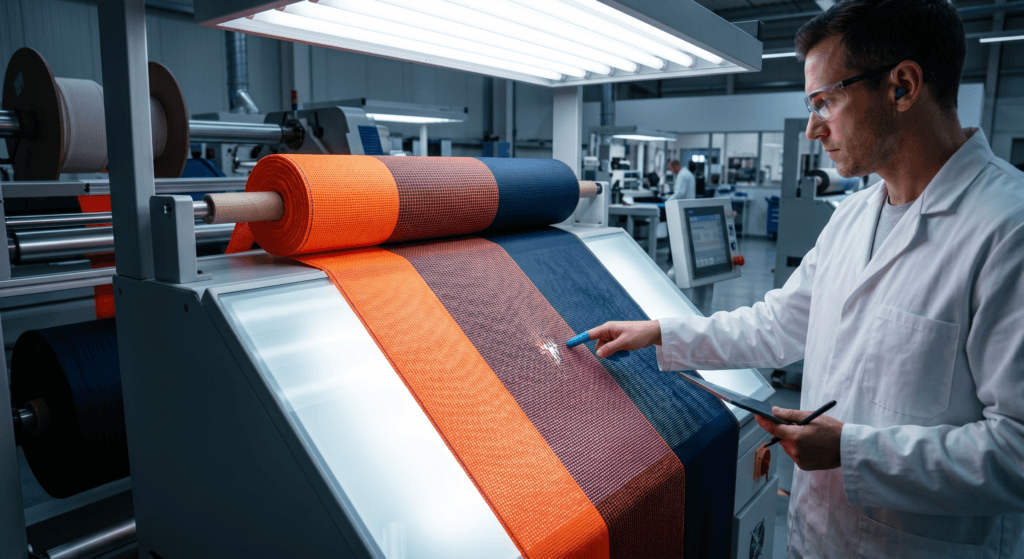 The “Light Box” Inspection: Deconstructing Fabric Defect Diagnostics and the 4-Point Quality System2026年4月28日The structural integrity and visual uniformity of […]
 The Engineering of Waterproof Breathable Workwear: A Forensic Analysis of PU Coatings vs. PTFE Membranes2026年4月24日The selection of waterproof foul-weather gear in industrial […]
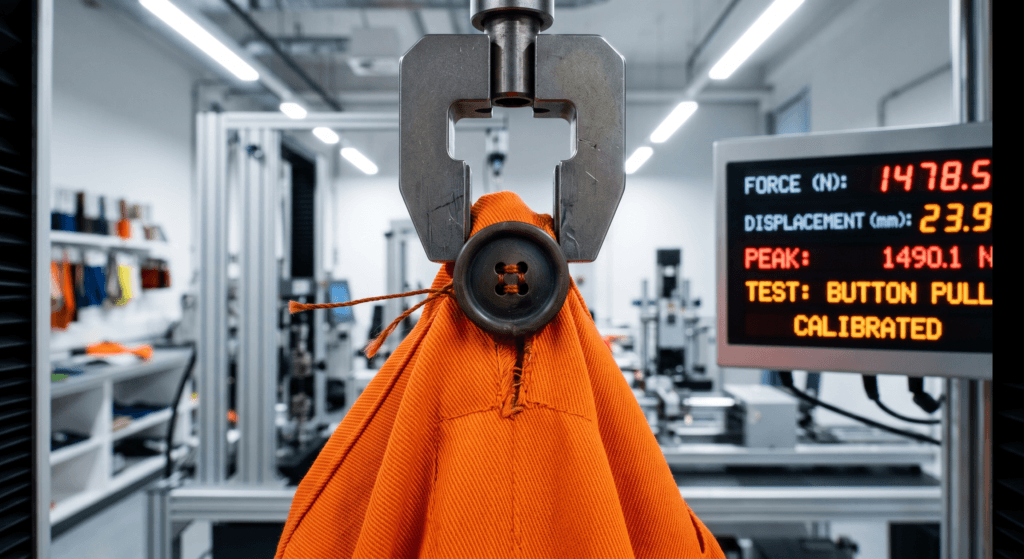 The “Button Pull” Test Protocol: Engineering Fastener Security to Mitigate Industrial Machinery and Choking Hazards2026年4月22日The “Button Pull” Test Protocol: Engineering […]
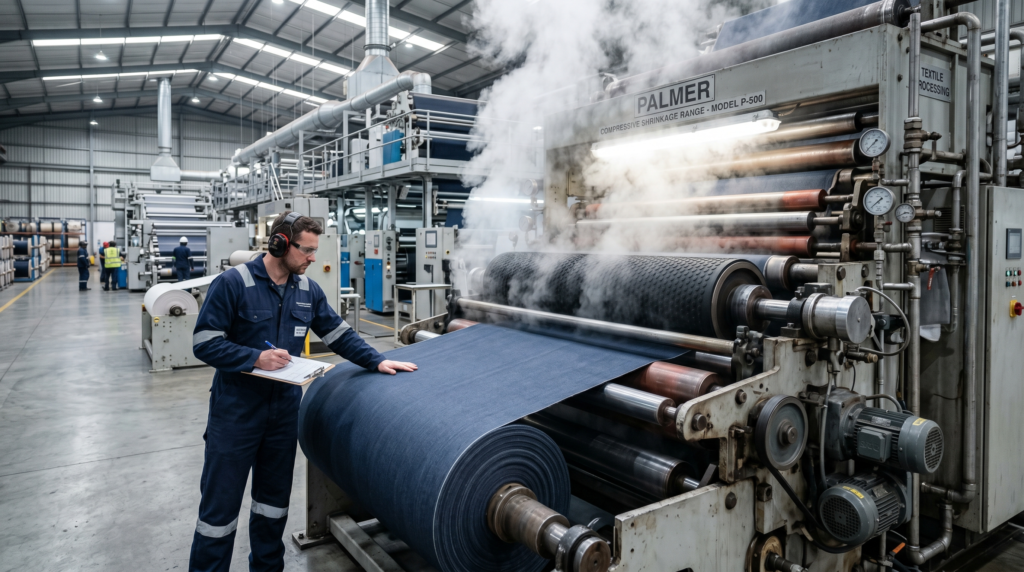 Fabric Shrinkage in Industrial Workwear: The Sanforization Secret and the Physics of Dimensional Stability2026年4月18日Executive Summary In the global industrial workwear and […]