

In the hierarchy of workwear design, pockets are often dismissed as mere storage sacks. This is a critical error. In modern industrial environments, a pocket is a risk vector.
A standard open-top patch pocket on a technician’s chest can drop a 50g bolt into a jet engine intake (FOD), causing millions in damage. An exposed metal zipper on an automotive assembly line can scratch a luxury sedan’s clear coat. A loose pocket flapping near a lathe can snag and pull a worker into machinery.
The future of industrial apparel lies in Pocket Engineering: the systematic design of Anti-Drop, Anti-Scratch, and Anti-Noise storage solutions. This guide combines Part 1 (The Physics of Containment) and Part 2 (Procurement Strategies & ROI) to provide a complete decision-making toolkit for sourcing the next generation of intelligent workwear.
Google Snippet: Quick Answer
Pocket Engineering transforms workwear from simple clothing into a safety tool management system. Advanced pocket designs utilize "Trap-Door" internal geometry to prevent dropped objects (Gravity Zero), concealed hardware and garage zippers to prevent surface scratches (Zero-Damage), and compartmentalized felt linings to eliminate noise. Key specifications include compliance with ANSI/ISEA 121 (Dropped Objects) and the use of scratch-free closures for automotive and cleanroom environments.
1. The Hidden Hazards of Poor Pocket Design
The Gravity Threat (Dropped Objects)
- The Scenario: A wind turbine technician bends over to inspect a flange. A wrench slides out of their loose hip pocket.
- The Physics: A 1kg tool dropped from 20 meters hits with a force of roughly 196 Joules—enough to penetrate a standard hard hat or kill a ground-level worker.
- FOD (Foreign Object Debris): In aerospace and food processing, an item falling out of a pocket isn’t just a safety risk; it is a contamination event that triggers massive recalls or engine teardowns.
The Surface Threat (Scratch & Snag)
- The Scenario: An assembly line worker leans over a car hood to install a wiper. The metal rivet on their jeans pocket scrapes the paint.
- The Cost: In automotive logistics, paint rectification costs millions annually.
- The Snag: Bellows pockets (pockets that expand outwards) can catch on door handles, scaffolding, or rotating shafts, leading to "entrapment incidents."
The Noise & Focus Threat
- The Scenario: A security guard or sound engineer moves through a quiet zone. Keys jingle against coins in an unlined pocket.
- The Impact: Loss of stealth, disruption of audio recording, or simple cognitive distraction for workers requiring high concentration.
2. Relevant Standards for Storage Safety
While there is no single "ISO Pocket Standard," several safety protocols dictate design requirements.
| Risk Category | Relevant Standard | Engineering Requirement |
|---|---|---|
| Dropped Objects | ANSI/ISEA 121-2018 | Standard for Dropped Object Prevention Solutions. Pockets must feature "positive closure" (zipper/velcro) or internal traps to be certified "Tether-Ready." |
| Surface Protection | Automotive OEM Specs | (e.g., VW/Toyota Plant Standards). No exposed metal. All buttons/zips must be covered by a fabric placket (fly). |
| Entanglement | EN 510 | Specification for protective clothing for use where there is a risk of entanglement with moving parts. Mandates internal pockets only; no external patch pockets. |
| Molten Metal | ISO 11612 (Code D/E) | Pocket flaps must be wider than the pocket opening to prevent molten splash from running into the pocket. |
3. The Three Pillars of Pocket Engineering
Pillar A: Anti-Drop Geometry (The "Trap-Door")
- Concept: Design the pocket so that gravity works for the user, not against them.
- The "S-Bend" Entry: Instead of a straight vertical opening, the pocket mouth is curved or features an internal fabric lip. Even if the worker hangs upside down, the tool slides into the "trap" rather than falling out.
- Zipper Garages: When a zipper is closed, the pull-tab is tucked into a small fabric hood. This prevents the zipper from drifting open due to vibration.
Pillar B: Anti-Scratch Architecture (The "Stealth" Surface)
- Concealed Hardware: Buttons and snaps are sandwiched between layers of fabric. The outer layer is smooth textile; the hard snap is never exposed to the outside world.
- Plastic/Rubberized Trims: Replacing brass rivets with high-density silicone or thermoplastic polyurethane (TPU) fasteners that are softer than automotive clear coats.
- Inverted Zippers: The coil of the zipper faces inward; the flat tape faces outward, creating a smooth, non-abrasive surface.
Pillar C: Anti-Noise Acoustics (The "Silencer")
- Compartmentalization: Sewing internal dividers into a cargo pocket. This separates keys from phones, preventing the "clinking" contact noise.
- Felt/Fleece Lining: Lining the bottom 2 inches of a pocket with micro-fleece. This dampens the impact sound when items are dropped in and prevents rattling during walking.
4. Case Study Comparisons by Industry Segment
| Industry Segment | The Pocket Problem | The Engineering Solution | Operational Outcome |
|---|---|---|---|
| Wind Energy / Telecoms | Gravity Kills: Dropped tools are the #1 fatality risk. | Tether-Ready Pockets: Reinforced D-rings sewn inside the pocket to clip tool lanyards. Zippered closures. | Safety: Dropped object incidents reduced by 100% in test groups. |
| Automotive Assembly | Paint Damage: Workers scratching car bodies with exposed rivets. | "Zero-Hardware" Design: All closures are Velcro (Hook & Loop) or fabric ties. No metal rivets. | Quality: Paint rectification costs dropped by $15,000 per month per line. |
| Food Processing | Contamination: Pens/thermometers falling into mixing vats. | Internal-Only Pockets: No pockets above the waist. Internal chest pocket accessed via a side slit. | Hygiene: Eliminated physical contamination risk (FOD) from upper-body storage. |
| Tactical / Security | Noise Discipline: rattling gear alerts targets. | Sub-Divided Cargo Pockets: Elastic webbing inside pockets to hold magazines/lights tight against the leg. | Stealth: Silent movement achieved even while carrying 2kg of gear. |
5. Common Procurement Mistakes in Pocket Design
| Mistake | Impact | Prevention Tip |
|---|---|---|
| The "Velcro" Trap | Standard Velcro fills with lint and stops sticking after 50 washes, leaving the pocket permanently flapping open. | Specify "Block Tapey" or Injection Molded Polymer Hooks which are non-snagging and endure 1,000+ cycles. |
| False Depth | Pockets that are deep enough for a hand but too shallow for a smartphone. The phone tips out when sitting. | Require "Ergonomic Depth": The pocket bottom should sit below the hip flexor line to trap contents during sitting. |
| Exposed Rivets | Using denim-style jeans with copper rivets in a warehouse handling solar panels. | Mandate Bar-Tack Reinforcement instead of metal rivets at stress points. |
| "Bellows" Everywhere | Puffy cargo pockets catch on door handles and scaffolding clamps. | Use "Inverted Pleat" or "Flush" pockets that only expand when filled, lying flat when empty. |
| Weak Linings | Using cheap poly-cotton for the pocket bag (internal lining). Keys poke holes in weeks. | Specify Cordura® 500D or double-layer reinforcement for the bottom 3 inches of the pocket bag. |
Example: An airline maintenance crew wore standard mechanic coveralls. A mechanic leaned over an engine, and a loose zipper pull scratched a fan blade. The engine had to be pulled for inspection (Cost: $50,000). Correction: Switched to "Scratch-Free" coveralls with covered plackets and plastic zippers. ROI was immediate.
6. ROI Analysis: The Cost of a "Bad" Pocket
Engineering a pocket adds roughly $2–$5 to the garment cost. Here is why it is cheap.
Scenario: Automotive Assembly Plant (1,000 workers).
| Metric | Standard Workwear | Engineered "Anti-Scratch" Workwear |
|---|---|---|
| Unit Cost | $30.00 | $35.00 |
| Total Investment | $30,000 | $35,000 (+$5k) |
| Scratch Incidents/Year | 50 cars | 2 cars |
| Repair Cost ($500/car) | $25,000 | $1,000 |
| Line Stoppages | 5 hours/year | 0 hours |
| Net Savings | — | $19,000 + Uptime |
Note: In "Death Risk" industries like Tower Climbing, the ROI is infinite (Cost of a lawsuit vs. Cost of a zipper).
7. Buyer Checklist for Pocket Engineering
Hardware Audit:
- [ ] No Exposed Metal: Are all buttons/snaps covered by fabric?
- [ ] Zipper Garages: Does the zipper pull hide under a hood when closed?
- [ ] Reinforcement: Are corners bar-tacked (stitched tightly) rather than riveted?
Functionality Audit:
- [ ] Inversion Test: Turn the jacket/pant upside down and shake. Do contents fall out?
- [ ] The "Phone Test": Put a large smartphone in the hip pocket and sit down. Does it dig into the hip or slide out?
- [ ] One-Hand Operation: Can the worker open/close the pocket with one hand (while holding a tool)?
Durability Audit:
- [ ] Floating Pockets: For heavy tools, are the pockets "floating" (attached only at the top) or sewn flat? Floating pockets prevent thigh abrasion.
- [ ] Lining Strength: Is the interior pocket fabric reinforced Nylon or basic cotton?
8. Frequently Asked Questions (FAQ)
Q1: Why are "Holster Pockets" (hanging pockets) popular? A: They act as a built-in tool belt. By distributing weight on the hips rather than the thigh skin, they reduce fatigue and allow the worker to remove the "tools" (by tucking the pocket away) when driving or entering clean areas.
Q2: Are magnets good for pocket closures? A: Yes and No. They are silent and self-closing (great for anti-drop). However, they attract metal filings (swarf) in welding/machining shops, which creates a cleaning nightmare. Use only in non-ferrous environments.
Q3: What is a "Napoleon Pocket"? A: A vertical chest pocket located alongside the main zipper. It allows access to a phone/document without unzipping the main jacket. Critical for cold storage workers to keep heat in.
Q4: Can pockets be added to FR (Flame Resistant) gear? A: Yes, but the pocket flaps must be FR, and the design must prevent "pucker" where fuel could pool. External hanging pockets are usually discouraged in strict FR zones due to snagging.
Q5: How do I stop pockets from ripping at the corners? A: Look for "Triangle Bartacks" or Cordura® backing. If you carry sharp tools (screwdrivers), you need a pocket with a Kevlar® or Ballistic Nylon bottom lining.
9. Advanced Sourcing Strategies
-
Rule of Thumb: "Zero External" for Food/Paint For hygiene (Dairy/Food) and Paint shops, mandate Zero External Pockets above the waist. Use internal pockets or pass-through slits to access undergarments. This eliminates the risk of dropping items into the product.
-
The "Ruler" Pocket Evolution The traditional "ruler pocket" on the right leg is a snag hazard. Source designs where the bottom of the ruler pocket is unstitched (free-hanging). This allows the pocket to pivot when the worker kneels, preventing the ruler from stabbing the worker in the ribs or snapping.
-
Haptic Feedback Design Advanced tactical pockets use different pull-tab textures (e.g., rubber vs. cord). This allows the worker to know which pocket they are opening (e.g., medical kit vs. notebook) without looking down.
-
Drainage Grommets For outdoor/marine work, ensure pockets have small embroidery eyelets or mesh bottoms. This prevents the pocket from filling with water or sand, which adds weight and rots the fabric.
10. Conclusion
A pocket is not an accessory; it is the interface between the worker and their tools.
Poor pocket design leads to scratched products, lost tools, frustrated workers, and fatal accidents. Superior Pocket Engineering—focusing on Anti-Drop, Anti-Scratch, and Anti-Noise protocols—transforms workwear into a productivity asset.
When sourcing workwear, look inside the garment. If the manufacturer has engineered the pocket, they have engineered the safety.
📩 Need help sourcing Automotive Anti-Scratch Uniforms or Tether-Ready Wind Energy Gear? We specialize in technical storage solutions for industrial safety. Email: [email protected] 🌐 www.workwearsolutions.net

 Architecting Resilience: Single Sourcing vs. Dual Sourcing Strategies in Global PPE Procurement2026年4月30日Executive Summary In the complex landscape of industrial […]
 Pattern Grading for Global Bodies: The Engineering of Anthropometric Fit in Industrial Workwear2026年4月29日In the highly regulated landscape of industrial Personal […]
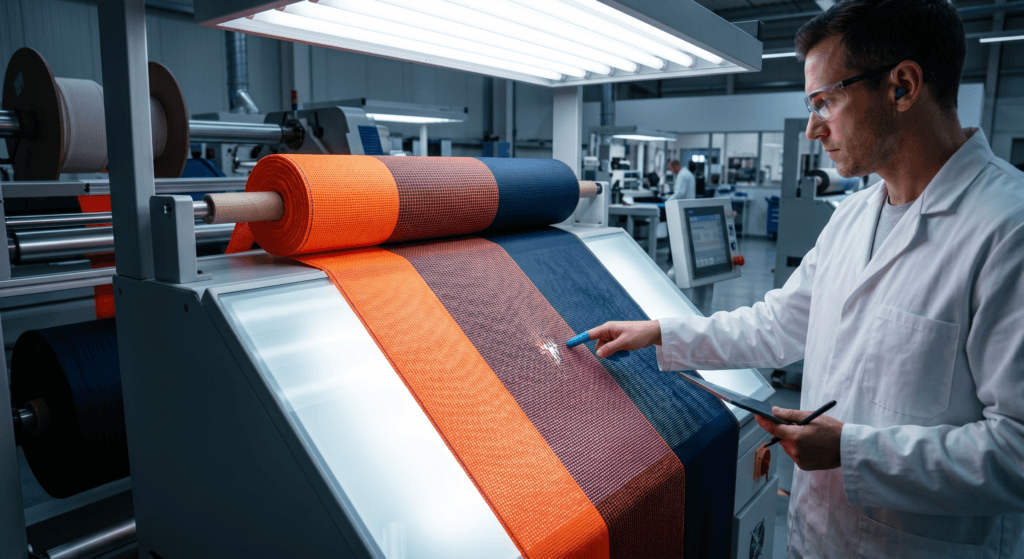 The “Light Box” Inspection: Deconstructing Fabric Defect Diagnostics and the 4-Point Quality System2026年4月28日The structural integrity and visual uniformity of […]
 The Engineering of Waterproof Breathable Workwear: A Forensic Analysis of PU Coatings vs. PTFE Membranes2026年4月24日The selection of waterproof foul-weather gear in industrial […]
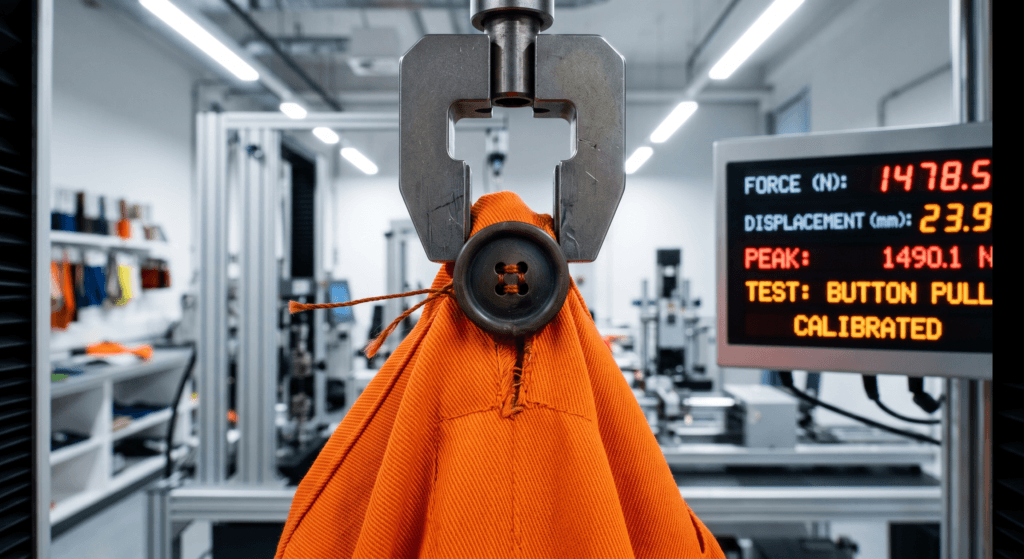 The “Button Pull” Test Protocol: Engineering Fastener Security to Mitigate Industrial Machinery and Choking Hazards2026年4月22日The “Button Pull” Test Protocol: Engineering […]
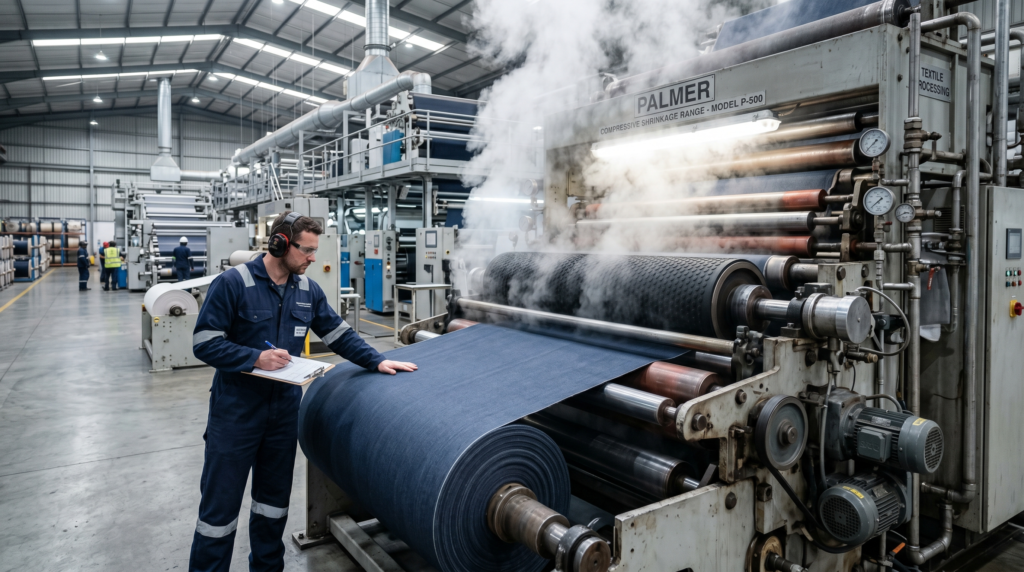 Fabric Shrinkage in Industrial Workwear: The Sanforization Secret and the Physics of Dimensional Stability2026年4月18日Executive Summary In the global industrial workwear and […]