
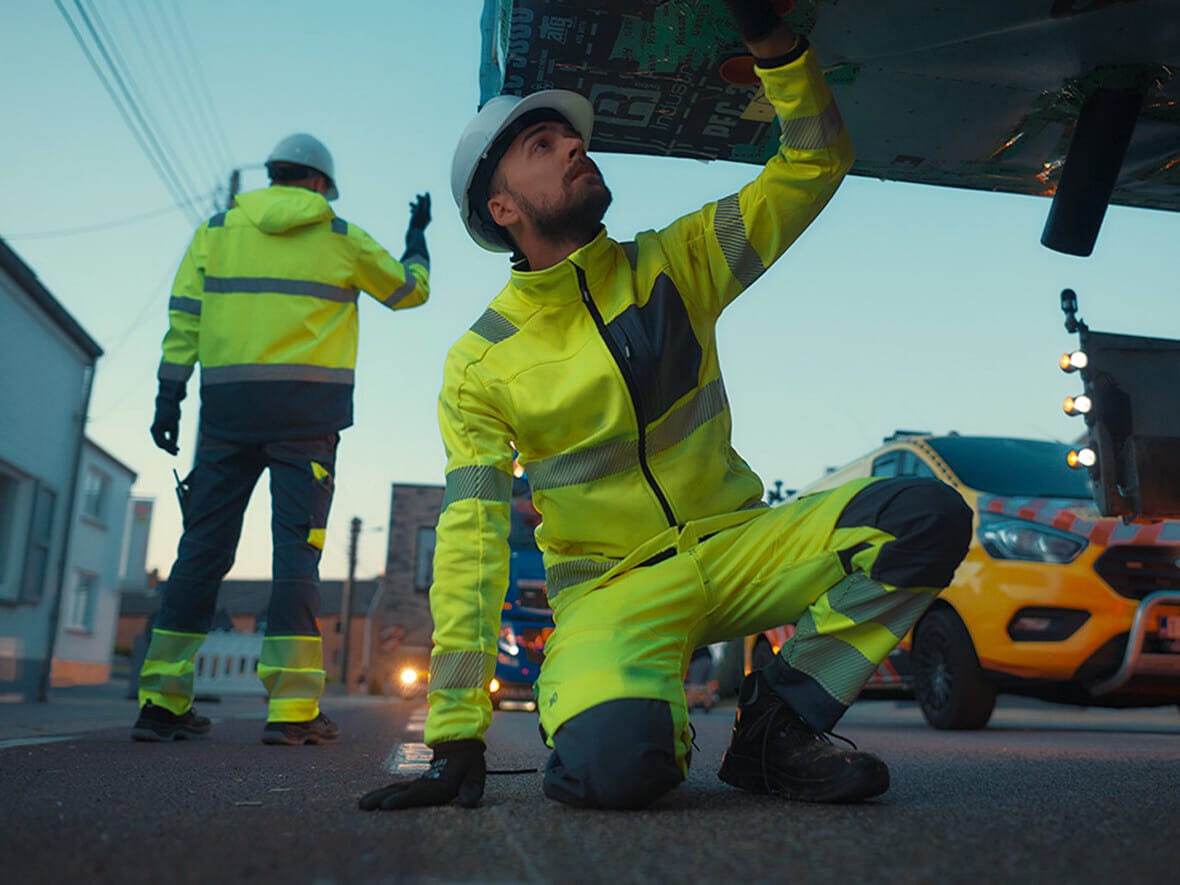
The dividing line between high-performance athletic apparel and heavy-duty industrial workwear is vanishing. Today’s industrial workforce is younger, more active, and accustomed to the comfort of technical sportswear in their daily lives. They no longer accept the "stiff canvas tuxedo" of the past.
This shift is not merely aesthetic; it is physiological. By integrating 4-way stretch polymers, hydrophilic moisture-wicking membranes, and ultralight abrasion-resistant fibers, safety managers can reduce metabolic heat buildup, lower energy expenditure during movement, and significantly improve compliance.
This guide combines Part 1 (The Science of Performance Materials) and Part 2 (Procurement Strategies and ROI) to provide a complete decision-making toolkit for sourcing the next generation of performance workwear.
Google Snippet: Quick Answer
Sportswear-like workwear utilizes athletic fabric technologies—such as elastane blends, moisture-wicking weaves, and zoned ventilation—to improve industrial safety and productivity. Key features include 4-way mechanical stretch (ISO 20932), high-breathability metrics (Ret < 10), and lightweight durability (Cordura® Nyco). This gear reduces worker fatigue by mirroring the body’s natural biomechanics while maintaining compliance with safety standards like EN ISO 20471 and EN 14404.
1. Why the Industry is Pivot to "Industrial Athleisure"
The Biomechanical Advantage
- Reduced Resistance: Traditional denim or canvas resists knee and hip flexion. Athletic-style workwear uses articulated patterning and stretch fabrics to remove this resistance, saving energy with every step.
- Range of Motion: Climbing scaffolding or crawling in crawlspaces requires the agility of a rock climber. Stiff gear restricts this; stretch gear enables it.
Thermal Regulation (The "Micro-Climate")
- Moisture Management: Unlike cotton, which holds sweat (making the worker cold in winter and hot in summer), hydrophobic synthetic blends move moisture away from the skin to the exterior, keeping the core temperature stable.
- Zoned Ventilation: Using mesh panels in high-heat zones (lower back, armpits), inspired by running kits, prevents overheating.
The "War for Talent"
- Image & Morale: The modern tradesperson wants to look professional, not sloppy. Fitted, modern designs attract younger talent who view gear as a perk of the job.
2. Relevant Standards for Performance Workwear
While the style is athletic, the protection must remain industrial.
| Performance Metric | Relevant Standard | Purpose |
|---|---|---|
| Stretch & Recovery | ISO 20932 | Measures how well the fabric stretches and, critically, how well it snaps back without bagging out. |
| Breathability | EN 343 Class 4 | Measures Ret (Resistance to Evaporative Transfer). Lower Ret (<10) means "sportswear" levels of breathability. |
| Abrasion Resistance | EN ISO 12947 | Martindale cycles. Sportswear usually fails at 20k; Workwear must pass 50k–100k cycles. |
| High Visibility | EN ISO 20471 | Ensures that even stretch fabrics maintain sufficient fluorescence and reflectivity after washing. |
| Dimensional Stability | ISO 5077 | Ensures the garment doesn’t shrink in industrial hot washes (60°C+). |
3. Material Selection: Fusing Durability with Agility
The challenge lies in making soft fabrics tough.
| Material | Athletic Property | Industrial Upgrade | Limitations |
|---|---|---|---|
| T400® / Elasterell-P | High stretch without degradation. | Chemical Resistance: Unlike Spandex, T400 withstands industrial bleaching and high heat. | Slightly heavier than pure spandex. |
| Cordura® Nyco Knit | Soft hand-feel of a t-shirt. | Abrasion Strength: 3x stronger than cotton. Used for "armored hoodies" and tees. | Higher cost than poly-cotton. |
| Ripstop Stretch | Lightweight and flexible. | Tear Prevention: Grid weave stops small snags from becoming gaping holes. | Can feel "crispy" or noisy if not washed. |
| Softshell Laminates | Windproof and water-resistant. | Bonded Fleece: Adds warmth without bulk, replacing heavy puffer jackets. | Not fully waterproof in torrential rain. |
| Merino Wool Blends | Natural odor control and temp regulation. | Nylon Core Spun: Wrapping wool around a nylon core prevents holes while keeping wool against the skin. | Premium pricing. |
4. Case Study Comparisons by Industry Segment
| Industry Segment | Old Standard | Sportswear Upgrade | Outcome When Implemented |
|---|---|---|---|
| Light Logistics / Delivery | Baggy Polos and rigid Cargo Pants. | Tech-Polo (wicking) + 4-Way Stretch Slim Trousers. | Appearance: Drivers looked cleaner/sharper. Comfort: "Chafing" complaints dropped by 60% during summer routes. |
| Indoor Construction / Joinery | Heavy Cotton Drill Trousers. | "Jogger" Style Work Pants with elastic cuffs and Cordura knees. | Agility: No snagging on ladders. Safety: Tapered legs prevented tripping hazards. |
| Rope Access / Wind Energy | Standard Boiler Suits. | Climbing-Style Technical Skins with harness compatibility. | Efficiency: Technicians could maneuver inside turbine nacelles without fabric restriction. |
| Road Maintenance | PVC Rain Gear (The "Sweat Bag"). | 3-Layer Stretch Membrane (Waterproof + Breathable). | Health: Reduced heat stress incidents. Workers kept gear on during rain because it wasn’t suffocating. |
5. Common Procurement Mistakes in "Active" Workwear
| Mistake | Impact | Prevention Tip |
|---|---|---|
| Buying "Fashion" Activewear | Gym clothes melt in a flash fire and tear on the first nail. | Verify ISO 13688 (General Workwear Requirements) to ensure industrial suitability. |
| Ignoring Pilling | Soft fabrics often "pill" (form bobbles) quickly, looking unprofessional. | Specify Anti-Pilling Grade 4 or higher in the tech sheet. |
| Overlooking Shrinkage | Stretch fabrics shrink more than canvas if not heat-set correctly. | Demand ISO 6330 wash testing data specifically for the stretch percentage. |
| The "Sagging" Waistband | Heavy tools pull down elastic waistbands. | Ensure trousers have a reinforced structured waistband or integrated belt system despite the stretch body. |
| Logo Application Failure | Heat-pressing rigid logos onto stretch fabric causes cracking/peeling. | Use Stretch Transfer logos or silicone branding that moves with the fabric. |
Example: A UK plumbing firm switched to cheap "super-stretch" pants from a fashion retailer. Within 3 weeks, the knees had worn through, and the elastane degraded in the dryer, causing the pants to fall down. Correction: They switched to a T400 Mechanical Stretch industrial pant. It retained shape for 12 months and withstood kneeling on concrete.
6. ROI Analysis: Comfort vs. Cost
Sportswear-inspired workwear commands a premium (20–40% higher). Here is the justification.
| Metric | Basic Rigid Workwear | Performance Stretch Workwear | Financial Implication |
|---|---|---|---|
| Purchase Price | $25.00 | $45.00 | Higher upfront cost. |
| Durability (Seam Failure) | High (Crotch blowout from rigid stress). | Low (Fabric flexes, sparing the seams). | Lower Replacement Rate (1.5 pairs/year vs 3 pairs/year). |
| Productivity | Restricted movement slows pace. | Fluid movement = faster task completion. | Time Savings: Estimated 10 min/day gained in agility. |
| Employee Retention | "They don’t care about my comfort." | "They provide top-tier gear." | Recruitment Tool: Reduces turnover costs. |
| Total Annual Cost | $75.00 (3 pairs) | $67.50 (1.5 pairs) | Net Savings + Happier Workforce. |
7. Buyer Checklist for Sportswear-Style Workwear
- [ ] Stretch Type: Is it Elastane (Chemically vulnerable) or Mechanical/T400 (Industrial strength)? Prefer Mechanical.
- [ ] Gusseting: Does the crotch have a diamond gusset for 180-degree movement?
- [ ] Knee Articulation: Is the knee pattern pre-bent to prevent cuff rise?
- [ ] Ventilation: Are there laser-cut holes or mesh panels in high-sweat areas?
- [ ] Pocketing: Are pockets low-profile (zippered) to prevent snagging, like hiking gear?
- [ ] Waistband: Does it have an internal silicone gripper to keep shirts tucked in?
- [ ] Reflectivity: Is the reflective tape segmented/stretchable? (Rigid tape snaps on stretch fabric).
8. Frequently Asked Questions (FAQ)
Q1: Is "Slim Fit" safe for work? A: Yes, often safer. Traditional baggy clothes are snag hazards around rotating machinery. "Slim" or "Active" fit reduces this risk, provided the fabric stretches enough to allow full movement.
Q2: Can stretch workwear be Flame Resistant (FR)? A: Yes. Innovation in FR Modacrylic/Elastane blends now allows for FR gear that feels like a tracksuit. However, ensure it meets NFPA 2112 or EN ISO 11612.
Q3: How do I wash technical workwear? A: Avoid fabric softeners! Softeners coat the moisture-wicking fibers, blocking their ability to move sweat. Wash at 40°C–60°C and hang dry or tumble low to preserve the elastic.
Q4: Will the fabric tear easily? A: Not if it is Ripstop. Look for the "grid" pattern in the fabric. This ensures that if a sharp object punctures the fabric, the tear stops at the grid line.
Q5: Is this gear suitable for winter? A: The "Layering System" (Base, Mid, Outer) derived from skiing is superior to a single heavy jacket. It allows the worker to shed layers as they warm up, preventing the "sweat-then-freeze" cycle.
9. Advanced Sourcing Strategies for Performance Gear
-
Look for "Hybrid" Construction: The best garments use three different fabrics:
- Main Body: Durable Poly/Cotton.
- Flex Zones (Knees/Back): High-Stretch 4-way panel.
- Reinforcement: Cordura® on hems and pockets.
-
Request "Ret" Values: Don’t just ask if it’s breathable. Ask for the Ret score.
- Ret 0–6: Extremely Breathable (Marathon level).
- Ret 6–13: Very Breathable (Good workwear).
- Ret 20+: Plastic bag (Avoid).
-
Audit the Seams: Stretch fabrics put more stress on thread. Ensure the manufacturer uses high-stretch thread (like Serafil) or chain stitching that expands with the fabric, rather than a lockstitch that will snap.
-
Trial Runs: Give the gear to your most active workers (e.g., scaffolders) for 2 weeks. If they refuse to give it back, you have found the right product.
10. Conclusion
The convergence of Sportswear and Workwear is not a passing trend; it is the evolution of industrial ergonomics.
By adopting gear that offers stretch, breathability, and lightweight durability, companies stop treating their workers like static equipment and start treating them like industrial athletes. The result is a workforce that is cooler, more agile, less fatigued, and ultimately, more productive.
Comfort is no longer a luxury—it is a performance metric.
📩 Need help sourcing 4-Way Stretch Industrial Trousers or Wicking Tech-Polos? We specialize in bridging the gap between athletic performance and safety compliance. Email: [email protected] 🌐 www.workwearsolutions.net

 Architecting Resilience: Single Sourcing vs. Dual Sourcing Strategies in Global PPE Procurement2026年4月30日Executive Summary In the complex landscape of industrial […]
 Pattern Grading for Global Bodies: The Engineering of Anthropometric Fit in Industrial Workwear2026年4月29日In the highly regulated landscape of industrial Personal […]
 The “Light Box” Inspection: Deconstructing Fabric Defect Diagnostics and the 4-Point Quality System2026年4月28日The structural integrity and visual uniformity of […]
 The Engineering of Waterproof Breathable Workwear: A Forensic Analysis of PU Coatings vs. PTFE Membranes2026年4月24日The selection of waterproof foul-weather gear in industrial […]
 The “Button Pull” Test Protocol: Engineering Fastener Security to Mitigate Industrial Machinery and Choking Hazards2026年4月22日The “Button Pull” Test Protocol: Engineering […]
 Fabric Shrinkage in Industrial Workwear: The Sanforization Secret and the Physics of Dimensional Stability2026年4月18日Executive Summary In the global industrial workwear and […]