

In the precision manufacturing world, the human body is the single largest source of contamination. A stationary worker emits over 100,000 particles per minute; a walking worker emits over 10 million. In environments like semiconductor fabrication (Wafer Fabs), TFT-LCD display manufacturing, and automotive spray painting, a single microscopic particle or a localized Electrostatic Discharge (ESD) event can destroy product yields and cost millions in lost revenue.
Dust-free workwear (Cleanroom Garments) is not just clothing; it is a filtration system worn by personnel. It must function as a two-way barrier: trapping human particles inside while refusing to generate its own lint or fibers, all while dissipating static electricity to prevent catastrophic hardware failure.
This guide combines Part 1 (Technical Fundamentals: ESD & Filtration) and Part 2 (Procurement Strategies, ROI, and Maintenance) to provide a complete decision-making toolkit for sourcing cleanroom apparel.
Google Snippet: Quick Answer
Dust-free production workwear acts as a mobile filter to contain human particles and dissipate static electricity. For electronics and automotive painting, garments must use 98-99% continuous filament polyester with 1-2% embedded carbon fiber. Key specifications include Surface Resistivity ($10^5 – 10^9 \Omega$), Filtration Efficiency (>95% at 0.5 microns), and compliance with ISO 14644 Class 4-8 and ANSI/ESD S20.20. Cotton and natural fibers are strictly prohibited due to linting.
1. Why Specialized Workwear is Critical for Yield Rates
The Particle Threat (Yield Killers)
- In Semiconductor manufacturing, a particle as small as 0.1 microns (1/1000th the width of a hair) can short-circuit a transistor.
- In Automotive Painting, airborne lint landing on wet paint causes "craters" or "fisheyes," requiring expensive sanding and repainting.
Electrostatic Discharge (ESD) Hazards
- Latent Defects: A static shock of just 100 volts can damage a microchip. The chip may pass testing but fail weeks later in the consumer’s hands (the "walking wounded" effect).
- Attraction: Static charge attracts dust to the product surface (Electrostatic Attraction – ESA), ruining optical lenses and display panels.
The "Bellows Effect"
- Standard clothing pumps air out through the collar and cuffs when a worker moves.
- Dust-Free Workwear Design: Must seal at the ankles, wrists, and neck to force air through the fabric, which acts as a filter, trapping skin flakes inside.
2. Relevant Safety and Cleanroom Standards
Procurement must align garment specifications with the facility’s ISO Class.
| Standard | Description | Relevance to Workwear |
|---|---|---|
| ISO 14644-1 | Classification of Air Cleanliness | Dictates the garment type (Coverall vs. Lab Coat) based on Class 1 (cleanest) to Class 9. |
| IEST-RP-CC003.4 | Garment System Considerations | The global reference for testing particle shedding (Helmke Drum Test) and filtration efficiency. |
| ANSI/ESD S20.20 | ESD Control Program | Sets the limit for garment resistance (typically < $3.5 \times 10^7$ ohms) to groundable points. |
| EN 1149-5 | Electrostatic Properties | European standard for antistatic protective clothing (essential for EU exports). |
| ASTM F51 | Sizing and Counting Particulate | Standard method for sizing and counting particulate contaminant in and on cleanroom garments. |
3. Material Selection: The Science of Conductive Fabrics
Unlike standard PPE, cleanroom fabric allows zero compromise on fiber choice.
| Component | Material Spec | Why it is Mandatory |
|---|---|---|
| Base Fabric | 100% Polyester Continuous Filament | Cotton, wool, and spun polyester break down and shed lint. Only continuous synthetic filaments are "lint-free." |
| Conductive Yarn | Carbon-Suffused Nylon/Polyester | Black threads woven into the fabric. They create a "Faraday Cage" effect to dissipate static charges instantly. |
| Weave Pattern | 5mm Grid vs. 5mm Stripe | Grid (Crossed): Higher ESD protection, used in Class 10-100 (ISO 4-5). Stripe (Parallel): Lower cost, suitable for Class 1,000-10,000 (ISO 6-7). |
| Sewing Thread | Filament Polyester | Using cotton thread at the seams will cause immediate contamination failure. |
| Zipper/Snaps | Plated Brass or Conductive Plastic | Must not corrode or generate particles; must maintain electrical continuity. |
The "Grid" vs. "Stripe" Debate
- 5mm Stripe: Carbon threads run vertically. Good for general assembly and packaging.
- 5mm Grid: Carbon threads cross-hatch. This allows charge to dissipate in any direction (x and y-axis) even if the fabric is torn or stressed. Mandatory for wafer fabrication.
- 2.5mm Grid: High-density carbon for ultra-sensitive components (HDD heads, Lithography).
4. Case Study Comparisons by Industry Segment
| Industry Segment | Environment Class | Garment Configuration | Outcome of Correct Selection |
|---|---|---|---|
| Semiconductor (Wafer Fab) | ISO 4 (Class 10) | Full Coverall (Bunny Suit) + Hood + Boots + Mask. Fabric: 2.5mm Grid, High Filtration. | Yield Stabilization: Defect density dropped by 15% after switching from stripe to grid weave due to better ESD suppression. |
| Automotive Paint Shop | Non-Classified (Lint Critical) | Lint-Free Coverall + Hood. Fabric: High breathability polyester, Silicone-free. | Rework Reduction: Switching to true continuous filament poly reduced "paint cratering" defects by 40%, saving $200k/year in rework costs. |
| Mobile Phone Assembly | ISO 7 (Class 10,000) | Smock / Lab Coat + ESD Shoes. Fabric: 5mm Stripe. | Cost Efficiency: Lab coats provided sufficient coverage for this class, reducing dressing time and laundry costs compared to full coveralls. |
| Pharmaceutical (Sterile) | ISO 5 (Grade A/B) | Sterilizable Coverall. Fabric: Compatible with Autoclave (121°C) or Gamma Irradiation. | Compliance: Withstood 50+ autoclave cycles without degrading filtration efficiency, passing GMP audits. |
5. Common Procurement Mistakes in Dust-Free Workwear
| Mistake | Impact | Prevention Tip |
|---|---|---|
| Allowing Cotton Undergarments | Workers wearing wool/cotton sweaters underneath release fibers that migrate through the collar/cuffs. | Mandate 100% Polyester inner-wear or enforce strict gowning protocols (tucking in). |
| Ignoring Laundering Specs | Washing cleanroom suits in a regular laundry with tap water introduces calcium and particulates. | Garments must be washed in a Class 10 Cleanroom Laundry using DI (Deionized) Water and ultra-pure surfactants. |
| One-Design-Fits-All | Using "Lab Coats" in a Class 100 room. | The design must match the ISO Class. Lab coats are open at the bottom (bellows effect) and fail in strict zones. |
| Overlooking Sizing | Tight garments stretch the fabric pores, reducing filtration efficiency and risking tears. | Order baggy/loose fits. Cleanroom garments should never be form-fitting. |
| Failing the "Decay Test" | Buying cheap ESD fabric where the carbon washes out after 10 cycles. | Request wash-test data: Surface resistivity should remain stable for at least 50-70 industrial washes. |
Example: An electronics assembler in Vietnam sourced "Cheap ESD Smocks" locally. The carbon thread was actually just black-dyed polyester (fake). Static built up, destroying 5,000 PCB boards. Lesson: Always test surface resistivity with a megohmmeter upon receipt.
6. ROI Analysis: The Cost of "Cheap" vs. Quality
| Metric | Low-Quality Garment ($10) | High-Quality Grid Garment ($18) | Impact |
|---|---|---|---|
| Durability (Washes) | 30 Cycles | 80 Cycles | Quality garments last 2.6x longer. |
| Filtration Efficiency | 40% @ 0.5um | 95% @ 0.5um | Low filtration = High product defect rate. |
| Breathability | Poor (plastic feel) | Optimized Air Permeability | Poor comfort = More sweat = More particles. |
| Cost Per Wash (Amortized) | $0.33 per use | $0.22 per use | High-quality is cheaper over the garment’s life. |
| Yield Loss Risk | High | Low | One saved batch covers the cost of PPE for 5 years. |
7. Buyer Checklist for Dust-Free Workwear
Material Verification:
- [ ] Fabric: 100% Polyester Continuous Filament + Conductive Fiber.
- [ ] Carbon Weave: Confirm 5mm Stripe, 5mm Grid, or 2.5mm Grid based on sensitivity.
- [ ] Resistivity: Test result between $10^5$ and $10^9$ ohms (Static Dissipative range).
Design Features:
- [ ] Seams: Laser-cut edges or fully encapsulated (bound) seams to prevent fraying.
- [ ] Closures: Coil zippers (no metal teeth) covered by a placket (flap) to prevent particle escape.
- [ ] Cuffs: Conductive knit cuffs or elastic (check that elastic is fully encased).
- [ ] Badge Holder: If present, must be ESD safe plastic, not standard vinyl (which generates static).
Supplier Validation:
- [ ] Traceability: Can they trace the fabric roll batch?
- [ ] Data Sheet: Request the "Helmke Drum Test" results for particle shedding.
- [ ] Stock: Do they hold buffer stock to handle sudden workforce expansion?
8. Frequently Asked Questions (FAQ)
Q1: How many times can cleanroom garments be washed? A: High-quality grid garments typically last 50 to 100 sterilization/wash cycles before the carbon fibers degrade or the fabric permeability changes. They should be RFID chipped to track wash cycles.
Q2: Can we use "Anti-static Sprays" instead of carbon fiber fabric? A: Absolutely not. Sprays are temporary, humidity-dependent, and chemically contaminate the cleanroom. Inherent carbon fiber protection is the only acceptable solution.
Q3: Why are the suits so hot? A: To trap particles, the fabric is tightly woven, which reduces airflow.
- Solution: ensure the cleanroom ambient temperature is kept at 20°C-22°C. Use fabrics with optimized "Air Permeability" that balance filtration and breathability.
Q4: What is the difference between "Anti-static" and "ESD Safe"? A: "Anti-static" just means it inhibits charging (often high resistance). "ESD Safe" means it actively conducts charge to ground (static dissipative) in a controlled range ($10^5 – 10^9$ ohms). You need ESD Safe.
Q5: Is White the only color available? A: No. White, Blue, Pink, and Yellow are common.
- Strategy: Use colors to designate zones (e.g., Blue for Maintenance, White for Operators, Pink for QA) to visually police cross-contamination.
9. Advanced Sourcing Strategies for Cleanroom PPE
-
Vertical Integration Audit: The best suppliers weave their own fabric and sew the garments. This ensures the carbon yarn quality is monitored from the start.
-
The "System Approach": Do not buy boots from Vendor A and suits from Vendor B. The Boot-to-Pant interface is critical for grounding. If the pant leg doesn’t make contact with the ESD boot, the worker is not grounded.
-
On-Site ESD Testing: Require the supplier to send a sample before the bulk order. Use a Surface Resistance Meter (e.g., Vermason or Desco) to verify the fabric meets ANSI/ESD S20.20.
-
Lifecycle Management: Negotiate a "Cost-Per-Use" contract rather than "Cost-Per-Suit" if working with a rental laundry service, OR manage your own stock with strict "retired date" protocols.
-
Comfort Trials: Cleanroom operators work 8-12 hour shifts. If the fit restricts movement, they will skip protocols (e.g., unzipping slightly) to get comfortable, violating the cleanroom integrity. Always run a 2-week wear trial.
10. Conclusion
In the world of Electronics and Automotive finishing, Dust-Free Workwear is not a commodity—it is a critical manufacturing tool. A compromise on fabric quality (e.g., accepting low-grade carbon or spun polyester) is a direct gamble with your facility’s yield rate.
By selecting continuous filament polyester with verified carbon grids, enforcing strict laundering protocols, and focusing on Total Cost of Ownership, you protect your sensitive products from the cleanroom’s biggest contaminant: the people working inside it.
📩 Looking for Verified Class 10-10,000 Cleanroom Garments? We supply high-grade, ESD-certified coveralls and smocks to global electronics and automotive manufacturers. Email: [email protected] 🌐 www.workwearsolutions.net

 Architecting Resilience: Single Sourcing vs. Dual Sourcing Strategies in Global PPE Procurement2026年4月30日Executive Summary In the complex landscape of industrial […]
 Pattern Grading for Global Bodies: The Engineering of Anthropometric Fit in Industrial Workwear2026年4月29日In the highly regulated landscape of industrial Personal […]
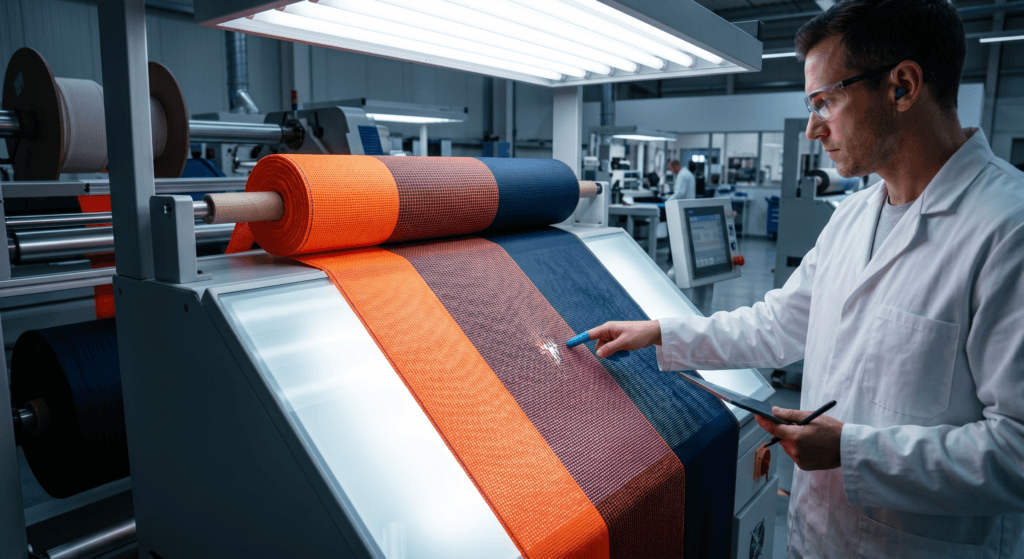 The “Light Box” Inspection: Deconstructing Fabric Defect Diagnostics and the 4-Point Quality System2026年4月28日The structural integrity and visual uniformity of […]
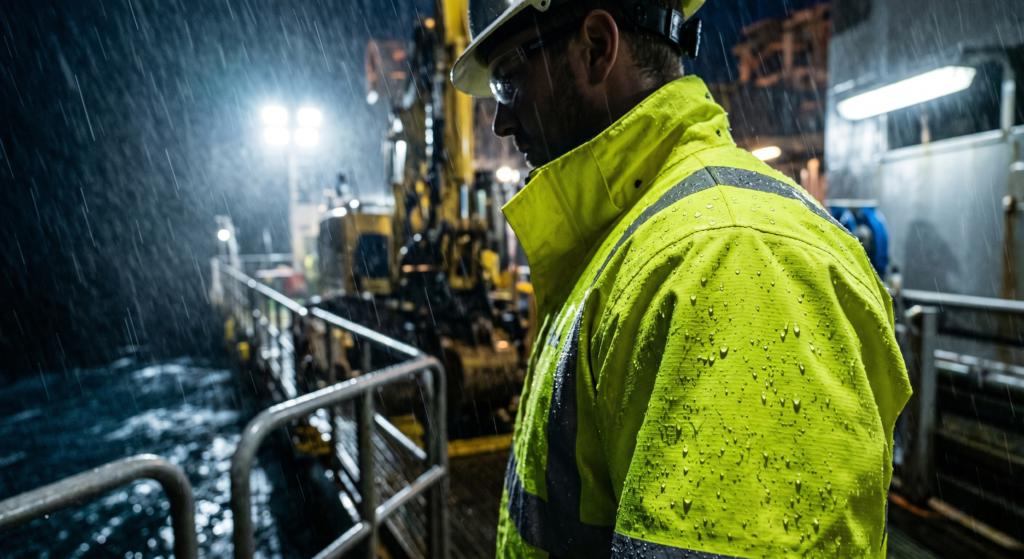 The Engineering of Waterproof Breathable Workwear: A Forensic Analysis of PU Coatings vs. PTFE Membranes2026年4月24日The selection of waterproof foul-weather gear in industrial […]
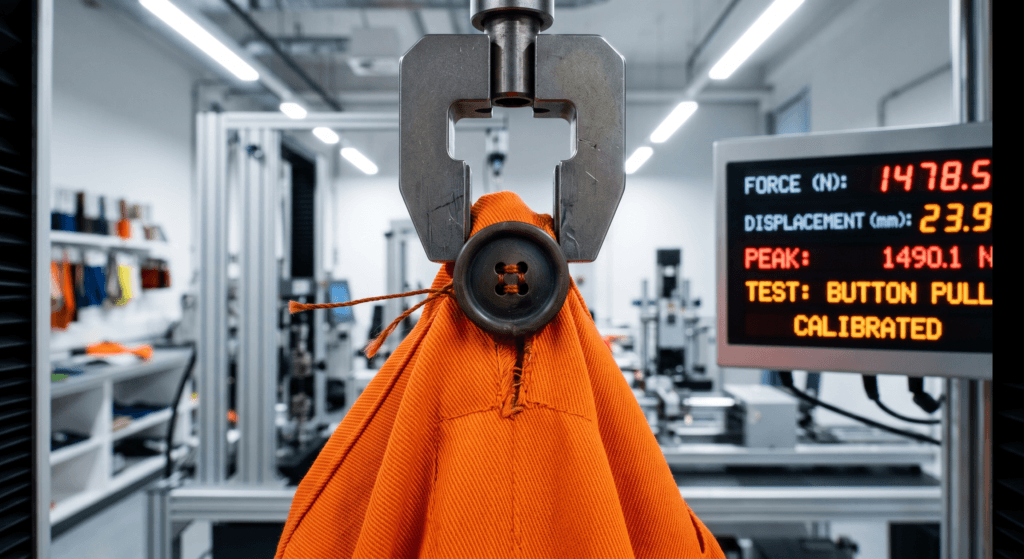 The “Button Pull” Test Protocol: Engineering Fastener Security to Mitigate Industrial Machinery and Choking Hazards2026年4月22日The “Button Pull” Test Protocol: Engineering […]
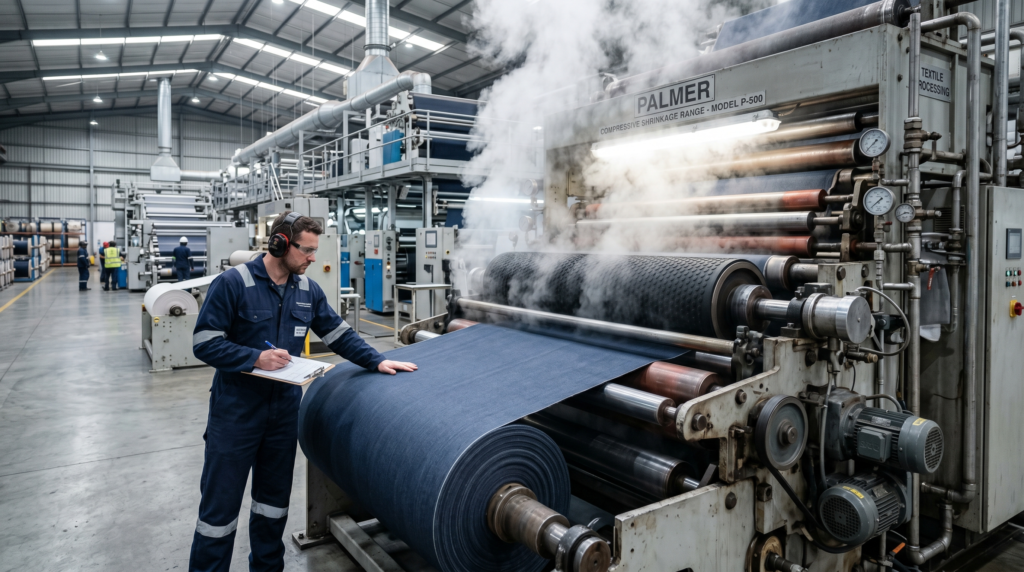 Fabric Shrinkage in Industrial Workwear: The Sanforization Secret and the Physics of Dimensional Stability2026年4月18日Executive Summary In the global industrial workwear and […]