
Executive Summary: The Hidden Cost of "Clean"
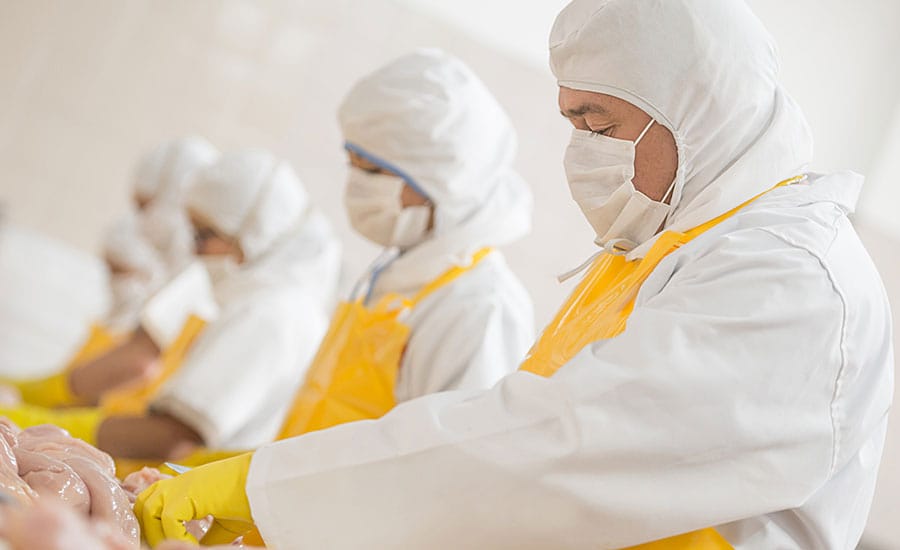
In the food processing and pharmaceutical industries, the white uniform is non-negotiable. It is the visual symbol of hygiene. However, maintaining that pristine whiteness is one of the most expensive challenges in facility management.
The industry faces a "Yellowing Crisis." Standard cotton/poly uniforms degrade rapidly under the harsh regime of industrial chlorine bleaching. Fibers break down, optical brighteners wash out, and garments turn a sickly yellow or grey within 30-40 wash cycles.
This premature degradation forces companies to replace uniforms twice as often as necessary, inflating procurement budgets by 40-60%.
This guide presents a technical solution: Chlorine-Resistant Engineering. By selecting fabrics with High-Fastness Dyes, Optical Brightener Stabilizers, and Chlorine-Resistant Polymers, organizations can extend the lifespan of white uniforms from 6 months to 18 months, drastically reducing Total Cost of Ownership (TCO).
Google Snippet: Quick Answer
How do you prevent white uniforms from turning yellow? White uniforms turn yellow due to the chemical degradation of cotton fibers by chlorine bleach and the washout of Optical Brightening Agents (OBAs). To prevent this, buyers should specify 100% Continuous Filament Polyester or CVC Blends treated with Chlorine-Resistant Resin Finishes. Additionally, switching from Sodium Hypochlorite (Bleach) to Peracetic Acid or Hydrogen Peroxide in the laundry process preserves whiteness for 50+ extra cycles, reducing replacement costs by up to 40%.
1. The Science of Degradation: Why White Turns Yellow
To solve the problem, we must understand the chemistry of failure. White fabric is not naturally white; it is bleached and treated with fluorescent dyes.
The Chlorine Attack Vector
- Oxidation: Sodium Hypochlorite ($NaOCl$) is a powerful oxidizer. It kills bacteria but also attacks the cellulose polymer chain in cotton.
- The Result: The fiber surface becomes rough (fibrillation), trapping dirt and oil residues which look grey/yellow.
The Optical Brightener Failure (OBA)
- The Mechanism: Fabrics are dipped in Optical Brightening Agents (OBAs) that absorb invisible UV light and re-emit it as blue light, creating a "brilliant white" appearance.
- The Failure: Chlorine molecules cleave the chemical bonds of standard OBAs. Once the OBA is destroyed, the natural yellowish tint of the raw fiber is revealed.
The Protein Build-up
- The Mechanism: In food plants, proteins (blood, fat) settle into the fiber. If the wash temperature is too high (>70°C) initially, the protein "cooks" into the fabric (denaturation), creating permanent yellow stains.
2. Material Selection: Engineered for Bleach
The solution begins at the fiber level. Not all white fabrics are created equal.
A. 100% Textured Polyester (The "Immortal" Fabric)
- Chemistry: Polyester is hydrophobic and chemically inert to chlorine at standard concentrations.
- Whiteness Retention: Excellent. Polyester does not require OBAs to appear white; the polymer itself is clear/white.
- Stain Release: Because it doesn’t absorb water, stains sit on the surface.
- Lifespan: 100+ Washes.
B. High-Grade CVC (Chief Value Cotton) with Resin
- Blend: 60% Cotton / 40% Polyester.
- Treatment: The fabric is treated with a Cross-Linking Resin that coats the cotton fiber, protecting it from bleach attack.
- OBA Selection: Must specify "Chlorine-Stable" OBAs (e.g., Stilbene derivatives) during the dyeing process.
- Lifespan: 60-70 Washes.
C. The "Cheap" Alternative (Avoid This)
- Standard 100% Cotton Drill:
- Outcome: Yellows after 20 washes. Holes appear after 40 washes due to bleach degradation. High TCO trap.
3. The Laundry Factor: Chemical Warfare
A durable uniform can be destroyed in one week by a bad laundry recipe.
| Parameter | The "Yellowing" Recipe | The "Whitening" Recipe |
|---|---|---|
| Bleach Agent | Sodium Hypochlorite (Chlorine) | Peracetic Acid (PAA) or H2O2 |
| pH Level | High Alkaline (>11) | Neutral / Mild Alkaline (8-9) |
| Temperature | High (85°C) | Medium (60°C) |
| Iron/Mangle | High Heat | Steam Tunnel |
Critical Insight: Peracetic Acid (PAA) is the game changer. It disinfects at lower temperatures (40-60°C) and acts as a bleaching agent without degrading the fiber or destroying the OBA. Switching to PAA can double garment life.
4. ROI Analysis: The Cost of Quality
Procurement often balks at the price of "High-Performance White" fabric. The financial model proves the value.
Scenario: A Dairy Plant with 500 Workers
| Metric | Option A: Standard Cotton | Option B: Engineered Poly/Cotton |
|---|---|---|
| Unit Price | $12.00 | $16.00 (+33%) |
| Life Expectancy | 25 Washes (Grey/Yellows) | 75 Washes (Stays White) |
| Replacements/Year | 4 sets | 1.3 sets |
| Annual Garment Cost | $48.00 per worker | $20.80 per worker |
| Total Spend (500 pax) | $24,000 | $10,400 |
| Net Savings | $13,600 (56% Reduction) |
Conclusion: The "cheaper" uniform is a financial leak. The engineered fabric pays for itself in 3 months.
5. Lab Testing Protocols: How to Verify Claims
Don’t trust the supplier’s word. Verify the durability.
Test 1: Chlorine Fastness (ISO 105-E03)
- Method: Fabric is submerged in chlorinated water.
- Target: Grade 4-5 (No color change/yellowing).
Test 2: Whiteness Index (CIE / Berger)
- Method: Spectrophotometer measures "Whiteness" (W) before washing.
- Requirement: Initial W > 140. After 50 washes, W > 120. Standard cotton often drops to W < 80 (Visible Yellow).
Test 3: Tensile Strength Loss
- Method: Measure tearing strength after 50 industrial bleach cycles.
- Target: Loss < 10%. (Standard cotton loses >40%).
6. Case Study: The Hospital Laundry Turnaround
The Client: A regional hospital group processing 5,000 lab coats weekly. The Problem: Doctors complaining coats looked "dingy and yellow" after 3 months. High replacement rate. The Root Cause: The laundry was using cheap liquid chlorine and high heat to kill potential pathogens (Clostridium difficile).
The Intervention:
- Material: Switched lab coats to 100% Spun Polyester (looks like cotton, acts like plastic).
- Chemistry: Switched laundry dosing to Hydrogen Peroxide + PAA.
- Process: Lowered wash temp to 60°C.
The Results (Year 1):
- Whiteness Retention: Coats remained "Optic White" for 12 months.
- Replacement Spend: Dropped by $45,000.
- Energy: Gas bill for steam boilers reduced by 18%.
7. Maintenance Best Practices for Users
Even the best fabric needs care.
- Pre-Sort: Never mix white uniforms with colored items or heavily soiled mechanics’ wear.
- Soak, Don’t Boil: For heavy protein stains (blood), use an enzymatic soak at 40°C. Heat sets the stain.
- Optical Boosters: Use a laundry detergent that contains Optical Brighteners to "top up" the fabric’s whiteness with every wash.
8. Buyer Checklist for White Uniforms
When sourcing white workwear for high-hygiene zones, ensure the specification sheet includes:
- [ ] Fiber Content: Ideally 100% Polyester or High-Poly Blend (65/35 minimum).
- [ ] OBA Type: "Chlorine Resistant" or "High Stability" optical brighteners.
- [ ] Resin Finish: "Crease Resistant" or "Easy Care" finish (often adds protection against fiber fibrillation).
- [ ] Weight: 240gsm or higher (thinner fabrics yellow faster as they thin out).
- [ ] Guarantee: Ask for a warranty on "Whiteness Retention" for 50 washes.
9. Conclusion: White is a Discipline, Not a Color
Maintaining a white uniform fleet is a battle against chemistry. If you fight chlorine with standard cotton, you will lose every time.
By adopting Chlorine-Resistant Materials and optimizing Laundry Chemistry, you transform the white uniform from a disposable consumable into a durable asset. This shift not only polishes your brand image—clean, bright, professional—but also fundamentally restructures your procurement budget.
Stop buying replacements. Start buying durability.
📩 Need a Fabric Analysis? Send us your current "yellowed" uniform. We will run a spectral analysis to tell you exactly why it failed and prescribe the correct spec. Email: [email protected] 🌐 www.workwearsolutions.net Engineered Whiteness. Industrial Strength.

 Architecting Resilience: Single Sourcing vs. Dual Sourcing Strategies in Global PPE Procurement2026年4月30日Executive Summary In the complex landscape of industrial […]
 Pattern Grading for Global Bodies: The Engineering of Anthropometric Fit in Industrial Workwear2026年4月29日In the highly regulated landscape of industrial Personal […]
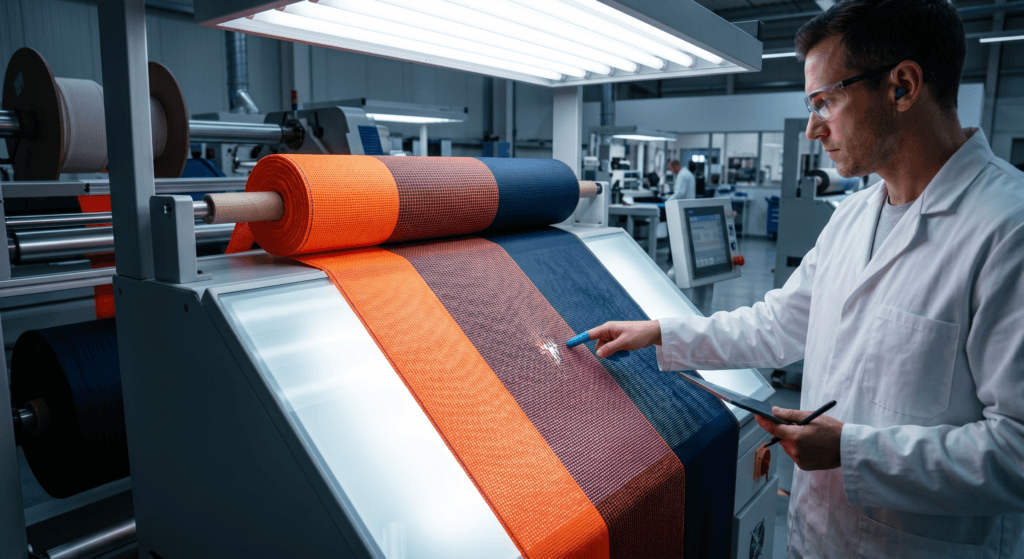 The “Light Box” Inspection: Deconstructing Fabric Defect Diagnostics and the 4-Point Quality System2026年4月28日The structural integrity and visual uniformity of […]
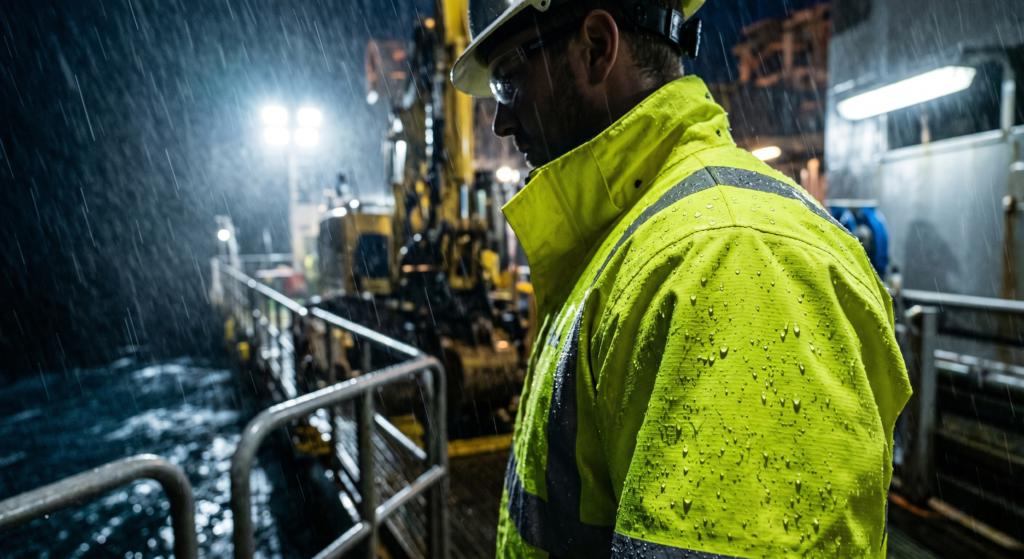 The Engineering of Waterproof Breathable Workwear: A Forensic Analysis of PU Coatings vs. PTFE Membranes2026年4月24日The selection of waterproof foul-weather gear in industrial […]
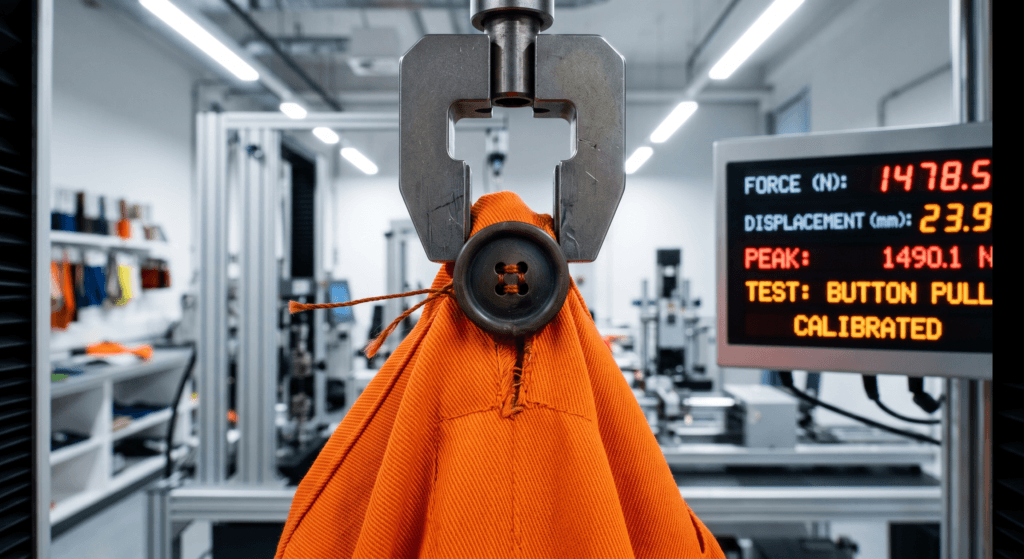 The “Button Pull” Test Protocol: Engineering Fastener Security to Mitigate Industrial Machinery and Choking Hazards2026年4月22日The “Button Pull” Test Protocol: Engineering […]
 Fabric Shrinkage in Industrial Workwear: The Sanforization Secret and the Physics of Dimensional Stability2026年4月18日Executive Summary In the global industrial workwear and […]