
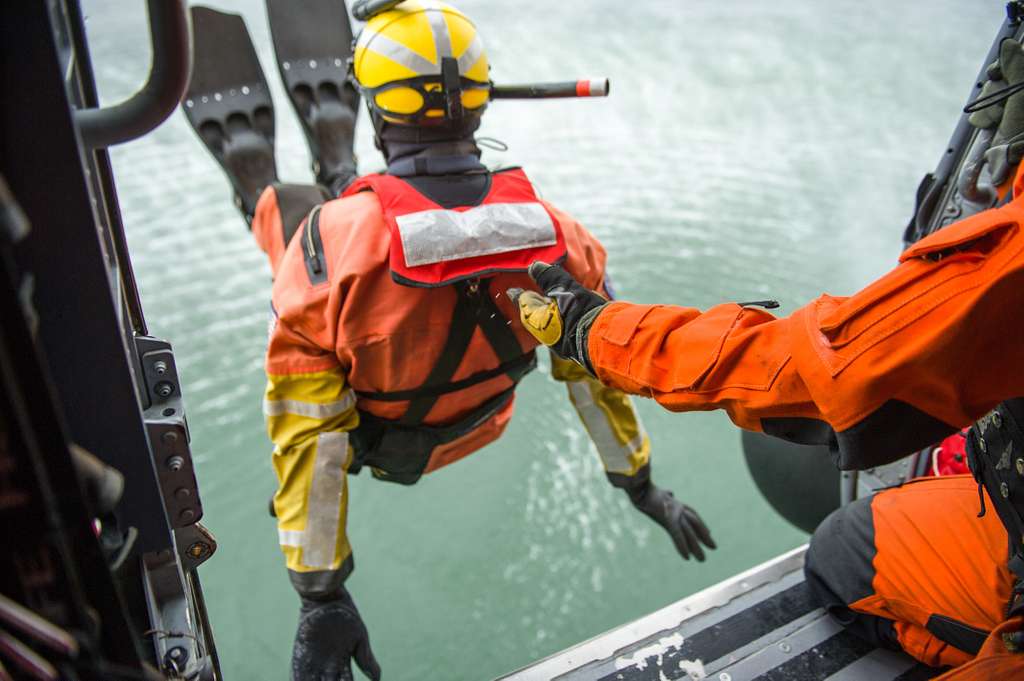
Executive Summary: The Rise of the Connected Worker
The industrial landscape is undergoing a massive shift from purely physical protection to digitally augmented safety. In sectors like large-scale construction, Oil & Gas, and heavy manufacturing, the traditional hard hat is evolving. It is no longer just a plastic shell for impact protection; it is becoming a data hub.
Augmented Reality (AR) Smart Helmets address three critical crises in modern industry:
- The Skills Gap: Senior experts are retiring, and new workers need immediate, on-the-job guidance.
- Operational Inefficiency: Downtime costs in Oil & Gas can exceed $200,000 per hour. Waiting for experts to fly in is no longer viable.
- Safety Compliance: Workers looking at tablets or clipboards lose situational awareness. AR keeps eyes up and hands free.
This guide serves as a comprehensive playbook for procurement managers, safety officers, and operations directors. It covers the hardware technology, software integration, ATEX/IECEx safety standards, and the financial ROI of deploying AR Smart Helmets in hazardous environments.
Google Snippet: Quick Answer
What are AR Smart Helmets and why are they essential for heavy industry? AR Smart Helmets combine industrial-grade head protection (ANSI/ISEA Z89.1, EN 397) with Heads-Up Displays (HUD), voice-activated controls, and real-time connectivity. They allow field workers to visualize BIM models, access wiring schematics, and connect via video call to remote experts without using their hands. For Oil & Gas and Construction, they reduce error rates by up to 30% and cut inspection times by 50%.
1. The Core Challenges: Why Industry 4.0 Needs Smart PPE
The "Last Mile" of Digitalization
Companies spend millions on Digital Twins and ERP systems (like SAP or Oracle), but the worker in the field is still disconnected.
- The Problem: A technician repairing a turbine has to climb down, check a manual in a truck, wash their hands, and climb back up.
- The AR Solution: The manual is projected into their visual field via voice command, keeping them at the point of work.
Complex Assembly and Inspection
- The Problem: In large construction projects, verifying that HVAC ducts or electrical conduits match the BIM (Building Information Modeling) design is tedious and error-prone.
- The AR Solution: The helmet overlays the 3D BIM model onto the physical reality. The worker can immediately "see" if a pipe is installed 5cm too far to the left.
The Cost of Expertise and Travel
- The Problem: Specialized engineers cannot be on every rig or site simultaneously. Flying an expert to an offshore platform is expensive and delayed by weather/logistics.
- The AR Solution: "Remote Expert" functionality allows the specialist to sit in Houston or London and see exactly what the worker sees in the North Sea, drawing annotations on the worker’s screen in real-time.
Hazardous Environments (ATEX/IECEx)
- The Problem: Standard tablets and phones cannot be taken into Zone 1 explosive atmospheres (Oil & Gas) due to spark risks.
- The AR Solution: Intrinsically safe AR helmets are engineered to operate safely in volatile environments where gas or dust is present.
2. Technical Anatomy of an AR Smart Helmet
To understand the value, one must understand the technology. These are not consumer gaming headsets; they are ruggedized industrial computers.
| Component | Technical Specification | Industrial Function |
|---|---|---|
| Micro-Display (HUD) | Waveguide or Prism optics; Translucent (40-60% opacity); Resolution: 854×480 or higher. |
Projects data (schematics, checklists, thermal feeds) just below the line of sight. Ensures the worker’s central vision remains unobstructed for safety. |
| Processor & OS | Qualcomm Snapdragon XR1/XR2 platforms; Android Open Source Project (AOSP). |
Powerful enough to render 3D models locally. Android base ensures compatibility with standard enterprise apps (Microsoft Teams, Zoom, TeamViewer). |
| Camera Module | High-Res (16MP+) with Optical Image Stabilization (OIS); Low-light performance. |
Essential for the remote expert to see clear details (e.g., rust, serial numbers) in dark environments like tank interiors. |
| Connectivity | Wi-Fi 6, 5G, Bluetooth 5.1, GPS/GLONASS. | 5G is critical for low-latency video streaming in remote construction sites without fiber optics. |
| Voice Control | 4-Mic Array with Active Noise Cancellation (ANC); 90dB+ ambient noise filtration. |
Works in loud environments (drills, compressors). Allows 100% hands-free operation ("Navigator, zoom in," "Take photo"). |
| Battery System | Hot-swappable batteries; 6-8 hours operational life. |
Enables continuous shifts without downtime. Hot-swapping allows changing batteries without rebooting the headset. |
| PPE Integration | Clips into standard hard hat slots; Compatible with earmuffs and face shields. |
Must not compromise the primary function of the helmet: impact protection. |
3. Safety Standards and Compliance: The Non-Negotiables
In the industries we serve, gadgets cannot compromise safety. AR Smart Helmets must meet rigorous dual standards: IT Compliance and PPE Compliance.
| Category | Standard | What It Means for Procurement |
|---|---|---|
| Head Protection | EN 397 / ANSI Z89.1 Type 1 | The helmet shell must withstand impact and penetration. The added weight of the AR unit must be balanced to prevent neck strain (ergonomics). |
| Explosion Proof | ATEX Zone 1 / IECEx | Critical for Oil & Gas. The device is sealed and powered such that it cannot create a spark capable of igniting ambient gas or dust. |
| Ingress Protection | IP66 / IP67 | Dust: Dust-tight (6). Water: Protected against powerful jets (6) or immersion (7). Essential for outdoor construction and wash-down areas. |
| Drop Test | MIL-STD-810G | The electronics must survive drops from 2 meters onto concrete. Ruggedness is not optional. |
| Eye Safety | EN 166 / ANSI Z87.1 | The visor or safety glasses used with the HUD must be impact-rated. |
Critical Note: Never use a consumer-grade AR headset (like HoloLens or Magic Leap) in an industrial Zone 1 area unless it is housed in a specific explosion-proof enclosure. Doing so violates OSHA/HSE regulations.
4. Use Case Deep Dive: Transforming Daily Operations
Scenario A: Remote Expert Assistance (The "See-What-I-See" Model)
- Industry: Offshore Oil Rig.
- The Situation: A critical pump fails. The only engineer who knows this legacy system is in Norway.
- The AR Workflow:
- Rig technician puts on the helmet and says, "Call Support."
- Expert in Norway answers on a laptop. They see the pump through the technician’s eyes.
- Expert draws a red circle on their screen around a specific valve. The red circle appears in the technician’s real-world view via the HUD.
- Expert shares a PDF wiring diagram, which floats next to the physical pump in the technician’s view.
- Result: Repair completed in 2 hours. Travel costs saved: $5,000+. Downtime saved: $50,000.
Scenario B: Digital Workflow & Inspection
- Industry: Infrastructure Construction (Bridge Building).
- The Situation: Quality Assurance (QA) needs to inspect 500 weld points.
- The AR Workflow:
- Inspector looks at a beam. The helmet recognizes the QR code or object geometry.
- The HUD displays the checklist for that specific beam: "Check Weld Thickness," "Check Corrosion Coating."
- Inspector speaks: "Check, pass. Take photo."
- The system automatically uploads the timestamped photo and status to the central project management software.
- Result: No paper to lose. Data is digitized instantly. 100% audit trail generated automatically.
Scenario C: Thermal Vision & Safety Monitoring
- Industry: Chemical Processing Plant.
- The Situation: Checking for overheating pipes or invisible gas leaks.
- The AR Workflow:
- Helmet is equipped with a thermal camera module.
- Worker walks through the plant. The HUD overlays a heat map on the pipes.
- A pipe operating above the safe threshold glows red in the worker’s vision.
- An alarm sounds in the headset.
- Result: Preventive maintenance triggered before catastrophic failure or fire.
5. Comparative Analysis: Leading AR Hardware Approaches
Not all smart helmets are built the same. There are two main form factors.
| Feature | Monocular (e.g., RealWear) | Binocular (e.g., HoloLens 2 Trimble) |
|---|---|---|
| Visual Experience | Small screen just below/above the eye. Like looking at a 7-inch tablet at arm’s length. | Fully immersive 3D holograms overlaid on the entire field of view. |
| Safety Focus | High. Maintains full peripheral vision. Less distracting. | Moderate. Can be distracting if holograms block hazards. |
| Battery Life | Long (8+ hours). | Shorter (2-4 hours) due to heavy 3D rendering. |
| Outdoor Use | Excellent readability in bright sun. | Holograms often fade in bright sunlight. |
| Best For… | Digital workflows, checklists, remote expert, text/schematics. | Complex 3D visualization, design reviews, training simulations. |
| Ruggedness | Often IP66 and Drop Proof. | More fragile, harder to ruggedize for ATEX. |
Recommendation: For 90% of field maintenance and inspection tasks, Monocular designs are superior due to battery life, safety, and ruggedness. Binocular is better reserved for indoor design reviews and complex training.
6. ROI Analysis: The Financial Case for AR Helmets
Investing in AR helmets is a CAPEX decision. Here is how to model the Return on Investment.
Assumptions:
- Cost of AR Helmet + Software License: $2,500 per unit.
- Senior Engineer Hourly Rate: $150.
- Travel Cost (Intl Flight + Hotel): $2,000 per trip.
| Cost Driver | Traditional Method | AR Smart Helmet Method | Annual Savings (Per 10 Workers) |
|---|---|---|---|
| Travel Expenses | 10 trips/year/expert = $20,000 | 0 trips (Remote Support) | $200,000 |
| Inspection Time | Paper-based: 4 hours/day (data entry included) | Digital/Voice: 2 hours/day (instant upload) | $78,000 (Time reallocation) |
| Error Rework | 5% error rate on assembly ($5,000 avg cost) | 0.5% error rate (Guided workflows) | $112,500 |
| Training Onboarding | Shadowing a senior for 4 weeks | Guided AR training (2 weeks) | $12,000 |
| Total Estimated Savings | ~$402,500 / Year |
Payback Period: Typically, an AR Smart Helmet pays for itself after the first avoided international trip or the first 10 hours of prevented downtime.
7. Implementation Challenges and How to Overcome Them
Deploying high-tech PPE isn’t as simple as handing out safety vests.
Challenge 1: Connectivity Dead Zones
- Issue: Many construction basements or metal-heavy oil refineries block 4G/5G signals.
- Solution: Procure helmets with "Offline Mode." Workers download manuals/workflows in the office, perform the work offline, and the device auto-syncs when they return to Wi-Fi range.
Challenge 2: User Resistance (The "Big Brother" Fear)
- Issue: Workers fear being tracked or recorded constantly.
- Solution:
- Configure devices so cameras only turn on with explicit voice commands ("Camera On").
- Emphasize that the tool is for their safety and ease, not surveillance.
- Involve union/worker reps in the selection process.
Challenge 3: Hygiene and Comfort
- Issue: Sharing helmets between shifts is unhygienic; devices can be heavy.
- Solution:
- Issue personal padding kits and straps for each worker, while sharing the electronic unit.
- Utilize UV-C sanitization cabinets for the electronics.
- Choose devices with battery packs mounted at the back of the head to counterbalance the display weight (50/50 weight distribution).
8. Buyer Checklist for AR Smart Helmets
Before issuing a Purchase Order, ensure the device meets these criteria:
- [ ] Safety Certification: Does it carry the specific hard hat certification required for your site (e.g., ANSI Type 1 Class E)?
- [ ] ATEX Rating: If you have hazardous zones, is it explicitly Zone 1 certified? (Zone 2 is often insufficient).
- [ ] Voice Recognition Quality: Test it next to a running generator (90dB). Does it recognize commands accurately?
- [ ] Battery Hot-Swap: Can you change the battery without shutting down the OS? (Critical for 12-hour shifts).
- [ ] Software Compatibility: Does it run the apps you already use (Microsoft Teams, Zoom, Webex)?
- [ ] Display Visibility: Is the screen readable in direct sunlight?
- [ ] IT Security: Does the device support MDM (Mobile Device Management) like VMWare Workspace ONE or Microsoft Intune?
9. Advanced Sourcing Strategies
As a supplier committed to long-term cooperation and quality, here is how we recommend sourcing these units:
-
The "Pilot" Phase: Do not buy 100 units immediately. Buy 5. Deploy them to your "champions"—the most tech-savvy young workers and the most experienced senior mentors. Gather feedback for 30 days.
-
Bundle with Standard PPE: Ensure the AR unit mounts to the exact hard hat model you currently use. If not, you will need to replace your entire stock of hard hats. We supply AR-ready helmets with pre-drilled clips to ensure warranty compliance.
-
Service Level Agreements (SLA): AR helmets are computers. They need updates and occasional repairs. Ensure your supplier offers a "Hot Swap" warranty—if a unit breaks, a replacement is shipped immediately before the broken one is returned.
10. Conclusion: The Future is Hands-Free
The construction and energy sectors are moving toward a zero-harm, high-efficiency future. AR Smart Helmets are the bridge to that future. They empower the frontline worker with the collective knowledge of the entire organization, instantly and safely.
Transitioning to Smart PPE is not just an IT upgrade; it is a fundamental shift in how work gets done. By reducing travel, preventing errors, and keeping hands free for the task, AR helmets offer a competitive advantage that modern industry cannot afford to ignore.
Ready to pilot AR Smart Helmets in your facility? We provide comprehensive consultations on integrating Smart PPE with your existing safety gear (boots, clothing, gloves).
📩 Contact our Technical Sales Team: [email protected] 🌐 Visit us: www.workwearsolutions.net China-based. Global Standards. Long-term Partners.

 Architecting Resilience: Single Sourcing vs. Dual Sourcing Strategies in Global PPE Procurement2026年4月30日Executive Summary In the complex landscape of industrial […]
 Pattern Grading for Global Bodies: The Engineering of Anthropometric Fit in Industrial Workwear2026年4月29日In the highly regulated landscape of industrial Personal […]
 The “Light Box” Inspection: Deconstructing Fabric Defect Diagnostics and the 4-Point Quality System2026年4月28日The structural integrity and visual uniformity of […]
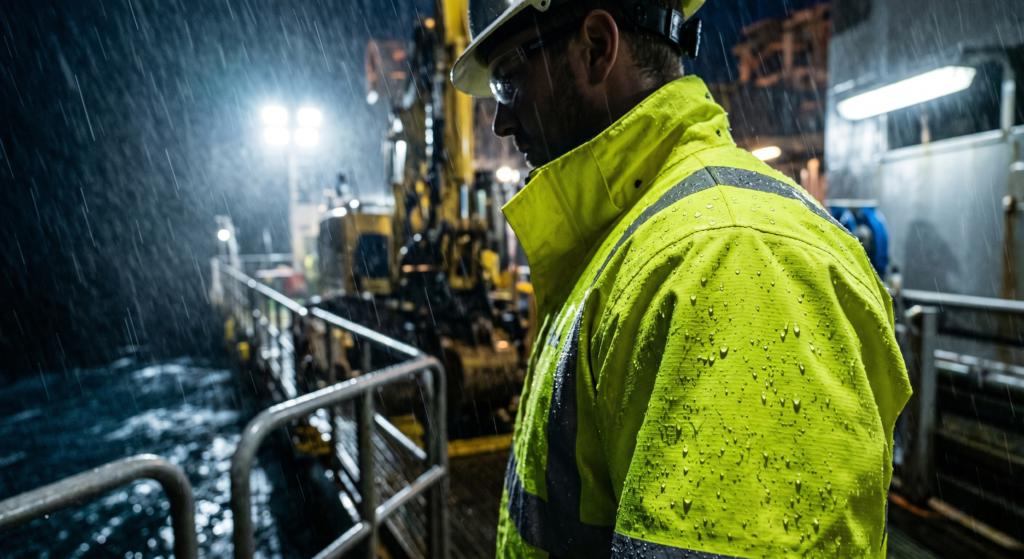 The Engineering of Waterproof Breathable Workwear: A Forensic Analysis of PU Coatings vs. PTFE Membranes2026年4月24日The selection of waterproof foul-weather gear in industrial […]
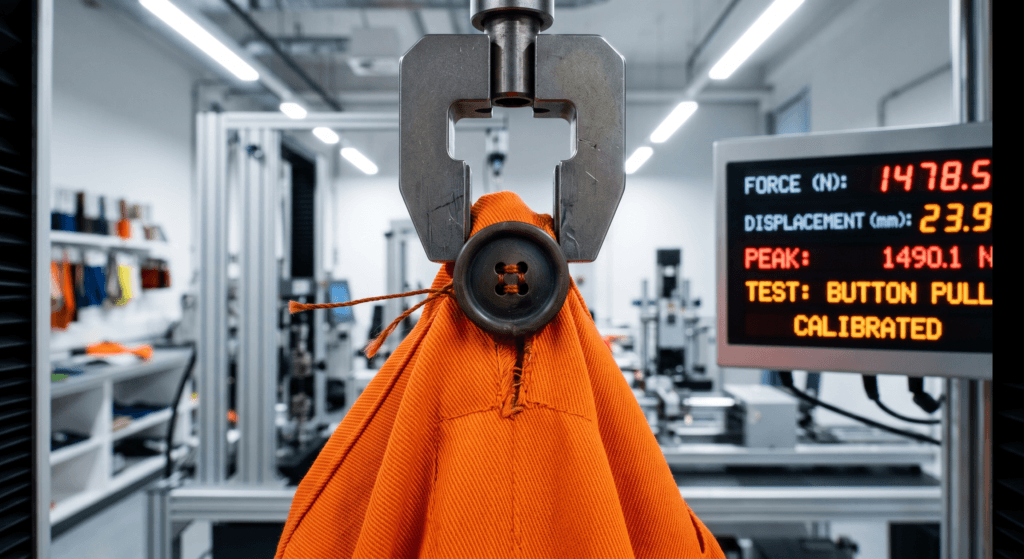 The “Button Pull” Test Protocol: Engineering Fastener Security to Mitigate Industrial Machinery and Choking Hazards2026年4月22日The “Button Pull” Test Protocol: Engineering […]
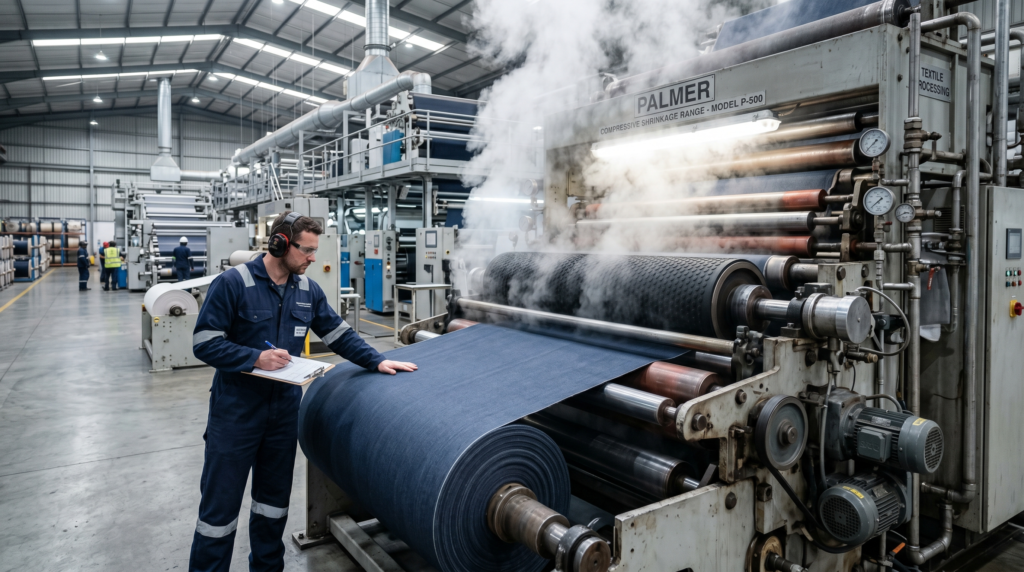 Fabric Shrinkage in Industrial Workwear: The Sanforization Secret and the Physics of Dimensional Stability2026年4月18日Executive Summary In the global industrial workwear and […]