

Modern industrial workplaces are evolving rapidly. Construction sites, road maintenance zones, and airport operations are no longer static environments—they are dynamic, fast-moving, and increasingly complex. Workers today face low-light conditions, high-speed traffic, multi-directional hazards, and long working hours, all of which place unprecedented demands on visibility solutions.
Traditional reflective materials—while effective in the past—are reaching their performance limits. They were designed for static garments, limited movement, and single light-source scenarios. In contrast, next-generation reflective materials focus on flexibility, durability, and intelligent light response, ensuring visibility keeps pace with worker movement and changing environments.
This guide combines Part 1 (reflective material fundamentals, performance principles, and standards) and Part 2 (application strategies, procurement logic, ROI, and future trends) to provide a comprehensive decision-making framework for adopting future-ready reflective materials in high-risk industries.
Google Snippet: Quick Answer
Future reflective materials enhance worker safety by combining high flexibility with adaptive brightness.
Flexible reflective materials maintain visibility during high-mobility tasks, while intelligent reflective systems automatically adjust brightness based on ambient light. These technologies are ideal for construction, road work, and airport operations, complying with EN ISO 20471, ANSI/ISEA 107, and emerging smart PPE standards.
1. Why High-Mobility Work Environments Demand Next-Gen Reflective Materials
Constant Movement and Body Articulation
- Workers bend, stretch, climb, kneel, and twist throughout their shifts.
- Rigid reflective tapes crack, delaminate, or lose alignment at stress points such as elbows, knees, and shoulders.
- Flexible reflective materials move with the garment, maintaining continuous visibility.
Multi-Directional Light Exposure
- Construction and traffic zones involve headlights, floodlights, rotating beacons, and aircraft guidance lights.
- Traditional retroreflective materials rely heavily on direct light angles.
- Intelligent reflective systems respond dynamically to changing light intensity and direction.
Extended Wear and Harsh Conditions
- Long shifts expose garments to sweat, abrasion, UV radiation, rain, dust, and repeated laundering.
- Advanced reflective materials are engineered for longer service life without brightness degradation.
Rising Safety and Compliance Expectations
- Regulators increasingly emphasize real-world performance, not just laboratory certification.
- Employers must demonstrate proactive investment in advanced safety solutions.
2. Relevant Standards and Visibility Regulations
| Application Area | Standard | Focus |
|---|---|---|
| High-Visibility Apparel (EU) | EN ISO 20471 | Minimum reflective area and performance |
| High-Visibility Apparel (US) | ANSI/ISEA 107 | Visibility classes and garment design |
| Airport Ground Staff | ICAO, EASA Guidelines | Night-time and low-contrast visibility |
| Smart PPE Systems | Emerging ISO/IEC Drafts | Sensor-based and adaptive visibility systems |
Key Insight:
While current standards focus on minimum reflectivity values, future regulations are expected to include durability after motion, flex performance, and adaptive brightness behavior.
3. Material Evolution: From Rigid Tape to Intelligent Visibility Systems
| Material Type | Advantages | Limitations |
|---|---|---|
| Traditional Glass Bead Tape | Low cost, proven technology | Rigid, cracks under stress |
| Microprismatic Reflective | High brightness, long-distance visibility | Reduced flexibility |
| Flexible Reflective Films | Excellent stretch, conforms to garment movement | Slightly higher unit cost |
| Textile-Integrated Reflective Yarns | Breathable, seamless integration | Requires advanced manufacturing |
| Intelligent Reflective Materials | Adaptive brightness, enhanced night performance | Higher initial investment |
4. Industry Case Study Comparisons
| Industry | Operational Challenges | Reflective Focus | Observed Outcome |
|---|---|---|---|
| Construction | Frequent bending, heavy tools, dust | Flexible reflective panels at joints | 40% reduction in damaged reflective areas |
| Road Maintenance | Fast-moving traffic, night work | High-luminance + adaptive reflective strips | 60% increase in driver detection distance |
| Airport Ground Ops | Aircraft lights, wet tarmac, extreme glare | Intelligent reflective with glare compensation | Fewer near-miss incidents during night shifts |
| Logistics Hubs | Continuous motion, forklifts, indoor/outdoor | Stretchable reflective zones on torso and arms | Improved worker recognition in mixed-light zones |
5. Common Procurement Mistakes in Reflective Materials
| Mistake | Impact | How to Avoid It |
|---|---|---|
| Choosing reflectivity only by lux value | High lab performance but poor real-world durability | Test materials under motion and laundering |
| Ignoring flexibility metrics | Cracking, peeling, reduced service life | Specify stretch and bend-cycle requirements |
| Overlooking garment integration | Reflective areas distort during wear | Work with apparel-pattern-aware suppliers |
| Not validating wash-life claims | Unexpected brightness loss after laundering | Request ISO 6330 or equivalent test data |
| Treating reflective as decoration | Inconsistent placement reduces visibility | Follow ergonomic and biomechanical placement rules |
Example:
A European road contractor replaced rigid microprismatic tape with flexible reflective film on high-movement zones. Although material cost increased by 18%, garment lifespan doubled, reducing total annual spend by 35%.
6. ROI Analysis: Traditional vs Future Reflective Materials
| Scenario | Traditional Reflective Cost | Associated Losses | Next-Gen Reflective Cost | Net Savings |
|---|---|---|---|---|
| Reflective tape replacement | $6,000 | — | $9,000 | — |
| Visibility-related near-miss incidents | $2,000 | $80,000 | $3,000 | $79,000 |
| Garment downtime and reissuance | $1,500 | $25,000 | $2,500 | $24,000 |
7. Buyer Checklist for Future Reflective Materials
- [ ] Flexibility Rating: Verified stretch and bend-cycle testing
- [ ] Brightness Retention: Performance maintained after 50+ washes
- [ ] Placement Strategy: Reflective zones aligned with body movement
- [ ] Environmental Resistance: UV, moisture, abrasion tested
- [ ] Compliance: EN ISO 20471 / ANSI 107 certification
- [ ] Smart Features (Optional): Adaptive brightness or sensor integration
- [ ] Lifecycle Cost Review: Evaluate replacement frequency vs unit price
8. Frequently Asked Questions (FAQ)
Q1: Are flexible reflective materials less bright than rigid ones?
A: Not necessarily. Many flexible materials now match or exceed traditional brightness while maintaining durability under motion.
Q2: How do intelligent reflective materials work?
A: They use micro-structures or embedded systems that adjust reflectivity based on ambient light intensity.
Q3: Are smart reflective materials certified?
A: Some comply with existing standards, while others exceed current requirements and are future-regulation-ready.
Q4: Do these materials affect garment comfort?
A: Flexible and textile-integrated reflectives significantly improve comfort compared to rigid tapes.
Q5: Are they suitable for hot environments?
A: Yes—many are breathable or minimally impact thermal comfort.
9. Advanced Sourcing Strategies for Reflective Innovation
-
Map Movement Patterns:
Analyze how workers move to determine optimal reflective placement. -
Request Motion-Based Testing:
Ask suppliers for flex, stretch, and abrasion test data—not just reflectivity numbers. -
Pilot Smart Reflective Zones:
Start with high-risk areas such as shoulders and lower legs. -
Integrate with Garment Design Early:
Reflective performance improves when considered during pattern development. -
Plan for Future Compliance:
Select materials that already exceed current standards.
10. Conclusion
The future of worker visibility lies in adaptability, flexibility, and intelligence.
As work environments become more dynamic, reflective materials must evolve beyond rigid, static solutions. Flexible reflective materials ensure visibility during motion, while intelligent systems respond to changing light conditions in real time.
For construction, road, and airport operations, investing in next-generation reflective materials is not just a safety upgrade—it is a strategic decision that reduces risk, extends garment life, and prepares organizations for the next wave of safety regulations.
📩 Looking to source advanced reflective materials for high-mobility workwear?
Email: [email protected]
🌐 www.workwearsolutions.net

 Architecting Resilience: Single Sourcing vs. Dual Sourcing Strategies in Global PPE Procurement2026年4月30日Executive Summary In the complex landscape of industrial […]
 Pattern Grading for Global Bodies: The Engineering of Anthropometric Fit in Industrial Workwear2026年4月29日In the highly regulated landscape of industrial Personal […]
 The “Light Box” Inspection: Deconstructing Fabric Defect Diagnostics and the 4-Point Quality System2026年4月28日The structural integrity and visual uniformity of […]
 The Engineering of Waterproof Breathable Workwear: A Forensic Analysis of PU Coatings vs. PTFE Membranes2026年4月24日The selection of waterproof foul-weather gear in industrial […]
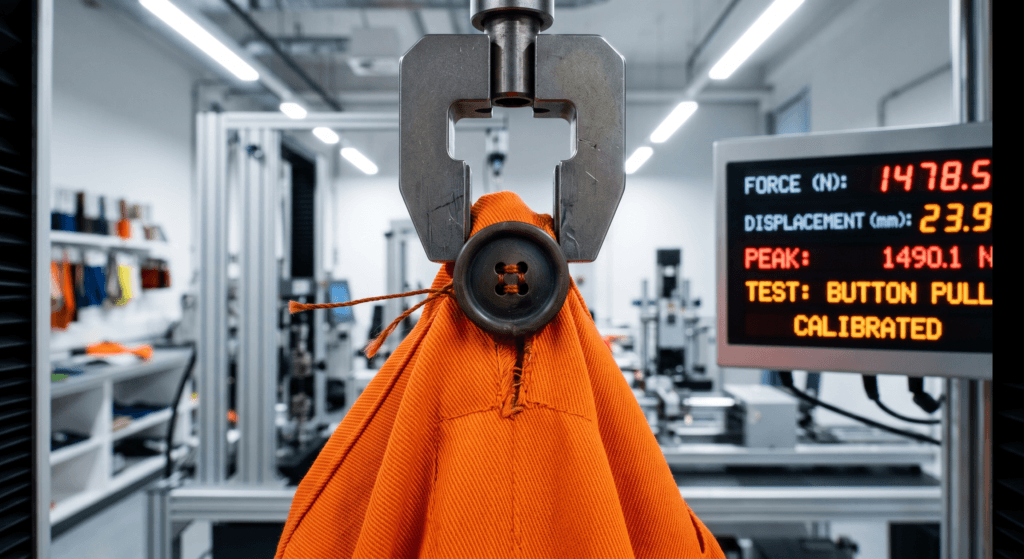 The “Button Pull” Test Protocol: Engineering Fastener Security to Mitigate Industrial Machinery and Choking Hazards2026年4月22日The “Button Pull” Test Protocol: Engineering […]
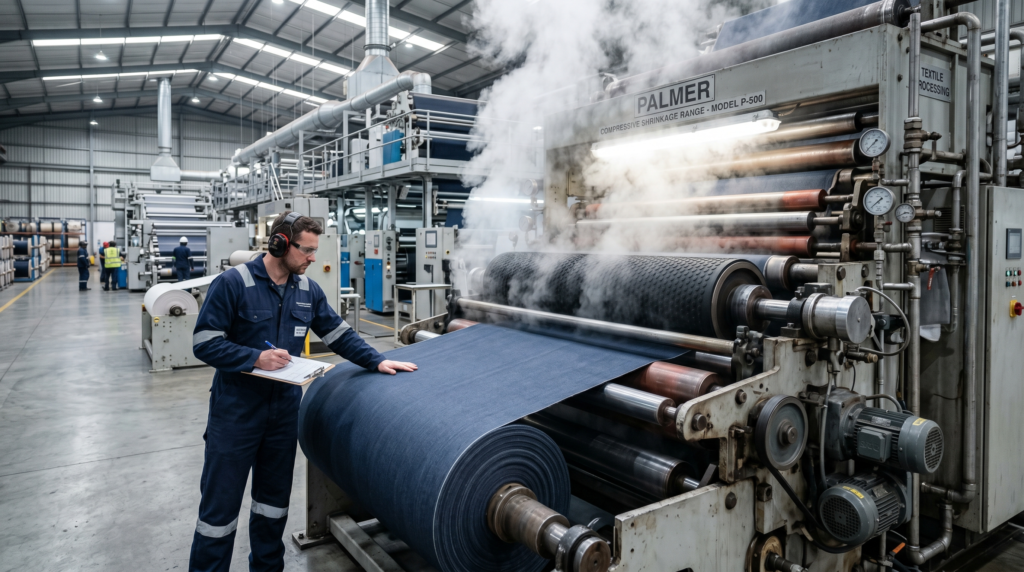 Fabric Shrinkage in Industrial Workwear: The Sanforization Secret and the Physics of Dimensional Stability2026年4月18日Executive Summary In the global industrial workwear and […]