
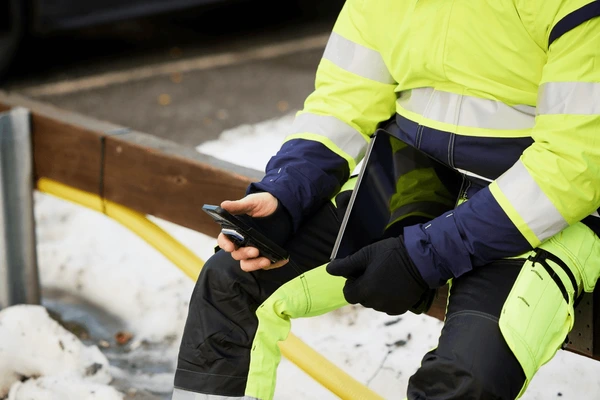
Before going all-in on a new supplier or product, smart importers start small.
In the world of PPE and workwear, this isn’t just caution — it’s strategy.
A small order lets you test quality, confirm compliance, evaluate supplier reliability, and validate market demand — all without burning through your cash flow.
This guide explains how to turn sampling and small-lot orders into a powerful business tool — the bridge between “trying” and “scaling.”
Small sample or trial orders let you verify a supplier’s quality, materials, and service before committing to large contracts. Always test for color consistency, size accuracy, certification validity, and durability. Use clear inspection checklists and negotiate small-lot pricing with transparent freight terms.
Why Sampling Is Essential for Workwear Traders
Sampling is not a cost — it’s insurance.
In emerging markets like Africa, Latin America, the Middle East, and Central Asia, distributors often rely on visual catalogs or WhatsApp photos to place orders.
But photos don’t show stitch density, reflective tape adhesion, or fabric breathability.
Without testing actual samples, you risk:
- Receiving lower-grade materials
- Incorrect sizing or logo printing
- Non-compliant products rejected by customs or end clients
- Poor durability that destroys repeat sales
A $200 sample order can save you $20,000 in rework and lost trust.
Case Studies: Small Orders, Big Lessons
Case #1 – Ghana Distributor’s Smart Pilot
A Ghanaian trader wanted to enter the construction PPE market but wasn’t sure which reflective vest would sell best.
He ordered 200 units of three models — one polyester mesh, one solid 120gsm, and one ANSI-standard type.
After field-testing with site managers, he learned that:
- Workers preferred mesh for airflow.
- Supervisors required EN ISO 20471 certification for tenders.
He then placed a 5,000-piece follow-up order for the certified model — selling out within two months.
✅ $3,000 pilot became a $40,000 business.
Case #2 – Chile Cold Storage Gear Trial
A Chilean wholesaler tested 100 cold-room jackets from three factories.
Results:
- Factory A’s seams opened after three washes.
- Factory B’s zippers jammed in -10°C conditions.
- Factory C passed all tests — strong stitching, insulation intact.
He signed a one-year contract with Factory C and expanded into Argentina the following season.
Lesson: The sample stage filters not just fabric — but future headaches.
Case #3 – Middle East Industrial Supplier
A Saudi importer wanted customized overalls for oilfield clients.
Instead of ordering 2,000 sets directly, he requested five prototype samples with different fabric weights and zipper types.
He tested each in field conditions for heat resistance and comfort.
The final chosen model had 35% lower fabric weight but maintained flame resistance — perfect for desert conditions.
What a Good Sampling Strategy Looks Like
| Stage | Action | Goal |
|---|---|---|
| 1️⃣ Initial Inquiry | Ask for product specs, material composition, MOQ | Shortlist realistic suppliers |
| 2️⃣ Sample Request | Order 2–3 variations of the same model | Compare build and finish |
| 3️⃣ Lab / Field Test | Wash test, wear test, or third-party inspection | Verify claims |
| 4️⃣ Feedback Loop | Share test results with supplier | Adjust specs for bulk order |
| 5️⃣ Trial Order | Small production (100–500 pcs) | Confirm quality consistency |
| 6️⃣ Scale Up | Full-size order | Maintain same QC criteria |
Pro Tip: Treat your first small batch as a mini production test, not just product inspection.
How to Request Samples Like a Pro
When you email or message a supplier, be specific.
“Please quote sample cost for:
- High-visibility vest, EN ISO 20471 compliant
- Fabric: 120gsm polyester, 5cm reflective tape
- Quantity: 2 pcs for color, 2 pcs for size testing
- Need DHL/FedEx express shipping quote to Lagos, Nigeria.”
This shows professionalism — and filters out amateurs.
Clarify:
- Who pays freight (often shared)
- Whether sample cost can be deducted from the bulk order
- Estimated lead time for sampling (usually 5–10 days)
- If logo printing or private label is available
The “Small Order” Tactic — Not Just for Testing
Sometimes, buyers use small batch orders as a soft entry strategy.
| Goal | Sample Order Size | Purpose |
|---|---|---|
| Product testing | 5–10 pcs | Check material & workmanship |
| Market testing | 100–300 pcs | Validate demand & feedback |
| Supplier trial | 200–500 pcs | Evaluate factory reliability |
| Tender compliance | 50–100 pcs | Meet proof-of-sample requirements |
This approach gives you leverage later:
- You’ve already paid and proven reliability.
- The factory takes your next order more seriously.
- You can negotiate better pricing and payment terms.
Cost Breakdown Example: Reflective Vest Sampling
| Item | Unit Price (USD) | Qty | Total |
|---|---|---|---|
| Reflective Vest (ANSI Type R) | $1.10 | 10 | $11.00 |
| Printing Setup (1 Color Logo) | $15 | 1 | $15.00 |
| Express Shipping (DHL) | $28 | 1 | $28.00 |
| Total Sample Cost | $54.00 |
✅ Typical timeline: 7–10 days to prepare + 5 days delivery.
✅ If approved, deduct sample cost from first order — mention this before paying.
Quality Testing for Samples
When you receive samples, don’t just look at them — test them.
| Test Type | Method | What It Reveals |
|---|---|---|
| Stitch strength | Pull seams by hand | Checks durability |
| Wash test | 3x machine washes | Tests color fastness |
| Reflective performance | Flashlight or camera | Validates visibility |
| Label check | Verify CE/EN numbers | Prevents fake certification |
| Comfort check | Field test for 1 shift | Ensures real usability |
If possible, have local clients or end users give real feedback — they’ll notice details you won’t.
Case Study: How a Small Order Built a Long-Term Brand
From $3,000 to $250,000 in 18 months – Ghana Construction PPE Distributor
Year 1:
- Ordered 200pcs x 3 styles reflective vest + 100 safety boots for testing.
- Sold to three different construction sites.
- Collected feedback on comfort, breathability, and durability.
Year 2:
- Based on customer preference, standardized one model.
- Ordered 10,000pcs per quarter.
- Built local reputation as the “quality PPE” supplier.
- Expanded into neighboring Togo and Côte d’Ivoire.
Lesson: Small orders are not small business — they’re the seed of long-term growth.
Template: Sample Inspection Record
| Parameter | Expected Standard | Observed Result | Remarks |
|---|---|---|---|
| Fabric weight | 120 gsm ±5% | 118 gsm | Acceptable |
| Reflective tape width | 5 cm | 5 cm | OK |
| Stitch per inch | ≥ 9 | 10 | OK |
| Color shade | Safety yellow Pantone 803C | Slightly lighter | Acceptable |
| Label accuracy | EN ISO 20471:2013 | Correct | OK |
| Size tolerance | ±1 cm | Within tolerance | OK |
How to Negotiate Sample Costs
Suppliers usually charge for samples — but you can reduce the total cost:
- Option 1: Request refund after bulk order confirmation.
- Option 2: Combine multiple items in one shipment to save freight.
- Option 3: Offer to share sample photos in exchange for partial discount.
- Option 4: If visiting China, collect samples in person at factory or trade fair.
💬 Sample cost isn’t profit for factories — it’s proof of commitment.
Common Sampling Mistakes to Avoid
❌ Ordering without specifying material or standard.
❌ Not confirming who pays for express shipping.
❌ Comparing samples from different suppliers without labeling them.
❌ Skipping feedback or not giving supplier a chance to fix issues.
❌ Expecting free samples from new factories (they’ll deprioritize you).
Buyer Toolkit: Sampling & Small Order Checklist
| Stage | Action | Status |
|---|---|---|
| Supplier shortlisted | Verified registration & trade references | ☐ |
| Quotation confirmed | Breakdown of fabric, trims, logo, packaging | ☐ |
| Sample specs sent | Technical drawing or reference photo attached | ☐ |
| Sample cost approved | Payment method & refund clause confirmed | ☐ |
| Sample received | Tested and documented | ☐ |
| Feedback shared | Adjustments noted | ☐ |
| Trial order confirmed | Lead time & QC method fixed | ☐ |
Key Takeaway: Think Big, Start Small
Every successful workwear importer started with samples.
It’s not about avoiding risk — it’s about managing it intelligently.
Samples help you:
- Learn the factory’s real capability.
- Build technical expertise.
- Win client confidence.
- Grow sustainably — order by order.
“The first box you ship defines your reputation.
Don’t rush — test, refine, then scale.”
📩 Need a sampling request template or inspection checklist?
Email: [email protected]
🌐 Visit www.workwearsolutions.net

 Architecting Resilience: Single Sourcing vs. Dual Sourcing Strategies in Global PPE Procurement2026年4月30日Executive Summary In the complex landscape of industrial […]
 Pattern Grading for Global Bodies: The Engineering of Anthropometric Fit in Industrial Workwear2026年4月29日In the highly regulated landscape of industrial Personal […]
 The “Light Box” Inspection: Deconstructing Fabric Defect Diagnostics and the 4-Point Quality System2026年4月28日The structural integrity and visual uniformity of […]
 The Engineering of Waterproof Breathable Workwear: A Forensic Analysis of PU Coatings vs. PTFE Membranes2026年4月24日The selection of waterproof foul-weather gear in industrial […]
 The “Button Pull” Test Protocol: Engineering Fastener Security to Mitigate Industrial Machinery and Choking Hazards2026年4月22日The “Button Pull” Test Protocol: Engineering […]
 Fabric Shrinkage in Industrial Workwear: The Sanforization Secret and the Physics of Dimensional Stability2026年4月18日Executive Summary In the global industrial workwear and […]