
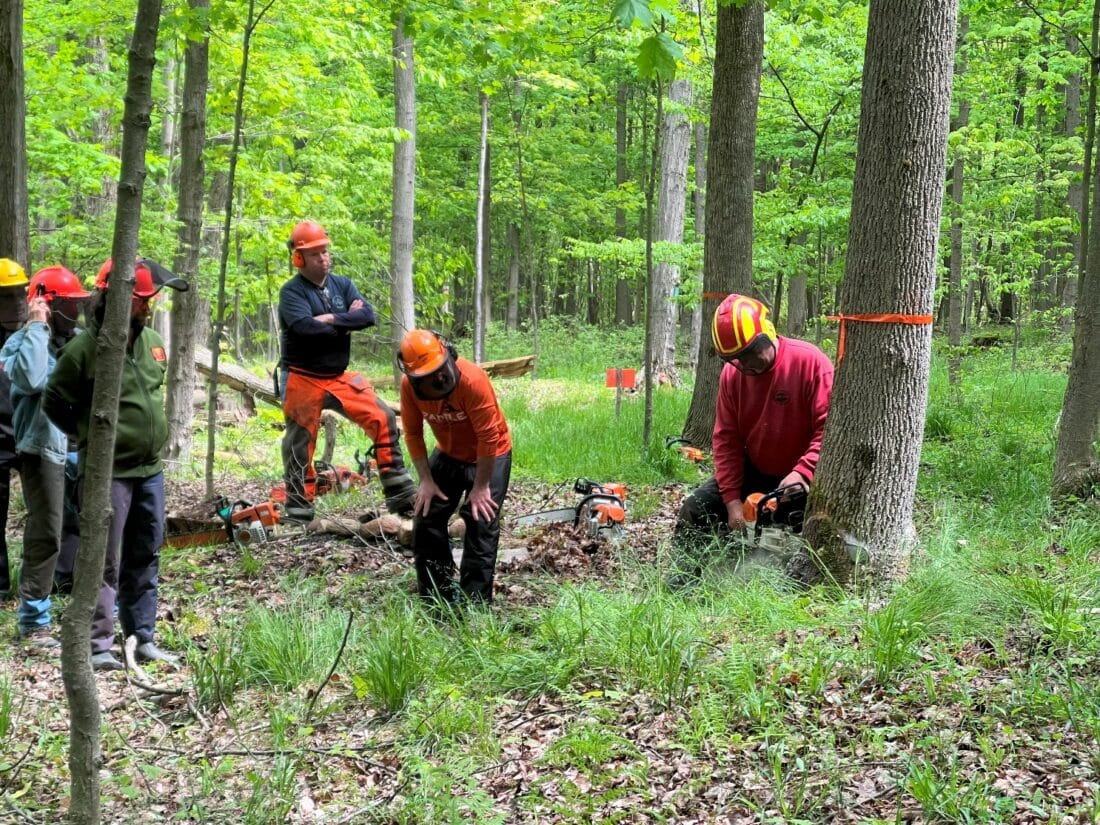
Buying certified chainsaw PPE is only half the job—proper maintenance and regular inspection determine whether that gear will perform when needed. Damaged fibers, worn soles, or cracked helmets can turn certified PPE into a liability.
This article covers:
- Why inspections and maintenance are non-negotiable
- What to check for each type of gear
- Replacement intervals and cleaning best practices
- Common mistakes that reduce protection
Google Snippet: Quick Answer
Chainsaw PPE must be inspected before and after every use for damage, contamination, and fiber wear. Replace garments after any chainsaw strike, boots with worn soles, helmets after 3–5 years, and gloves showing tears. Follow manufacturer cleaning guidelines to avoid weakening cut-resistant fibers.
Why Maintenance and Inspection Matter
Chainsaw PPE works by sacrificing itself to save you. If its protective layers are compromised, you’re exposed to catastrophic injuries.
- Cut fibers = zero chain-stopping ability
- Cracked helmets = no impact protection
- Dirty visors = impaired vision and higher accident risk
Case Example (Finland):
A forestry worker reused pants after a minor chain nick. During the next incident, the fibers failed—resulting in a deep thigh wound and 8 weeks off work.
Inspection Checklist by PPE Category
1. Chainsaw Pants and Chaps
- Before use: Check for:
- Cuts, rips, or fraying in outer fabric
- Signs of fiber pull-out
- After a chainsaw strike: Immediate replacement—protection is gone.
- Weekly: Inspect straps, zippers, and stitching integrity.
2. Chainsaw Boots
- Examine for:
- Worn or cracked soles (loss of grip = slip hazard)
- Damage to protective inserts
- Leaks or broken waterproof lining
- Replace if:
- Steel/composite toe exposed
- Soles lose traction pattern
3. Helmets and Face Protection
- Check:
- Shell cracks or UV fading (compromised impact resistance)
- Visor clarity and hinge function
- Replace helmet every 3–5 years or after a major impact.
- Earmuffs: Ensure seals aren’t cracked or hardened.
4. Chainsaw Gloves
- Inspect for:
- Tears in cut-resistant area (especially left hand)
- Worn-out grip surface
- Degraded padding reducing anti-vibration efficiency
Replacement Intervals at a Glance
| PPE Item | Replacement Interval |
|---|---|
| Pants/Chaps | After chain strike or every 1–2 years |
| Boots | Every 12–24 months (heavy use) |
| Helmets | 3–5 years or after impact |
| Gloves | When torn or padding compromised |
Cleaning and Care Best Practices
- Never bleach or dry-clean—chemicals weaken fibers.
- Wash pants in cold water with mild detergent.
- Air dry away from direct sunlight to prevent UV damage.
- For boots:
- Clean mud after each use
- Apply leather conditioner if applicable
- Visors: Use anti-fog cleaner and soft cloth.
Pro Tip:
Always follow the manufacturer’s care instructions—improper washing can invalidate certification.
Common Mistakes to Avoid
- Continuing to use PPE after fiber exposure
- Storing wet boots or gloves—promotes mold and material degradation
- Leaving helmets in hot vehicles—heat weakens plastic shells
- Using aggressive detergents on FR or cut-resistant fabrics
Quick Procurement Checklist for Maintenance Support
- [ ] Supplier provides official care guide for each PPE item
- [ ] Availability of replacement parts (visors, earmuff seals)
- [ ] Written warranty and recommended service intervals
- [ ] Batch traceability for PPE inspections and audits
- [ ] Training materials for worker self-inspection
Buyer FAQ
Q: Can pants be repaired after a small tear?
A: No. Once protective fibers are damaged, they can’t stop the chain.Q: How do I know if a helmet is too old?
A: Check the manufacture date inside the shell—replace after 3–5 years.Q: Do cleaning mistakes affect certification?
A: Yes. Harsh detergents and high heat degrade cut resistance.
Conclusion
Maintaining chainsaw PPE isn’t just about longevity—it’s about ensuring full protection when it counts. Implement a strict inspection schedule, train your team on care procedures, and hold suppliers accountable for providing detailed maintenance guides.
Need chainsaw PPE with maintenance instructions and replacement support?
Email: [email protected]
Website: www.workwearsolutions.net

 Architecting Resilience: Single Sourcing vs. Dual Sourcing Strategies in Global PPE Procurement2026年4月30日Executive Summary In the complex landscape of industrial […]
 Pattern Grading for Global Bodies: The Engineering of Anthropometric Fit in Industrial Workwear2026年4月29日In the highly regulated landscape of industrial Personal […]
 The “Light Box” Inspection: Deconstructing Fabric Defect Diagnostics and the 4-Point Quality System2026年4月28日The structural integrity and visual uniformity of […]
 The Engineering of Waterproof Breathable Workwear: A Forensic Analysis of PU Coatings vs. PTFE Membranes2026年4月24日The selection of waterproof foul-weather gear in industrial […]
 The “Button Pull” Test Protocol: Engineering Fastener Security to Mitigate Industrial Machinery and Choking Hazards2026年4月22日The “Button Pull” Test Protocol: Engineering […]
 Fabric Shrinkage in Industrial Workwear: The Sanforization Secret and the Physics of Dimensional Stability2026年4月18日Executive Summary In the global industrial workwear and […]